US Affordable Housing: Challenges & Solutions in 2026

The landscape of US affordable housing in 2026 presents a critical challenge, one that touches the lives of millions across the nation.
As housing costs continue to outpace wages, understanding the current complexities and exploring viable solutions becomes not just important, but essential for the well-being of communities.
The deepening crisis of housing affordability
The issue of housing affordability in the United States has escalated into a full-blown crisis, impacting individuals and families from coast to coast. For many, the dream of secure, affordable housing feels increasingly out of reach, a stark reality shaped by a confluence of economic and social factors.
Understanding the root causes of the crisis
Several underlying issues contribute to the current state of housing unaffordability. A primary driver is the severe imbalance between housing supply and demand. For decades, new housing construction has lagged behind population growth and household formation, creating a persistent shortage, especially in desirable urban and suburban areas.
This scarcity inevitably drives up prices, making homeownership and even renting increasingly burdensome. Additionally, the rising cost of land, labor, and materials further inflates construction expenses, discouraging developers from building affordable units.
Supply-demand imbalance: Insufficient new housing units relative to population growth.
Stagnant wages: Incomes have not kept pace with the rapid increase in housing costs.
Rising construction costs: Escalating prices for land, labor, and building materials.
Zoning restrictions: Local regulations often limit density and the types of housing that can be built.
Beyond these foundational issues, the financialization of housing also plays a significant role. Large institutional investors now own a substantial portion of rental properties, often leading to aggressive rent increases and reduced flexibility for tenants. This trend further squeezes the market for average income earners, transforming housing from a basic need into a speculative asset.
The deepening crisis of housing affordability is not merely an economic problem; it’s a social one, affecting health, education, and economic mobility. When a significant portion of a household’s income is dedicated to housing, other essential needs like food, healthcare, and transportation are often compromised. This creates a ripple effect, exacerbating poverty and inequality within communities.
In conclusion, the current state of housing affordability is a multifaceted problem rooted in a persistent supply shortage, rising costs, and complex market dynamics. Addressing this crisis requires a comprehensive understanding of its origins and a commitment to innovative, sustainable solutions that prioritize people over profit.
Economic pressures and their impact on housing access
Economic forces exert immense pressure on housing markets, directly influencing who can access safe and affordable homes. In 2026, these pressures are more pronounced than ever, making it difficult for many to secure stable housing.
Inflation, a persistent concern, has significantly eroded purchasing power. While wages have seen some increases, they haven’t kept pace with the soaring costs of goods and services, particularly housing.
This disparity means that even individuals with seemingly good jobs find themselves struggling to afford rent or mortgage payments in competitive markets. The cost of living, including utilities and groceries, further strains household budgets, leaving less disposable income for housing.
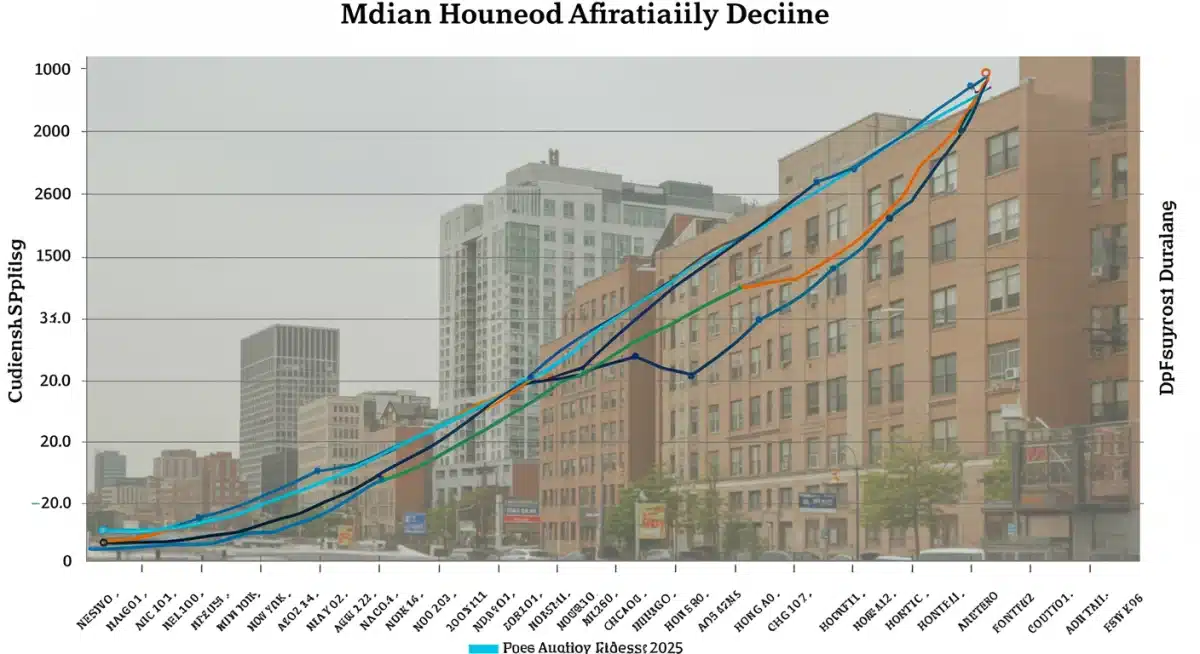
Interest rate fluctuations also play a critical role, especially for prospective homeowners. Higher interest rates translate to more expensive mortgages, effectively pricing out many first-time buyers and those with limited savings.
This pushes more people into the rental market, increasing demand and subsequently driving up rental prices. The cycle perpetuates, making both pathways to stable housing increasingly challenging.
The role of income inequality
Income inequality is a foundational element in the struggles surrounding housing access. The widening gap between high-income earners and low-to-middle-income families means that a significant portion of the population simply cannot compete in the current housing market.
While luxury housing developments continue to rise, the construction of housing units affordable to essential workers, teachers, and service industry employees has not kept pace. This imbalance creates a segmented market where high earners can afford to pay premium prices, driving up baseline costs for everyone else.
Disproportionate impact: Low-income households bear the brunt of rising housing costs.
Limited options: Fewer affordable rental and ownership opportunities for the working class.
Geographic disparities: Affordability issues are often more severe in economic hubs.
Furthermore, the concentration of wealth in specific urban centers leads to intense competition for housing, pushing prices to exorbitant levels. This forces many to commute long distances, adding financial burdens and reducing quality of life. The struggle for affordable housing is, therefore, deeply intertwined with broader economic disparities and the uneven distribution of prosperity.
In essence, economic pressures, from inflation to interest rates and systemic income inequality, are formidable barriers to housing access. Addressing these challenges requires not only housing-specific interventions but also broader economic policies aimed at fostering greater equity and stability for all segments of the population.
Policy failures and regulatory hurdles

The current state of US affordable housing is not solely a product of market forces; it is also significantly shaped by long-standing policy failures and complex regulatory hurdles. These systemic issues often inadvertently hinder the very solutions needed to expand housing access.
One of the most persistent policy failures is the insufficient investment in affordable housing programs at both federal and local levels.
Funding for initiatives like the Low-Income Housing Tax Credit (LIHTC) and various rental assistance programs, while crucial, often falls short of meeting the overwhelming demand. This lack of sustained, robust investment means that many promising projects struggle to secure financing, leaving countless individuals without the support they need.
Zoning and land-use regulations
Local zoning and land-use regulations are frequently cited as major impediments to increasing housing supply and affordability.
Many municipalities maintain restrictive zoning codes that favor single-family homes on large lots, effectively prohibiting the construction of multi-family dwellings or denser housing options. This approach limits the types of housing that can be built, drives up land costs, and perpetuates sprawl, making it harder to create diverse, affordable communities.
Exclusionary zoning: Regulations preventing multi-family housing or smaller lot sizes.
Lengthy approval processes: Bureaucratic delays increasing project costs and timelines.
NIMBYism: “Not In My Backyard” opposition from residents against new developments.
Beyond zoning, intricate permitting processes and environmental reviews, while important for safety and sustainability, can add years and millions of dollars to development timelines and budgets.
These delays disproportionately affect affordable housing projects, which often operate on tighter margins. Developers face a labyrinth of approvals, fees, and requirements that can deter even the most committed efforts to build reasonably priced homes.
The cumulative effect of these policy failures and regulatory hurdles is a constrained housing supply and artificially inflated costs.
Reforming these systems requires a concerted effort from policymakers to streamline processes, encourage denser and more diverse housing types, and provide consistent, adequate funding for affordable housing initiatives. Without meaningful policy changes, market forces alone will continue to exacerbate the affordability crisis.
Innovative construction and development strategies
Addressing the challenges in US affordable housing requires more than just policy shifts; it demands a revolution in how homes are built and developed. Innovative construction and development strategies are emerging as crucial components in the fight for greater affordability and accessibility.
One of the most promising avenues is modular and prefabricated construction. By building housing components or entire units in a factory setting, developers can achieve significant cost savings through economies of scale, reduced waste, and faster construction times.
These factory-built homes are then transported to the site for assembly, drastically cutting down on on-site labor and weather-related delays. This approach is not only efficient but also allows for greater quality control and consistency in building standards.

Sustainable and resilient design
Beyond speed and cost, integrating sustainable and resilient design principles into affordable housing projects offers long-term benefits.
Energy-efficient building materials, solar panels, and smart home technologies can significantly reduce utility costs for residents, making housing more affordable in the long run. Furthermore, designing homes to withstand climate change impacts, such as extreme weather events, ensures their longevity and protects vulnerable communities.
Energy efficiency: Reduces utility bills, lowering overall living costs.
Green building materials: Environmentally friendly and often more durable.
Climate resilience: Designs that protect against natural disasters and extreme weather.
Another innovative strategy involves leveraging underutilized land and existing infrastructure. This could include transforming abandoned commercial buildings into residential units or developing housing on vacant public land. Transit-oriented development (TOD) is also gaining traction, where affordable housing is built near public transportation hubs, reducing residents’ reliance on cars and lowering transportation costs. This integrated approach maximizes existing resources and creates more sustainable, connected communities.
Collaboration between public, private, and non-profit sectors is also vital. Public-private partnerships can pool resources and expertise, accelerating the development of affordable housing projects that might otherwise face funding or regulatory hurdles.
Non-profit organizations often bring a deep understanding of community needs and can help ensure that new developments genuinely serve the target population.
Ultimately, innovative construction and development strategies are key to expanding the supply of affordable housing. By embracing modular construction, sustainable design, and strategic land use, coupled with strong cross-sector partnerships, we can build a future where quality housing is within reach for more Americans.
Federal and state government initiatives for 2026
As the US affordable housing crisis intensifies, both federal and state governments are recognizing the urgent need for more robust interventions. For 2026, several key initiatives are either in motion or being proposed to tackle the problem head-on.
At the federal level, the Biden administration has continued to emphasize increasing housing supply and lowering housing costs. Programs like the American Rescue Plan’s Emergency Rental Assistance (ERA) have provided critical, albeit temporary, relief.
Looking forward, there’s a push for greater funding for existing programs, such as the Low-Income Housing Tax Credit (LIHTC), which is the largest federal program for creating affordable housing. There are also discussions around expanding tax incentives for developers who build affordable units and streamlining federal regulations to expedite construction.
State-level policy innovations
Many states are stepping up with their own innovative policies to address housing affordability. California, for example, has been at the forefront of enacting legislation to override local zoning restrictions, allowing for denser housing developments near transit corridors and in single-family zones. Oregon has similarly moved to eliminate single-family zoning in many areas, paving the way for more diverse housing types.
Zoning reform: State-mandated changes to local zoning laws to allow for more density.
Housing trust funds: Dedicated state funds to finance affordable housing projects.
Tenant protections: Laws to prevent excessive rent increases and unjust evictions.
Streamlined permitting: Efforts to reduce bureaucratic delays for housing developments.
Other states are establishing dedicated affordable housing trust funds, financed through various mechanisms, to provide consistent funding streams for development and preservation.
These funds can offer grants, loans, and other financial assistance to projects that serve low-income populations. Furthermore, efforts to implement stronger tenant protections, such as rent stabilization measures and eviction moratoriums, are gaining traction in some states, aiming to provide immediate relief and greater stability for renters.
The synergy between federal and state efforts is crucial. Federal funding and policy guidance can provide a broad framework, while state-level innovations can tailor solutions to specific regional needs and challenges.
For 2026, the hope is that these combined initiatives will lead to a significant increase in affordable housing units, greater housing stability for vulnerable populations, and a more equitable distribution of housing resources across the nation.
The role of community and non-profit organizations

While government initiatives and innovative construction methods are vital, the backbone of a successful US affordable housing strategy often lies in the tireless efforts of community and non-profit organizations. These groups play a crucial, often localized, role in providing immediate solutions and advocating for long-term change.
Non-profits are frequently on the front lines, directly developing and managing affordable housing projects. They leverage grants, donations, and volunteer labor to construct or rehabilitate properties, ensuring that units remain affordable for low-income individuals and families.
Unlike private developers driven by profit, non-profits prioritize community well-being, often offering supportive services alongside housing, such as job training, childcare, and healthcare referrals.
Advocacy and tenant support
Beyond direct development, community organizations are powerful advocates for policy change. They mobilize residents, gather data, and educate policymakers on the realities of the housing crisis from the ground up.
Their advocacy efforts often lead to the passage of local and state legislation that protects tenants, funds affordable housing, and reforms restrictive zoning laws. They provide a crucial voice for those most affected by the lack of affordable housing, ensuring their concerns are heard.
Tenant rights education: Informing renters about their legal protections.
Eviction prevention: Providing legal aid and financial assistance to prevent homelessness.
Community land trusts: Innovative models that keep land costs permanently affordable.
Many non-profits also focus on tenant support and empowerment. They offer resources to help individuals navigate complex housing applications, understand their rights, and prevent eviction. Programs like community land trusts, often managed by non-profits, offer an innovative model where the land beneath a home is owned by the trust, which then leases it to homeowners.
This mechanism dramatically reduces the purchase price of homes, ensuring permanent affordability for future generations.
The strength of community and non-profit organizations lies in their deep understanding of local needs and their ability to build trust within the communities they serve. They bridge gaps left by larger governmental programs and provide a human-centered approach to a systemic problem. Supporting and empowering these organizations is indispensable for creating truly sustainable and equitable affordable housing solutions across the United States.
Looking ahead: a collaborative path to equitable housing
The path forward for US affordable housing in 2026 and beyond is undeniably complex, yet it is also ripe with opportunities for meaningful change. Achieving a state where everyone has access to safe, stable, and affordable housing requires a deeply collaborative and multi-faceted approach.
No single entity—neither government, nor private sector, nor non-profit—can solve this crisis alone. The most effective solutions will emerge from robust partnerships, where resources, expertise, and innovative ideas are pooled to create comprehensive strategies.
This means fostering stronger dialogues between federal agencies and local municipalities, encouraging private developers to engage in affordable housing projects, and empowering community-based organizations to lead initiatives tailored to their specific needs.
Key areas for future focus
Several critical areas demand continued attention and investment. Firstly, sustained and increased funding for affordable housing programs remains paramount. This includes expanding tax credits, providing direct subsidies, and investing in infrastructure that supports new developments. Secondly, aggressive zoning and land-use reforms are essential to unlock greater housing supply and diversify housing types, moving away from exclusionary practices.
Increased public funding: Consistent government investment in affordable housing.
Zoning reform acceleration: Overhauling restrictive land-use policies.
Technological adoption: Embracing modular construction and sustainable building practices.
Community engagement: Prioritizing local input in development decisions.
Furthermore, embracing technological advancements in construction, such as modular building and 3D printing, can significantly reduce costs and accelerate project timelines. These innovations, coupled with a commitment to sustainable design, will not only make housing more affordable but also more resilient and environmentally friendly.
Finally, prioritizing community engagement ensures that housing solutions are not just built, but truly meet the needs and aspirations of the people they are intended to serve.
In conclusion, the vision for equitable housing in the U.S. relies on a collective will to dismantle existing barriers and build new pathways.
By committing to sustained investment, thoughtful policy reforms, innovative construction, and collaborative partnerships, we can move closer to a future where affordable housing is a reality for all Americans, strengthening communities and fostering greater economic stability nationwide.
| Key Aspect | Brief Description |
|---|---|
| Deepening Crisis | Supply-demand imbalance, stagnant wages, and rising costs fuel housing unaffordability. |
| Economic Pressures | Inflation, high interest rates, and income inequality hinder housing access for many. |
| Policy & Regulation | Insufficient funding and restrictive zoning laws impede affordable housing development. |
| Solutions & Collaboration | Innovative construction, government initiatives, and community efforts are crucial for progress. |
Frequently asked questions about US affordable housing
The crisis is primarily driven by a significant shortage of housing supply relative to demand, stagnant wages that haven’t kept pace with rising housing costs, escalating construction expenses, and restrictive local zoning regulations that limit diverse housing options.
Inflation reduces purchasing power, making it harder for individuals to afford rising rents and mortgage payments. Higher interest rates also increase borrowing costs, pricing out many potential homeowners and further intensifying demand in the rental market.
Government policies are crucial, involving funding for programs like LIHTC, rental assistance, and tax incentives for affordable housing development. State-level reforms in zoning and land-use regulations are also vital to increase housing supply and diversity.
Modular and prefabricated construction techniques are gaining traction, allowing for faster, more cost-effective building in factory settings. Sustainable design and the repurposing of existing structures also contribute to creating more accessible and efficient housing units.
Individuals can advocate for supportive policies and engage in local planning discussions. Communities can support non-profit housing organizations, participate in community land trusts, and promote inclusive zoning reforms to foster diverse and affordable housing options.
Conclusion
The state of US affordable housing in 2026 underscores a persistent and multifaceted crisis demanding urgent, coordinated action. From systemic economic pressures and regulatory hurdles to a chronic supply shortage, the challenges are significant.
However, through innovative construction methods, robust government initiatives, and the dedicated efforts of community organizations, a collaborative path toward more equitable and accessible housing is within reach. Addressing this issue is not merely about building more homes; it’s about fostering resilient communities and ensuring a fundamental human right for all Americans.