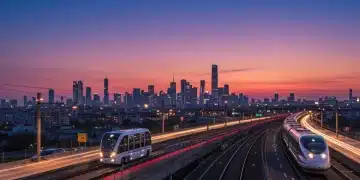
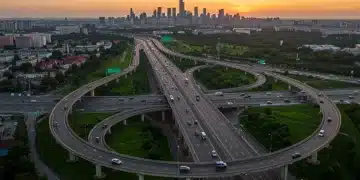
US Public Transportation: Improvements & Accessibility Challenges

US public transportation is undergoing significant transformation, marked by crucial infrastructure investments, technological advancements, and a persistent focus on enhancing accessibility for all citizens.
Have you ever considered how vital public transportation is to the fabric of American life? US public transportation is a complex, ever-evolving system, serving millions daily, yet it faces unique challenges and opportunities for growth. This article delves into its current state, highlighting recent improvements and persistent accessibility hurdles.
The Evolving Landscape of American Public Transit
Public transportation in the United States has a rich and varied history, reflecting the nation’s growth from burgeoning industrial centers to sprawling metropolitan areas. Historically, it has been a cornerstone of urban development, facilitating economic activity and social mobility. However, decades of underinvestment and a cultural shift towards personal vehicle ownership led to a decline in ridership and infrastructure quality in many regions.
Today, there’s a renewed interest in revitalizing public transit, driven by concerns over climate change, traffic congestion, and equitable access to opportunities. This renewed focus is translating into significant investments and innovative approaches, aiming to create more efficient, sustainable, and inclusive transportation networks across the country.
Historical Context and Decline
For much of the 20th century, streetcars, trolleys, and robust bus networks were the lifelines of American cities. Post-World War II, the rise of the automobile and the development of the interstate highway system shifted priorities. Suburbanization encouraged car-centric lifestyles, leading to decreased funding and ridership for public transit. This era saw the dismantling of many once-thriving transit systems.
- Post-WWII automobile boom
- Suburban sprawl and reduced urban density
- Underinvestment in public transit infrastructure
- Shift in public perception towards private vehicles
The Resurgence of Interest
The 21st century has brought a paradigm shift. Growing awareness of environmental impacts, coupled with increasingly congested urban centers, has rekindled public and governmental interest in transit. Millennials and Gen Z, in particular, show a greater propensity for public transport, valuing sustainability and urban living over car ownership. This demographic shift is a powerful catalyst for change.
The current landscape is characterized by a blend of legacy systems and new, innovative projects. Cities like New York, Chicago, and Boston maintain extensive subway and bus networks, while newer cities are investing in light rail, streetcars, and enhanced bus rapid transit (BRT) systems. These efforts are not just about moving people; they are about shaping communities and fostering economic growth.
The evolving landscape signifies a pivotal moment for US public transportation, moving from a period of decline to one of potential renaissance. Understanding this historical context is crucial to appreciating both the progress made and the challenges that still lie ahead in building a truly integrated and accessible transit system for all Americans.
Significant Investments and Modernization Efforts
The federal government, along with state and local entities, has recognized the critical need to bolster public transit infrastructure. This recognition has translated into substantial financial commitments aimed at upgrading aging systems, expanding networks, and integrating new technologies. These investments are not merely about repair; they are about building for the future, ensuring resilience and efficiency.
Major legislative acts and local initiatives are channeling billions of dollars into projects ranging from high-speed rail development to electric bus fleets. This wave of modernization seeks to address decades of deferred maintenance and prepare transit systems for the demands of a growing and increasingly urbanized population. The goal is to create systems that are not only functional but also attractive and reliable for daily commuters.
Federal Funding and Infrastructure Initiatives
The Bipartisan Infrastructure Law (BIL), enacted in 2021, represents a landmark investment in American infrastructure, with a significant portion dedicated to public transportation. This law provides billions for transit agencies to improve service, modernize fleets, and expand access. It’s a game-changer for many struggling systems, offering a lifeline for much-needed upgrades.
- Bipartisan Infrastructure Law (BIL): Billions allocated for transit.
- Formula and competitive grants: Funding for states and agencies.
- Focus on climate resilience: Investing in infrastructure that can withstand extreme weather.
- Equity considerations: Prioritizing projects that serve disadvantaged communities.
Technological Advancements and Smart Transit
Beyond concrete and steel, technology is revolutionizing how public transit operates. Smart transit initiatives are leveraging data, sensors, and connectivity to enhance efficiency, safety, and rider experience. Real-time tracking apps, digital payment systems, and predictive maintenance are becoming standard, making public transit more user-friendly and reliable.
Many cities are experimenting with autonomous vehicles for first-mile/last-mile solutions, and electric buses are rapidly replacing diesel fleets, reducing emissions and operating costs. These technological leaps are crucial for attracting new riders and positioning public transit as a viable, modern alternative to private cars. The integration of artificial intelligence for route optimization and demand prediction is also on the horizon, promising even greater efficiencies.
These significant investments and modernization efforts are laying the groundwork for a more robust and sustainable public transportation system in the US. The commitment to federal funding combined with technological innovation is creating a positive trajectory, promising better service and greater connectivity for communities nationwide.
The Persistent Challenge of Accessibility
While investments in modernization are commendable, the journey towards fully accessible public transportation in the US remains an uphill battle. Despite significant progress since the Americans with Disabilities Act (ADA) of 1990, many transit systems still fall short in providing seamless access for individuals with disabilities. This isn’t just about physical ramps; it encompasses a wide array of barriers, from informational access to operational reliability.
Accessibility is a multifaceted issue, affecting not only those with mobility impairments but also individuals with visual or hearing impairments, cognitive disabilities, and seniors. Ensuring equitable access means designing systems that are intuitive, reliable, and adaptable to diverse needs. The challenge lies in retrofitting older infrastructure while also embedding accessibility from the ground up in new projects.
Physical Barriers and ADA Compliance
The ADA mandated specific requirements for public transit, including accessible vehicles, stations, and services. While many newer buses and trains are ADA-compliant, older infrastructure, particularly subway stations built decades ago, still pose significant challenges. Elevators break down, ramps are missing, and station layouts can be difficult to navigate for wheelchair users.
- Aging infrastructure: Many stations predate ADA.
- Elevator and escalator reliability: Frequent outages hinder access.
- Gap between platform and train: Can be dangerous for some users.
- Lack of accessible pathways: Inconsistent routes for wheelchairs.
Informational and Systemic Barriers
Accessibility extends beyond physical structures. Informational barriers, such as unclear signage, inaccessible websites, or lack of audio announcements, can make using public transit daunting for individuals with visual or cognitive impairments. Furthermore, systemic issues like infrequent accessible service or poorly trained staff can undermine even the most physically accessible infrastructure.
The concept of ‘universal design’ is gaining traction, advocating for transit systems that are inherently usable by all people, to the greatest extent possible, without the need for adaptation or specialized design. This holistic approach considers everything from ticket machines to emergency procedures, aiming for an inclusive user experience from start to finish. Addressing these complex layers of accessibility requires sustained effort, collaboration, and a deep understanding of diverse user needs.
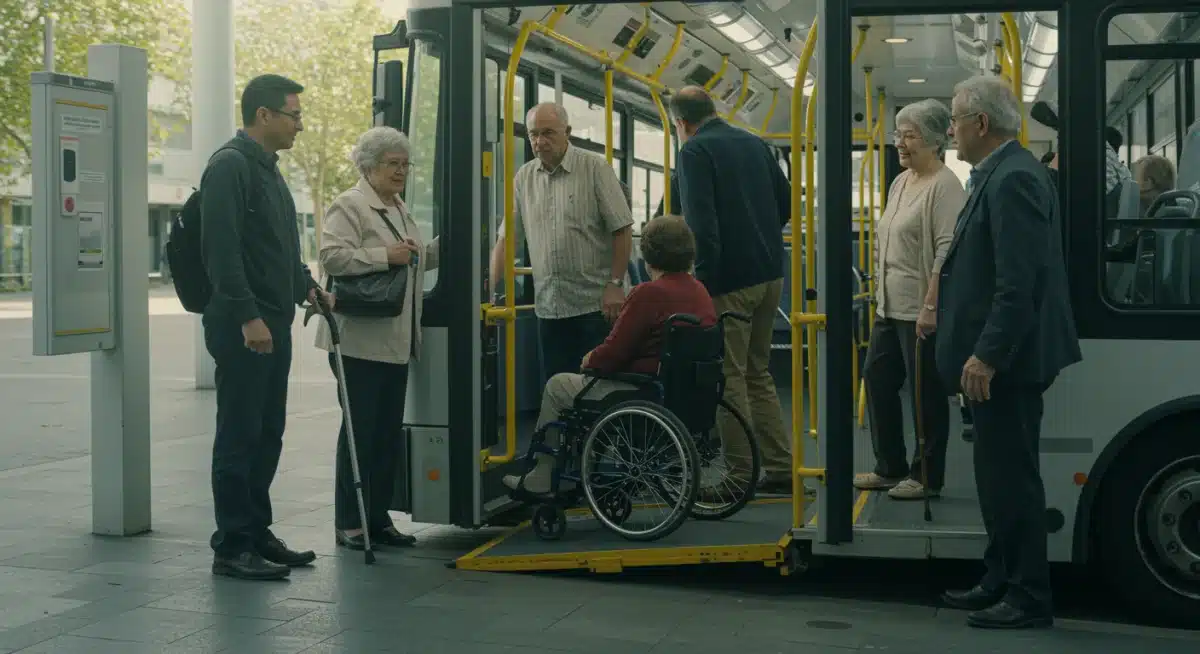
The persistent challenge of accessibility in US public transportation underscores the need for continuous vigilance and investment. While the ADA was a crucial step, its full implementation and the evolution beyond its minimum requirements remain vital for achieving truly equitable transit for all.
Innovations in Transit Planning and Design
To overcome current limitations and build for the future, transit agencies across the US are embracing innovative planning and design strategies. These innovations go beyond simply adding more buses or trains; they involve rethinking how transit integrates with communities, how it responds to user needs, and how it can contribute to broader urban goals like sustainability and economic development.
From microtransit solutions to integrated mobility platforms, the focus is on creating more flexible, efficient, and user-centric systems. This forward-thinking approach is essential for adapting to changing demographics, technological advancements, and evolving travel patterns. The goal is to make public transit not just a necessity, but a preferred mode of transport for a wider segment of the population.
Microtransit and On-Demand Services
Traditional fixed-route transit can be inefficient in areas with lower ridership or during off-peak hours. Microtransit, which often uses smaller vehicles and on-demand routing via apps, offers a flexible solution. It can fill gaps in service, provide first-mile/last-mile connections to major transit hubs, and serve communities where traditional bus routes are not feasible.
- Flexible routing: Adapts to user demand in real-time.
- Smaller vehicles: More efficient for lower ridership areas.
- App-based booking: Enhances user convenience and accessibility.
- Bridging transit gaps: Connects users to main transit lines.
Transit-Oriented Development (TOD)
Transit-Oriented Development (TOD) is a planning strategy that focuses on creating compact, mixed-use communities around transit stations. By placing housing, jobs, and amenities within walking or biking distance of transit, TOD reduces reliance on cars, increases ridership, and fosters vibrant, sustainable neighborhoods. It’s a holistic approach that integrates land use with transportation planning.
TOD projects often involve collaborations between transit agencies, local governments, and private developers. They aim to create walkable environments, enhance public spaces, and ensure that transit access is a core component of community design. This integrated approach not only boosts transit ridership but also contributes to economic revitalization and improved quality of life in urban and suburban areas.
These innovations in transit planning and design are crucial for building resilient, adaptable, and attractive public transportation systems. By embracing new technologies and integrated development strategies, US cities are working towards a future where public transit is a seamless and integral part of daily life, serving diverse needs and contributing to sustainable growth.
Impact on Urban Development and Equity
The state of public transportation profoundly influences urban development patterns and the equitable distribution of opportunities within cities. A robust and accessible transit system can be a powerful engine for economic growth, fostering denser, more sustainable urban forms and connecting residents to jobs, education, healthcare, and recreational activities. Conversely, inadequate transit can exacerbate inequalities, isolating communities and limiting access for vulnerable populations.
Investing in public transit is not just about moving people; it’s about shaping the future of cities. It encourages compact development, reduces sprawl, and supports local businesses by bringing customers closer. Furthermore, by providing affordable and reliable transportation options, transit plays a crucial role in promoting social equity, ensuring that everyone, regardless of income or ability, can participate fully in civic and economic life.
Economic Benefits and Smart Growth
Public transportation systems stimulate local economies in multiple ways. They create jobs in construction and operations, increase property values around transit corridors, and reduce household transportation costs, freeing up income for other expenditures. Studies consistently show that areas with good transit access attract businesses and residents, fostering what is known as ‘smart growth’ – development that is economically sound, environmentally sensitive, and community-oriented.
- Job creation: Construction, operations, and maintenance.
- Increased property values: Near transit stations.
- Reduced transportation costs: For households.
- Support for local businesses: Increased foot traffic and accessibility.
Addressing Social Equity and Mobility Justice
For many low-income individuals, seniors, and people with disabilities, public transit is the only viable means of transportation. Ensuring that these systems are affordable, reliable, and accessible is fundamental to social equity. When transit systems fail these populations, it creates significant barriers to employment, education, healthcare, and social participation, perpetuating cycles of disadvantage.
Mobility justice is a growing movement that advocates for equitable access to transportation for all, recognizing that transportation is a human right. This perspective emphasizes that transit planning must actively involve and prioritize the needs of marginalized communities, ensuring that new investments and service improvements benefit those who rely on transit the most, rather than displacing them or serving only affluent areas.
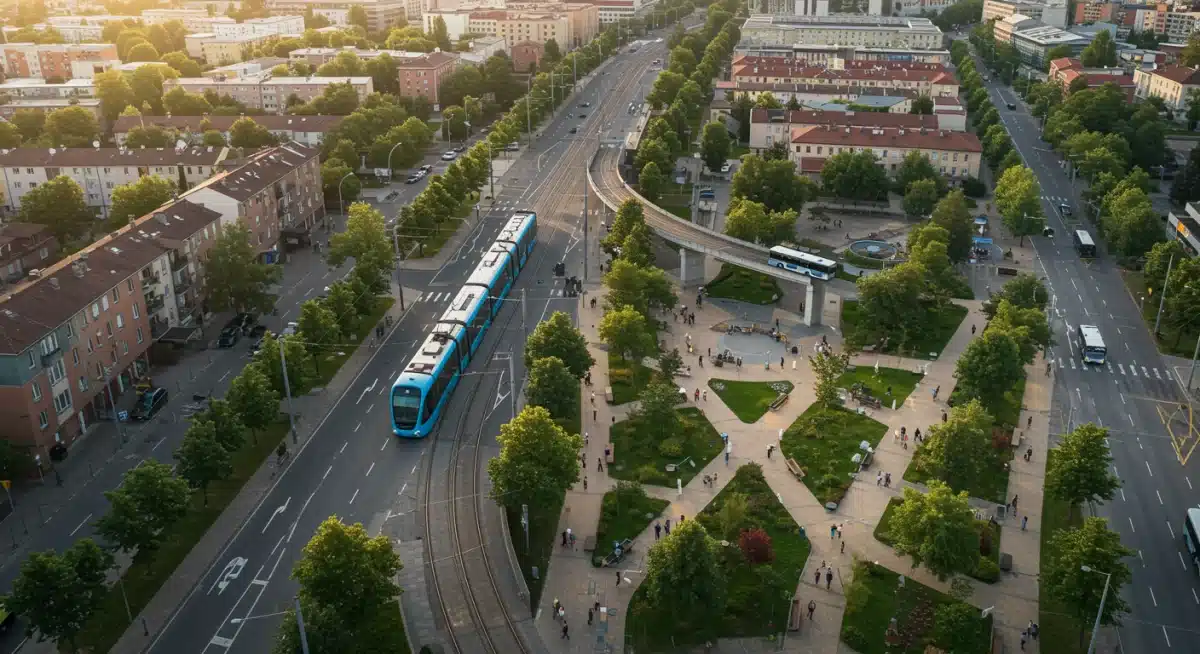
The impact of public transportation on urban development and equity cannot be overstated. As US cities continue to grow and diversify, robust and equitable transit systems will be essential for creating inclusive, prosperous, and sustainable communities for all residents.
Funding Models and Future Outlook
The sustainability and expansion of US public transportation hinge critically on its funding models. Historically, transit agencies have relied on a mix of federal, state, and local subsidies, farebox revenue, and dedicated taxes. However, these traditional sources often prove insufficient to meet the rising costs of operation, maintenance, and necessary capital improvements. The future outlook for public transit is therefore intertwined with the ability to secure stable, diversified, and adequate funding.
Innovative financing mechanisms, public-private partnerships, and a re-evaluation of funding priorities are becoming increasingly important. The goal is to move beyond short-term fixes and establish long-term financial stability that can support the continuous evolution and improvement of transit systems, ensuring they can effectively serve communities for decades to come.
Diversifying Revenue Streams
Relying solely on farebox revenue is often unsustainable, especially in periods of low ridership or when prioritizing affordability. Transit agencies are exploring various ways to diversify their revenue streams. This includes leveraging transit-oriented development to capture value from increased property values, implementing congestion pricing in urban centers, and exploring advertising and sponsorship opportunities.
Dedicated sales taxes, property taxes, and even carbon taxes are also being considered or implemented in various jurisdictions to provide a more stable and predictable funding base. The challenge lies in building public consensus for these new funding sources, demonstrating the clear benefits of transit investment to taxpayers and stakeholders.
Public-Private Partnerships and Innovation
Public-private partnerships (PPPs) are emerging as a viable model for financing and delivering complex transit projects. These partnerships can bring private sector expertise, efficiency, and capital to projects that might otherwise be delayed or unfeasible due to public funding constraints. Examples include private companies operating transit lines, maintaining infrastructure, or developing adjacent real estate.
- Private capital injection: Reduces immediate public financial burden.
- Efficiency and expertise: Leverages private sector best practices.
- Risk sharing: Spreads financial and operational risks.
- Accelerated project delivery: Can bring projects online faster.
The Role of Federal Support
Despite local efforts, federal support remains a cornerstone of US public transportation funding. Continued federal investment through programs like the Bipartisan Infrastructure Law is crucial for major capital projects, maintenance, and research into new technologies. A consistent and robust federal commitment signals the national importance of public transit and encourages state and local matching funds.
The future outlook for public transportation in the US, while challenging, is also filled with potential. By embracing diversified funding models, fostering innovative partnerships, and maintaining strong federal support, transit systems can evolve to meet the needs of a changing nation, contributing to more sustainable, equitable, and prosperous communities.
Community Engagement and User Experience
At the heart of any successful public transportation system lies its users. Effective community engagement and a relentless focus on enhancing the user experience are paramount for increasing ridership, building public trust, and ensuring that transit truly serves the needs of the diverse populations it aims to connect. Without understanding and responding to community input, even the most technologically advanced systems risk falling short of their potential.
User experience encompasses every touchpoint a rider has with the transit system, from planning a trip to boarding to arriving at their destination. This holistic view requires agencies to consider ease of use, comfort, safety, reliability, and the overall perception of the service. Engaging communities throughout the planning and implementation process ensures that services are tailored to local needs and priorities.
Listening to the Community: Participatory Planning
Historically, transit planning has often been a top-down process. However, modern approaches emphasize participatory planning, actively involving residents, advocacy groups, and local businesses in decision-making. Workshops, public forums, online surveys, and community advisory boards are vital tools for gathering diverse perspectives and ensuring that transit projects reflect local values and needs.
- Public workshops and forums: Direct input from residents.
- Online surveys and feedback platforms: Broader reach for opinions.
- Community advisory boards: Ongoing representation of local interests.
- Equity-focused engagement: Reaching underserved and marginalized groups.
Improving Rider Comfort and Safety
Beyond getting from point A to point B, the quality of the journey significantly impacts user experience. Agencies are investing in features that enhance rider comfort, such as improved seating, climate control, and Wi-Fi connectivity. Safety is also a primary concern, addressed through better lighting, surveillance, and visible staff presence at stations and on vehicles. A clean, well-maintained environment contributes significantly to a positive perception of transit.
Furthermore, digital tools like real-time information displays and mobile apps that provide journey planning, delay notifications, and even capacity information are transforming the rider experience. These innovations empower users with information, reducing anxiety and making public transit a more predictable and enjoyable option. Ultimately, a transit system that prioritizes its users through active engagement and thoughtful design is one that thrives and serves its community effectively.
Community engagement and a strong focus on user experience are indispensable for the success of US public transportation. By actively involving the public in planning and continuously striving to improve every aspect of the rider’s journey, transit agencies can build stronger relationships with their communities and foster a greater reliance on and appreciation for public transit services.
The Role of Public Transportation in a Sustainable Future
As the United States grapples with the escalating impacts of climate change and the need for more sustainable urban environments, public transportation emerges as a critical component of the solution. Its role extends far beyond merely moving people; it is a fundamental tool for reducing carbon emissions, conserving energy, and fostering healthier, more livable communities. A robust public transit system is inherently more sustainable than a car-centric model, offering a path towards a greener future.
Embracing public transportation means reducing the number of single-occupancy vehicles on the road, which in turn alleviates traffic congestion, improves air quality, and lowers overall fuel consumption. The shift towards electric and zero-emission transit vehicles further amplifies these environmental benefits. Investing in public transit is an investment in the long-term ecological and social well-being of the nation.
Environmental Benefits and Emission Reduction
One of the most significant advantages of public transportation is its potential to drastically reduce greenhouse gas emissions. A single bus or train can carry dozens or hundreds of passengers, significantly lowering the per-person carbon footprint compared to individual car trips. As transit agencies electrify their fleets, these benefits become even more pronounced, contributing directly to national climate goals.
- Lower per-capita emissions: More efficient than individual cars.
- Reduced traffic congestion: Leads to less idling and fuel waste.
- Improved air quality: Fewer vehicle emissions in urban areas.
- Transition to electric fleets: Eliminates tailpipe emissions.
Promoting Walkable and Bikeable Communities
Public transportation systems are powerful catalysts for creating more walkable and bikeable communities. By providing convenient transit options, cities can reduce the need for car ownership, encouraging residents to walk or cycle for short trips and to access transit stations. This shift away from car dependency not only benefits the environment but also promotes public health through increased physical activity.
Urban planning that integrates transit with pedestrian and cycling infrastructure creates vibrant, active streetscapes and reduces safety risks associated with vehicle traffic. This synergy between public transit and active transportation modes is essential for building sustainable cities where residents can easily and safely navigate their surroundings without relying on private automobiles. The future of sustainable urban living is intrinsically linked to the strength and integration of public transportation networks.
The role of public transportation in forging a sustainable future for the US is undeniable. By championing emission reductions, fostering active transportation, and enabling denser, more efficient urban development, transit systems are not just a mode of transport but a cornerstone of environmental stewardship and resilient community building.
| Key Aspect | Brief Description |
|---|---|
| Investments & Modernization | Significant federal and local funding revitalizing infrastructure and integrating smart technologies. |
| Accessibility Challenges | Ongoing barriers for individuals with disabilities despite ADA, requiring further infrastructure and systemic improvements. |
| Sustainability Role | Crucial for reducing emissions, promoting active transport, and fostering green urban development. |
| Funding & Future | Diversifying revenue streams and public-private partnerships are key to long-term stability and growth. |
Frequently Asked Questions About US Public Transportation
Recent improvements include significant federal investments through the Bipartisan Infrastructure Law, modernization of aging infrastructure, and the adoption of new technologies like real-time tracking and digital payments. Many agencies are also electrifying their bus fleets and expanding light rail networks.
Key challenges include outdated infrastructure (especially older subway stations) that isn’t fully ADA compliant, unreliable elevators/escalators, and informational barriers for individuals with visual or cognitive impairments. Systemic issues like inconsistent accessible service also persist.
Public transit drives urban development by fostering Transit-Oriented Development (TOD), which creates dense, mixed-use communities around stations. This reduces car dependency, stimulates local economies, increases property values, and promotes sustainable urban growth patterns.
Technology is crucial for modernization, enabling real-time passenger information, mobile ticketing, and predictive maintenance. It also supports microtransit solutions, electric vehicle adoption, and potentially autonomous shuttles, improving efficiency, convenience, and environmental performance.
Future funding relies on diversifying revenue streams beyond fares, including dedicated taxes, value capture from TOD, and public-private partnerships. Continued federal investment, like the Bipartisan Infrastructure Law, will also remain vital for large-scale capital projects and operational support.
Conclusion
The state of US public transportation is at a fascinating crossroads, marked by a determined push towards modernization and expansion, yet still confronting significant hurdles, particularly in ensuring universal accessibility. While substantial federal and local investments are catalyzing improvements in infrastructure and technology, the journey to a truly equitable and efficient transit system for all Americans is ongoing. Future success will depend on sustained funding, innovative planning that prioritizes community needs, and a continued commitment to addressing the diverse challenges that prevent full participation for every citizen. Ultimately, a robust, accessible, and sustainable public transportation network is indispensable for the nation’s economic vitality, social equity, and environmental health.