Boost Your Mood in 15 Minutes: Quick Mindfulness Exercises for Busy Americans
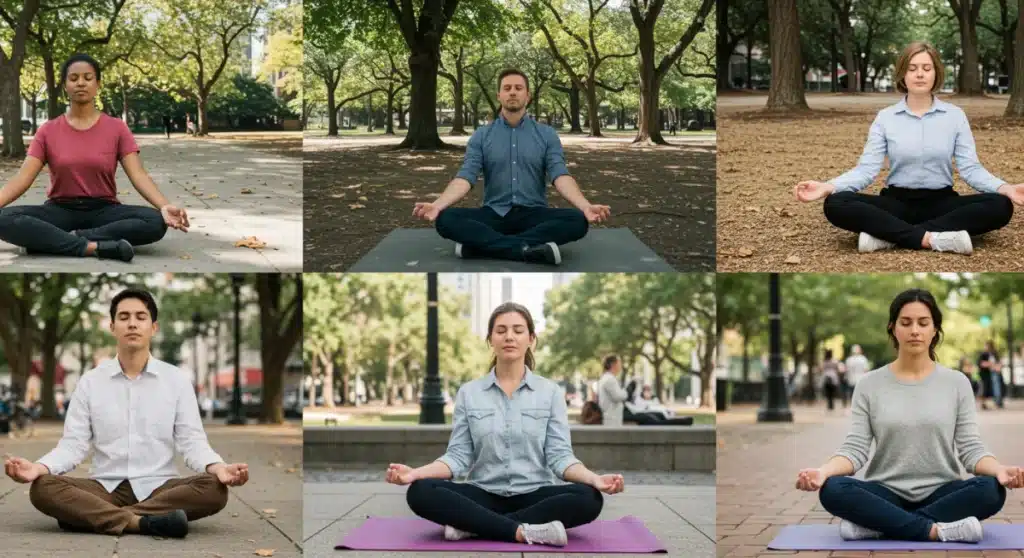
Busy Americans can significantly improve their mood and reduce stress through a variety of quick, 15-minute mindfulness exercises designed for integration into daily routines, promoting enhanced well-being and mental clarity.
In the whirlwind of modern American life, finding moments of peace and mental clarity can feel like a luxury. However, integrating quick mindfulness exercises into your daily routine is a powerful way to Boost Your Mood in 15 Minutes: Quick Mindfulness Exercises for Busy Americans, fostering greater resilience and well-being.
The American Pace: Why Mindfulness is More Critical Than Ever
American society often champions a fast-paced, high-achievement lifestyle. From demanding careers to packed family schedules and endless digital notifications, the relentless pursuit of productivity can leave many feeling overwhelmed, anxious, and disconnected. This constant pressure makes it increasingly difficult to simply be present, leading to elevated stress levels and a diminished sense of well-being.
The notion that one must always be ‘on’ or ‘doing’ overshadows the importance of ‘being.’ This cultural emphasis on external achievements often comes at the cost of internal peace. Without regular moments to pause and reflect, the cumulative effect of daily stressors can lead to burnout, affecting both mental and physical health. It’s a cycle that, if left unchecked, can significantly impact one’s quality of life.
Understanding the Stress Epidemic
Stress in America isn’t just a buzzword; it’s a pervasive issue documented by numerous studies. The American Psychological Association consistently reports high levels of stress among adults, citing work, money, and health concerns as primary factors. This chronic stress can manifest in various ways, from irritability and fatigue to more serious health conditions like heart disease and depression. Addressing this epidemic requires accessible and effective coping mechanisms.
- Work-Life Imbalance: Long hours and the expectation of constant availability blur the lines between professional and personal life.
- Digital Overload: The incessant stream of information and notifications from smartphones and computers creates cognitive fatigue.
- Economic Pressures: Financial anxieties, including cost of living and debt, contribute significantly to mental strain.
- Social Expectations: The pressure to maintain a perfect image or keep up with societal norms adds another layer of stress.
The Promise of Mindfulness
Mindfulness offers a powerful antidote to this modern malaise. It’s not about escaping reality or ignoring problems, but rather about engaging with the present moment with non-judgmental awareness. This practice allows individuals to observe their thoughts and feelings without getting swept away by them, thereby reducing reactivity and fostering a sense of calm. The beauty of mindfulness lies in its simplicity and adaptability, making it perfect for busy schedules.
Even short bursts of mindful attention can create significant shifts in one’s mental landscape. It’s a skill that improves with practice, offering a sustainable path to better emotional regulation and a more balanced life. By intentionally carving out time for these practices, Americans can reclaim a sense of agency over their internal states, regardless of external circumstances.
In conclusion, the unique demands of American life necessitate practical strategies for mental well-being. Mindfulness emerges as a highly effective and accessible tool, offering a much-needed pause in the daily grind. By understanding the roots of stress and embracing mindful techniques, busy individuals can cultivate greater peace and resilience, transforming their daily experience one conscious moment at a time.
The 15-Minute Power Boost: Why Short Sessions Matter
For many Americans, the idea of dedicating hours to meditation or lengthy self-care routines feels impossible. The modern schedule simply doesn’t allow for it. This is precisely why the concept of a ’15-minute power boost’ is so revolutionary. It acknowledges the constraints of busy lives while still offering profound benefits. Short, consistent mindfulness sessions are not only achievable but also incredibly effective in recalibrating the mind and lifting the spirit.
The cumulative effect of these brief practices can be just as impactful, if not more so, than infrequent longer sessions. It’s about consistency and integration rather than intensity. By weaving mindfulness into the fabric of daily life, even in small increments, individuals can build a robust foundation for mental resilience.
The Science Behind Short Mindfulness Bursts
Research supports the efficacy of brief mindfulness interventions. Studies have shown that even short periods of mindful meditation can lead to measurable changes in brain activity, reducing activity in the amygdala (the brain’s fear center) and increasing connectivity in areas associated with attention and emotional regulation. This means that a quick 15-minute session isn’t just a temporary fix; it’s actively rewiring your brain for better stress management.
- Increased Focus: Regular short practices improve concentration and cognitive function, making daily tasks easier.
- Reduced Cortisol: Brief mindfulness helps lower stress hormones, leading to a calmer physiological state.
- Enhanced Emotional Regulation: Even short sessions can help individuals respond to challenges more thoughtfully rather than reactively.
- Improved Sleep Quality: Integrating mindfulness into the day can contribute to more restful sleep at night.
Fitting Mindfulness into a Hectic Schedule

The beauty of 15-minute mindfulness exercises is their adaptability. They don’t require special equipment or a dedicated quiet room. You can practice them on your commute, during a lunch break, while waiting in line, or even before starting your workday. The key is to identify natural pauses in your day and intentionally fill them with mindful attention.
Consider setting a timer for 15 minutes and committing to one exercise. Over time, these small acts of self-care become habitual, transforming moments of potential stress into opportunities for peace. It’s about making mindfulness a non-negotiable part of your routine, just like brushing your teeth or eating meals.
Ultimately, the 15-minute power boost is about empowering busy Americans to take control of their mental landscape without needing to overhaul their entire life. It’s a pragmatic approach to well-being that acknowledges the realities of modern existence, proving that even a small investment of time can yield significant returns in mood and overall mental health.
Mindful Breathing: Your Portable Calm Button
Among the simplest yet most profoundly effective mindfulness exercises is mindful breathing. It requires no special equipment, can be done anywhere, and takes only a few minutes to reset your nervous system. For busy Americans constantly on the go, mindful breathing acts as a portable calm button, instantly accessible whenever stress or anxiety begins to mount. It’s a foundational practice that underpins many other mindfulness techniques.
The act of focusing on your breath brings you immediately into the present moment, pulling your attention away from past worries or future anxieties. This immediate grounding is invaluable in a world that constantly pulls our minds in multiple directions. Learning to breathe mindfully is not just about inhaling and exhaling; it’s about connecting with the rhythm of your own body and finding stillness within.
The 4-7-8 Breathing Technique
One popular and highly effective mindful breathing technique is the 4-7-8 method, popularized by Dr. Andrew Weil. This technique is specifically designed to relax the nervous system and can be particularly helpful for managing stress or falling asleep. It involves a specific count for inhaling, holding, and exhaling, creating a powerful physiological response.
- Exhale Completely: Start by exhaling completely through your mouth, making a ‘whoosh’ sound.
- Inhale for 4: Close your mouth and inhale quietly through your nose to a mental count of four.
- Hold for 7: Hold your breath for a count of seven.
- Exhale for 8: Exhale completely through your mouth, making a ‘whoosh’ sound, for a count of eight.
- Repeat: This is one breath. Repeat the cycle three more times for a total of four breaths.
Deep Belly Breathing
Another fundamental technique is deep belly breathing, also known as diaphragmatic breathing. Many people tend to breathe shallowly from their chest, especially when stressed. Deep belly breathing engages the diaphragm, promoting fuller oxygen exchange and activating the parasympathetic nervous system, which is responsible for rest and digestion.
To practice, place one hand on your chest and the other on your belly. As you inhale, feel your belly rise, and as you exhale, feel it fall. The hand on your chest should remain relatively still. Focus on the gentle expansion and contraction of your abdomen. This simple awareness can dramatically shift your state of mind, bringing a sense of calm and centeredness.
Mindful breathing, whether through structured techniques like 4-7-8 or simple belly breathing, is an indispensable tool for stress reduction and mood enhancement. By dedicating just a few minutes each day to consciously observing and regulating your breath, you equip yourself with an immediate and powerful mechanism to navigate the demands of American life with greater ease and tranquility.
Mindful Movement: Integrating Awareness into Activity
Mindfulness isn’t limited to sitting still; it can be integrated into everyday movements, transforming mundane activities into opportunities for present-moment awareness. For active Americans who might find traditional meditation challenging, mindful movement offers a dynamic pathway to calm and focus. It’s about bringing intentionality and sensory awareness to physical actions, whether it’s walking, stretching, or even doing household chores.
This approach helps bridge the gap between mind and body, fostering a holistic sense of well-being. Instead of rushing through tasks or letting your mind wander, mindful movement encourages you to fully inhabit your body and experience each sensation as it arises. This practice can be particularly effective in breaking cycles of overthinking and promoting a feeling of groundedness.
Mindful Walking

Mindful walking is a powerful exercise that can be done anywhere—from a busy city street to a quiet park. It involves paying close attention to the physical sensations of walking: the feeling of your feet striking the ground, the movement of your legs, the swing of your arms, and the rhythm of your breath. It’s not about reaching a destination quickly, but about experiencing the journey.
- Sensory Focus: Notice the texture of the ground under your feet, the temperature of the air on your skin, and any sounds around you.
- Breath Awareness: Synchronize your steps with your breath, perhaps inhaling for three steps and exhaling for three.
- Body Scan: As you walk, gently scan your body for any tension and consciously release it with each exhale.
- Non-Judgmental Observation: If your mind wanders, gently bring your attention back to the sensations of walking without judgment.
Desk Stretches with Awareness
For those spending long hours at a desk, mindful stretching can be a game-changer. Instead of mindlessly pulling on a tight muscle, bring full awareness to each stretch. Notice the sensation of your muscles lengthening, the gentle pull, and the release of tension. This can be done in just a few minutes and provides both physical relief and mental clarity.
Simple stretches like neck rolls, shoulder shrugs, and gentle back bends can be transformed into mindful moments. As you move, pay attention to how your body feels, without trying to force anything. This practice not only alleviates physical discomfort but also offers a mental break, helping to reset your focus and improve your mood.
Mindful movement is an accessible way for busy Americans to integrate mindfulness into their active lives. By bringing conscious attention to physical actions, individuals can cultivate a deeper connection with their bodies, reduce stress, and enhance their overall sense of presence and well-being. It’s a practical reminder that every moment holds the potential for mindfulness.
Sensory Awareness: Engaging Your Five Senses
In a world often dominated by screens and abstract thoughts, reconnecting with our five senses can be a powerful and immediate way to ground ourselves in the present moment. Sensory awareness exercises are particularly effective for busy Americans because they can be practiced discreetly and quickly, transforming ordinary experiences into mindful ones. By intentionally focusing on what we see, hear, smell, taste, and touch, we pull our attention away from internal chatter and into the richness of our immediate environment.
This practice helps to quiet the overactive mind and reduces the tendency to dwell on worries or future plans. It’s about savoring the small details of life that often go unnoticed, thereby enhancing appreciation and reducing the feeling of being overwhelmed. Engaging your senses is an intuitive path to mindfulness, accessible to everyone.
The 5-4-3-2-1 Grounding Technique
A popular and effective sensory awareness exercise is the 5-4-3-2-1 technique, often used to manage anxiety or panic attacks. It systematically guides your attention through each of your senses, bringing you firmly into the present. This technique is incredibly versatile and can be done during a stressful meeting, a busy commute, or simply when you need a quick mental break.
- 5 Things You Can See: Look around and name five things you can see. Notice details like colors, shapes, or textures.
- 4 Things You Can Feel: Acknowledge four things you can feel. This could be the chair beneath you, your clothes on your skin, or the temperature of the air.
- 3 Things You Can Hear: Listen for three distinct sounds, both near and far.
- 2 Things You Can Smell: Identify two different smells around you, however subtle.
- 1 Thing You Can Taste: Notice one thing you can taste in your mouth, even if it’s just the residual taste of your last meal or drink.
Mindful Eating and Drinking

Transform your coffee break or mealtime into a mindful experience. Instead of rushing through your food or drink while distracted, dedicate a few minutes to fully engage your senses. This practice not only enhances enjoyment but also aids digestion and promotes a healthier relationship with food.
When eating, notice the colors, textures, and aromas of your food. Take a small bite and chew slowly, paying attention to the flavors and how they evolve in your mouth. When drinking, observe the warmth of the mug, the steam, the scent, and the sensation of the liquid as it passes your lips and goes down your throat. This intentionality turns a routine act into a moment of profound presence.
In summary, sensory awareness exercises offer a direct and powerful route to mindfulness. By consciously engaging our five senses, busy Americans can quickly shift their focus from overwhelming thoughts to the tangible reality of the present moment, fostering a greater sense of calm, appreciation, and well-being throughout their day.
Cultivating Gratitude: A Quick Mood Lifter
In the demanding environment of American daily life, it’s easy to get caught up in what’s going wrong or what’s still left to do. This focus on deficits can quickly drain energy and dampen spirits. Cultivating gratitude, however, offers a powerful and immediate antidote. It’s a simple, quick mindfulness exercise that shifts your perspective from lack to abundance, significantly boosting your mood in just a few minutes. Gratitude is not about ignoring challenges, but about acknowledging the good that exists alongside them.
Practicing gratitude regularly has been shown to improve mental health, increase resilience, and even enhance physical well-being. It helps to reframe negative experiences and fosters a more positive outlook on life, which is essential for navigating the stresses of modern existence. The beauty of gratitude is its accessibility; it requires no special tools, just a willingness to look for the good.
The 3-Minute Gratitude Journal
You don’t need to write lengthy entries to reap the benefits of a gratitude journal. A ‘3-minute gratitude journal’ involves quickly jotting down three to five things you are grateful for each day. This can be done first thing in the morning to set a positive tone, or before bed to reflect on the day’s blessings. The items can be big or small, tangible or intangible.
- Simple Pleasures: A warm cup of coffee, a sunny day, a good song.
- Relationships: A kind word from a colleague, a call from a friend, family support.
- Personal Strengths: Your resilience, your creativity, your ability to learn.
- Opportunities: A new project at work, a chance to help someone, a new experience.
Gratitude Walk or Commute
Turn your daily walk or commute into a gratitude practice. Instead of listening to podcasts or scrolling through your phone, consciously look for things to appreciate around you. This could be the architecture of a building, the beauty of a tree, the efficiency of public transport, or the simple fact that you have a safe way to travel.
As you notice these things, silently acknowledge your gratitude for them. This shifts your focus from internal stressors to external blessings, creating a sense of peace and contentment. It’s a subtle yet powerful way to inject positivity into routine activities, making your day feel lighter and more joyful.
In essence, cultivating gratitude is a quick and effective way to boost your mood and foster a more positive mindset. By intentionally seeking out and acknowledging the good in your life, even for just a few minutes each day, busy Americans can build a strong foundation of emotional well-being and resilience against the inevitable stresses of modern life.
Integrating Mindfulness into Your Busy American Day
The true power of mindfulness for busy Americans lies not in isolated practices, but in its seamless integration into the rhythm of daily life. It’s about weaving moments of awareness into the fabric of your routine, transforming mundane tasks and transitional periods into opportunities for presence. The goal isn’t to add more to an already packed schedule, but to approach existing activities with a different quality of attention. This shift can bring a sense of calm and control to even the most chaotic days.
By strategically placing short mindfulness exercises throughout your day, you create mental speed bumps that prevent you from constantly operating on autopilot. These intentional pauses help to break cycles of stress, improve focus, and enhance overall mood, making your day feel more manageable and meaningful.
Morning Rituals for a Mindful Start

How you start your day often sets the tone for what follows. Dedicating 15 minutes to mindfulness in the morning can significantly impact your productivity and emotional state. Instead of immediately checking your phone, try one of these quick practices:
- Mindful Coffee/Tea: Spend 5 minutes savoring your morning beverage, focusing on its aroma, warmth, and taste.
- 3-Minute Breath Awareness: Sit quietly and simply observe your breath for three minutes.
- Intention Setting: Take a few minutes to set a positive intention for your day, visualizing how you want to feel and act.
- Gentle Stretching: Combine mindful movement with gratitude as you gently stretch your body for 5-10 minutes.
Mindful Breaks Throughout the Day
The workday, in particular, is ripe with opportunities for short mindfulness breaks. These don’t need to be formal meditation sessions; they can be as simple as taking a conscious pause between tasks or during transitions.
For example, before opening a new email or starting a meeting, take three deep breaths. During a lunch break, practice mindful eating for a few minutes. If you find yourself waiting in line or on hold, use the 5-4-3-2-1 grounding technique. These micro-breaks prevent stress from accumulating and help you maintain clarity and focus throughout the day.
Evening Practices for Restful Sleep
Ending your day mindfully can significantly improve sleep quality and prepare you for a more rejuvenating night. Instead of unwinding with screens, consider these brief evening practices:
- Body Scan Meditation: Lie in bed and systematically bring awareness to each part of your body, noticing sensations without judgment.
- Gratitude Reflection: Before falling asleep, recall three things you were grateful for that day.
- Mindful Reading: Spend 10-15 minutes reading a physical book, focusing entirely on the words and story.
By strategically integrating these quick mindfulness exercises into your morning, daytime, and evening routines, busy Americans can cultivate a sustained sense of calm, improve their mood, and enhance their overall well-being. It’s a practical approach to mental health that fits seamlessly into a demanding lifestyle, proving that even small moments of presence can create profound positive change.
| Key Exercise | Benefit & How-To |
|---|---|
| Mindful Breathing | Reduces stress instantly. Focus on inhale/exhale or use 4-7-8 method for 5-10 minutes. |
| Sensory Awareness | Grounds you in the present. Use 5-4-3-2-1 technique or mindful eating for 5-10 minutes. |
| Gratitude Practice | Boosts mood and positivity. Jot down 3 things you’re grateful for, or take a gratitude walk for 5-15 minutes. |
| Mindful Movement | Connects mind and body. Engage in mindful walking or desk stretches for 10-15 minutes. |
Frequently Asked Questions About Quick Mindfulness
Many individuals report an immediate sense of calm and improved mood after just 5-15 minutes of mindful breathing or sensory awareness. Consistent practice over weeks can lead to more significant, lasting positive changes in emotional regulation and overall well-being, reducing reactivity to stressors.
No, one of the greatest benefits of quick mindfulness exercises is their accessibility. Most can be done anywhere, anytime, without any special equipment. Mindful breathing, sensory awareness, and even mindful walking can be practiced discreetly in an office, on public transport, or at home.
Yes, regular mindfulness practice has been extensively researched and shown to be highly effective in reducing chronic stress and anxiety symptoms. It teaches you to observe thoughts without judgment, breaking cycles of worry and improving emotional resilience. For severe conditions, it should complement professional help.
It’s completely normal for the mind to wander; that’s what minds do. The practice of mindfulness isn’t about stopping thoughts but gently bringing your attention back to your chosen anchor (like breath or senses) whenever you notice your mind has strayed, without judgment. Each return is a strengthening of your mindful muscle.
Absolutely. Many excellent apps like Calm, Headspace, and Insight Timer offer guided meditations and quick mindfulness exercises suitable for beginners and experienced practitioners. These resources can provide structure and support, making it easier to integrate short practices into your daily routine and track your progress effectively.
Conclusion
In the demanding landscape of modern American life, the pursuit of well-being often feels like an uphill battle against time and endless responsibilities. However, as we’ve explored, the power to Boost Your Mood in 15 Minutes: Quick Mindfulness Exercises for Busy Americans is not only achievable but also incredibly transformative. By intentionally carving out brief moments for mindful breathing, sensory awareness, gratitude practices, and intentional movement, individuals can significantly reduce stress, enhance emotional regulation, and cultivate a deeper sense of presence and peace. These aren’t just temporary fixes; they are sustainable tools that, when consistently applied, can rewire your brain for greater resilience and happiness. Embracing these quick, accessible techniques is an investment in your mental and physical health, proving that even a small commitment to mindfulness can yield profound, lasting benefits for a more balanced and fulfilling life.