Automation’s Impact on US Manufacturing & Job Transitions
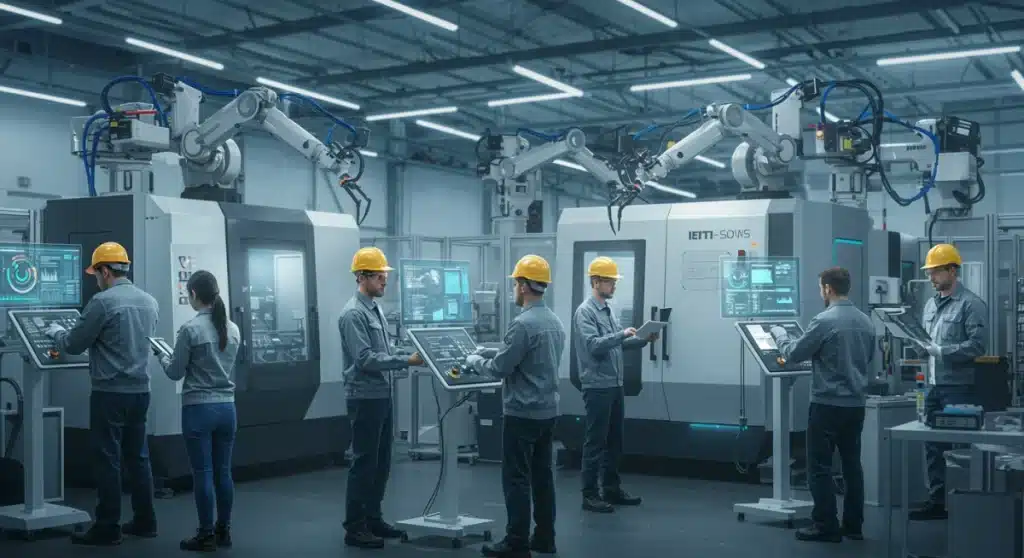
Automation is profoundly transforming US manufacturing, demanding new strategies for job transitions, skill development, and industry adaptation to ensure a robust and competitive workforce in the evolving economic landscape.
The landscape of American industry is undergoing a significant transformation, driven by rapid advancements in technology. One of the most talked-about changes is the impact of automation on US manufacturing: preparing for job transitions.
This shift isn’t just about robots replacing human hands; it’s about redefining roles, creating new opportunities, and challenging the workforce to adapt.
Understanding the Automation Revolution in Manufacturing
The concept of automation in manufacturing isn’t new, but its current pace and sophistication are unprecedented. From advanced robotics to artificial intelligence and machine learning, these technologies are fundamentally altering how goods are produced across the United States. This section explores the core drivers and manifestations of this revolution.
The Rise of Smart Factories and Industry 4.0
Modern manufacturing is increasingly characterized by ‘smart factories,’ where interconnected systems, data analytics, and automation work in concert.
This paradigm, often referred to as Industry 4.0, integrates physical and digital technologies to optimize production processes, improve efficiency, and enhance quality control. It’s a move away from isolated machines to a holistic, data-driven operational environment.
Interconnected Systems: Machines communicate with each other and central systems.
Data Analytics: Real-time data informs decision-making and predictive maintenance.
Robotics and AI: Autonomous systems perform complex and repetitive tasks.
The integration of these elements allows for greater flexibility in production, enabling manufacturers to respond more quickly to market demands and customize products with greater ease. This agility is a significant competitive advantage in today’s global economy.
Key Technologies Driving the Change
Several technologies are at the forefront of this automation wave. Collaborative robots, or ‘cobots,’ work alongside human employees, assisting with tasks that require precision or heavy lifting.
AI-powered vision systems are enhancing quality inspection, identifying defects with unparalleled accuracy. Furthermore, advanced software platforms are optimizing supply chains and production scheduling, reducing waste and improving overall resource utilization.
These technologies are not merely replacing human labor but are augmenting human capabilities, allowing workers to focus on more complex, creative, and strategic tasks. The objective is often to enhance productivity and safety rather than outright elimination of jobs, though job roles inevitably shift.
In essence, the automation revolution is transforming manufacturing into a more intelligent, efficient, and responsive sector. This evolution necessitates a deeper understanding of its implications for the workforce and proactive strategies for managing the inevitable job transitions that will follow.
The Shifting Landscape of Manufacturing Jobs
As automation becomes more prevalent, the nature of jobs within the US manufacturing sector is undergoing a profound transformation. While some roles may diminish, new ones are emerging, demanding a different set of skills from the workforce. This shift presents both challenges and opportunities for American workers.
Decline of Repetitive and Manual Labor Roles
Historically, manufacturing has relied heavily on repetitive manual labor. Assembly line workers, machine operators, and material handlers, among others, have formed the backbone of the industry. However, these are precisely the types of tasks that automation excels at. Robots can perform repetitive actions with greater speed, precision, and consistency, often around the clock, without fatigue or error.
This does not necessarily mean mass unemployment; rather, it signals a reallocation of human effort. Workers previously engaged in these roles will need to transition into positions that leverage uniquely human capabilities or interact with automated systems. The decline in these traditional roles is a primary concern for many, highlighting the urgency of effective transition strategies.
Emergence of New Roles and Skill Demands
The rise of automation creates a demand for new types of jobs. These include roles in robotics programming, data analysis, system maintenance, and human-robot collaboration. For example, ‘cobot operators’ work directly with collaborative robots, overseeing their functions and ensuring smooth integration into the workflow. ‘Predictive maintenance technicians’ use data to anticipate and prevent machine failures, a critical function in highly automated environments.
Robotics Technicians: Install, maintain, and troubleshoot robotic systems.
Data Scientists: Analyze production data to optimize processes and identify trends.
Automation Engineers: Design, implement, and manage automated systems.
These new roles often require a blend of technical expertise, problem-solving abilities, and soft skills such as critical thinking and adaptability. The shift is from purely physical labor to cognitive and technical engagement with complex systems.
The evolving job landscape in manufacturing underscores the need for continuous learning and skill development. Understanding these shifts is the first step in preparing the workforce for a future where humans and machines collaborate to drive industrial progress.
Challenges and Opportunities for the Workforce
The integration of automation into US manufacturing presents a dual-edged sword: significant challenges for existing workers and equally significant opportunities for those willing to adapt. Navigating this transition effectively requires proactive measures from individuals, industries, and policymakers alike.
Addressing Job Displacement Concerns
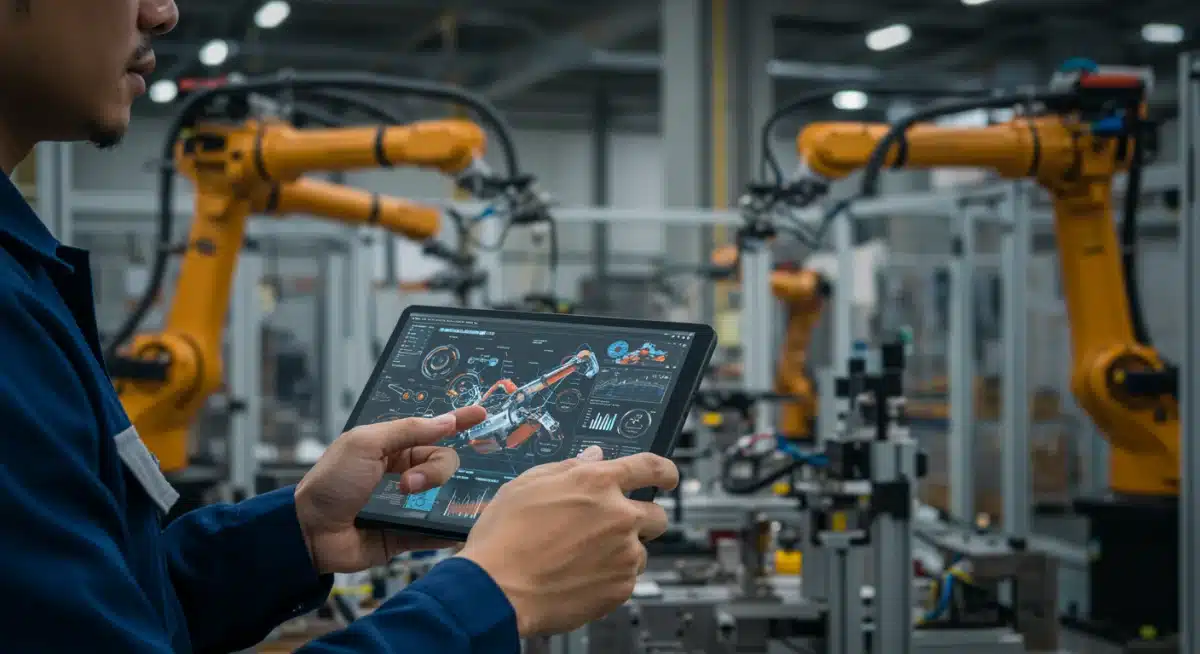
One of the most pressing concerns surrounding automation is the potential for widespread job displacement. While new jobs emerge, the skills required for these roles often differ vastly from those of traditional manufacturing positions. This creates a skills gap, leaving some workers vulnerable to unemployment if they cannot retrain or upskill.
The psychological impact of potential job loss, coupled with the economic uncertainty it creates, is a major challenge. It necessitates robust social safety nets and comprehensive support systems to assist workers through periods of transition. Open communication from employers about automation plans can also help mitigate fear and facilitate smoother transitions.
The Imperative of Upskilling and Reskilling
For individuals, the primary opportunity lies in upskilling and reskilling. Upskilling involves enhancing existing skills to perform current jobs more effectively in an automated environment, while reskilling means acquiring entirely new skills for different roles. This continuous learning approach is no longer a luxury but a necessity for career longevity in manufacturing.
Digital Literacy: Understanding and interacting with digital interfaces and software.
Data Interpretation: Analyzing information from automated systems to make informed decisions.
Problem-Solving: Addressing complex issues that arise from integrated human-machine systems.
Collaboration: Working effectively with both human colleagues and automated machinery.
Government initiatives, educational institutions, and private companies all have a role to play in providing accessible and relevant training programs. These programs must be agile, responding to the rapidly evolving needs of the industry.
Ultimately, while automation poses challenges, it also offers a chance to elevate the manufacturing workforce to higher-skilled, more rewarding roles. The key is to embrace lifelong learning and proactive adaptation.
Strategies for Workforce Development and Education
To effectively navigate the changes brought by automation, a concerted effort in workforce development and education is crucial. This involves collaboration between educational institutions, government bodies, and private industries to equip workers with the necessary skills for future manufacturing jobs.
Partnerships Between Academia and Industry
One of the most effective strategies is fostering stronger partnerships between universities, community colleges, and manufacturing companies.
These collaborations can ensure that educational curricula are aligned with industry needs, producing graduates who are immediately valuable to automated factories. Internships, apprenticeships, and co-op programs provide vital hands-on experience.
Community colleges, in particular, are well-positioned to offer vocational training and certifications in areas such as robotics, advanced manufacturing technologies, and industrial data analytics. Their accessibility and focus on practical skills make them ideal hubs for reskilling existing workers and training new entrants.
Government Initiatives and Funding
Government plays a critical role in supporting workforce transitions through funding, policy, and infrastructure. This can include grants for training programs, tax incentives for companies investing in employee development, and the establishment of national or regional centers for advanced manufacturing training.
Policies that encourage lifelong learning and provide unemployment benefits during retraining periods can also ease the burden on transitioning workers.
Investing in digital infrastructure and promoting broadband access in rural manufacturing areas is also essential to ensure equitable access to online learning resources and remote work opportunities that may arise from automation.
Company-Led Training and Internal Mobility
Forward-thinking companies are taking the initiative to develop internal training programs for their employees. This not only retains valuable institutional knowledge but also fosters employee loyalty and adaptability.
Companies can establish dedicated training academies, offer tuition reimbursement for relevant courses, or implement mentorship programs to facilitate skill transfer.
Encouraging internal mobility, where employees can transition from one role to another within the same company after receiving appropriate training, is another effective strategy. This demonstrates a commitment to the workforce and helps mitigate the fear of displacement.
By combining these various strategies, the US can build a robust and adaptable manufacturing workforce capable of thriving in an increasingly automated world.
The Economic and Social Implications of Automation

Beyond individual job transitions, the widespread adoption of automation in US manufacturing carries significant economic and social implications. These effects ripple through local communities, national competitiveness, and the very fabric of American society.
Impact on Regional Economies and Communities
Manufacturing has historically been a cornerstone of many regional economies in the US. The shift towards automation can have uneven impacts, potentially exacerbating economic disparities if not managed carefully.
Communities heavily reliant on traditional manufacturing jobs may face significant challenges, including reduced employment opportunities and a shrinking tax base, leading to broader social issues.
Conversely, regions that successfully adapt by investing in advanced manufacturing and workforce training can become hubs of innovation and high-tech employment. This requires strategic planning at the local and state levels to attract new industries and support existing ones through technological transitions.
Boosting Competitiveness and Productivity
From an economic standpoint, automation is crucial for enhancing the competitiveness of US manufacturing on a global scale. Automated processes lead to higher productivity, reduced production costs, and improved product quality.
This allows American manufacturers to compete more effectively with countries that have lower labor costs, potentially leading to reshoring of production and strengthening domestic supply chains.
Increased Output: Machines can work faster and longer than humans.
Cost Reduction: Lower labor costs and reduced waste.
Quality Improvement: Greater precision and consistency in production.
Higher productivity also contributes to economic growth, allowing for greater investment in research and development, which further fuels innovation. This positive feedback loop can create a more dynamic and resilient manufacturing sector.
Addressing Equity and Social Justice
The transition to an automated manufacturing sector also raises important questions about equity and social justice. Ensuring that the benefits of automation are widely shared, and that vulnerable populations are not left behind, is paramount.
This includes providing equitable access to education and training, ensuring fair labor practices in new automated roles, and exploring policies such as universal basic income or expanded unemployment benefits to support those most affected.
A proactive approach to these social implications is essential to prevent widening societal gaps and to foster an inclusive economic future for all Americans. The goal is not just economic efficiency, but also social well-being.
Policy Responses and Future Outlook
Effective policy responses are critical to managing the impact of automation on US manufacturing and ensuring a positive future for the American workforce. A forward-looking approach involves collaboration across government, industry, and education to create an adaptive ecosystem.
Government’s Role in Guiding Transition
Government policies can significantly influence the trajectory of automation’s impact. This includes investing in research and development for new manufacturing technologies, providing incentives for companies to adopt automation responsibly, and establishing robust worker retraining programs. Policies that encourage investment in human capital alongside technological capital are vital.
Furthermore, regulatory frameworks need to evolve to address issues such as data privacy, cybersecurity in interconnected factories, and the ethical implications of AI and robotics. A balanced approach that fosters innovation while protecting workers and society is essential.
Education Reform and Lifelong Learning
Reforming the education system to prioritize STEM (Science, Technology, Engineering, and Mathematics) education from an early age is crucial.
Cultivating critical thinking, problem-solving, and digital literacy skills will prepare future generations for a highly automated world. Emphasizing vocational training and technical certifications at the secondary and post-secondary levels will also provide direct pathways to new manufacturing jobs.
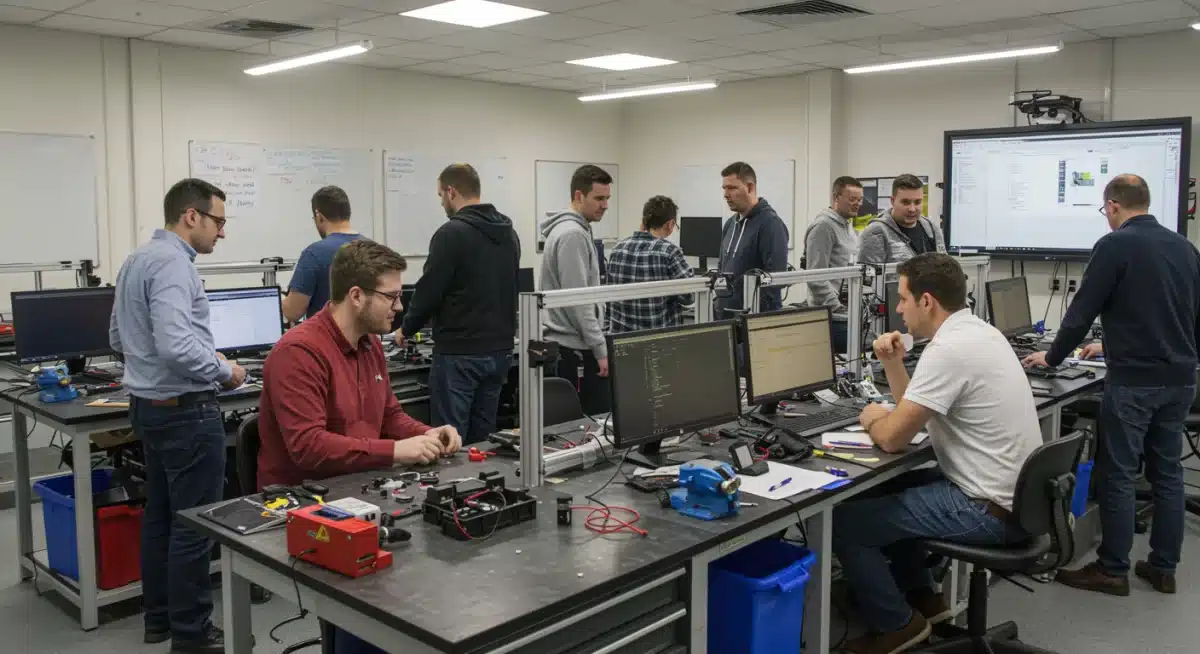
The concept of lifelong learning must become ingrained in the workforce culture. This means accessible and affordable opportunities for adults to continuously update their skills, whether through online courses, employer-sponsored training, or community programs. Governments can facilitate this by subsidizing learning initiatives and creating platforms for skill verification.
Adapting Business Models and Innovation
Businesses themselves must adapt their models to thrive in an automated environment. This includes investing in new technologies, but also rethinking organizational structures to promote human-machine collaboration. Fostering a culture of innovation, where employees are encouraged to experiment and contribute to process improvements, will be key.
Companies that prioritize their workforce through transparent communication, retraining initiatives, and opportunities for growth will be better positioned to attract and retain talent in a competitive landscape. The future of US manufacturing hinges on a collaborative and adaptive ecosystem where technology serves to empower, rather than diminish, the human element.
| Key Aspect | Brief Description |
|---|---|
| Job Transformation | Automation shifts roles from manual to technical, requiring new skills like robotics programming and data analysis. |
| Upskilling Imperative | Continuous learning and acquiring digital and technical skills are crucial for workforce adaptability. |
| Economic Competitiveness | Automation boosts productivity and quality, enhancing US manufacturing’s global standing. |
| Policy & Education | Government support and education reform are vital for smooth transitions and future workforce readiness. |
Frequently Asked Questions About Automation in Manufacturing
Automation often shifts job requirements rather than completely eliminating roles. While some repetitive tasks are automated, new positions in programming, maintenance, and oversight emerge, requiring workers to adapt and acquire new skills to maintain job security.
Key skills include robotics programming, data analytics, cybersecurity, advanced machine operation, and problem-solving. Soft skills like critical thinking, adaptability, and collaboration are also becoming increasingly important for human-machine interaction.
Community colleges are vital, offering vocational training, certifications, and associate’s degrees in advanced manufacturing technologies. They provide accessible and practical education for both new entrants and existing workers seeking to reskill or upskill for new roles in automated factories.
Automation can lead to job creation, particularly in areas like system design, integration, maintenance, and data management. While some traditional roles may be displaced, the overall economic growth and increased competitiveness driven by automation can foster new opportunities across the sector.
Companies can support employees by investing in internal training programs, offering tuition assistance for relevant courses, providing clear communication about upcoming changes, and facilitating internal mobility to new roles that leverage emerging technologies and skills.
Conclusion
The journey of automation in US manufacturing is not merely a technological upgrade; it is a fundamental restructuring of work, demanding foresight and concerted action. While the prospect of job transitions can be daunting, the opportunities for a more productive, competitive, and innovative manufacturing sector are immense.
By prioritizing workforce development, fostering strong partnerships between industry and education, and implementing supportive government policies, the United States can ensure a resilient and adaptable workforce capable of thriving in the automated era. The future of American manufacturing hinges on our collective ability to embrace change, invest in human potential, and proactively shape a future where technology and human ingenuity work hand-in-hand.