US Copyright Laws 2026: Your Essential Guide
As we approach 2026, the landscape of US Copyright Laws continues to evolve, presenting both challenges and opportunities for creators, businesses, and consumers. Navigating this intricate legal framework is essential for anyone involved in producing or utilizing creative works, ensuring compliance and safeguarding intellectual property.
The evolving landscape of US Copyright Laws
The digital age has profoundly reshaped how creative works are produced, distributed, and consumed, leading to constant pressures for copyright law to adapt.
In 2026, we anticipate continued efforts to modernize these laws, addressing issues that were unforeseen when many foundational statutes were enacted. This ongoing evolution aims to strike a balance between protecting creators’ rights and fostering innovation and public access to information.
Understanding these shifts is not merely a legal formality; it’s a strategic necessity. For artists, musicians, writers, and software developers, knowing their rights is paramount to securing fair compensation and control over their creations. For businesses, compliance with copyright law minimizes legal risks and supports responsible use of intellectual property.
Key legislative trends influencing copyright
Several legislative trends are likely to shape US copyright in the coming years. Discussions often revolve around the scope of fair use in digital contexts, the liability of online platforms for user-generated content, and the international harmonization of copyright standards. These debates reflect a global effort to create a legal framework that can keep pace with technological advancements.
Digital Millennium Copyright Act (DMCA) updates: Expect ongoing discussions and potential amendments to the DMCA, particularly concerning its safe harbor provisions and takedown procedures.
Artificial Intelligence (AI) and copyright: The rise of AI-generated content and AI tools used in creative processes poses complex questions about authorship, ownership, and infringement.
International treaties and agreements: US copyright law is often influenced by international accords, which aim to standardize protections across borders, impacting global content distribution.
The continuous adaptation of US copyright laws reflects a dynamic interplay between technological innovation, economic interests, and fundamental rights. Staying informed about these trends is crucial for anyone operating within the creative and digital economies.
Digital rights management and enforcement in 2026
Digital Rights Management (DRM) and its enforcement mechanisms are at the forefront of copyright discussions, especially as digital content becomes increasingly prevalent.
In 2026, we will see a continued emphasis on robust DRM technologies and more sophisticated enforcement strategies to combat online piracy and unauthorized use of copyrighted material. This involves a multi-faceted approach, combining technological safeguards with legal remedies.
The goal is to protect the economic value of creative works while ensuring legitimate access for consumers. This often leads to a delicate balance, as overly restrictive DRM can sometimes hinder fair use and user experience. Creators and distributors are constantly seeking innovative solutions that are effective without being overly burdensome.
Technological advancements in DRM
New technologies are emerging to make DRM more effective and less intrusive. These include blockchain-based solutions for tracking content ownership and usage, advanced watermarking techniques that are harder to remove, and AI-powered monitoring systems that can detect unauthorized distribution across various platforms. The aim is to create a more secure digital environment for copyrighted works.
Blockchain for content tracking: Immutable ledgers offer transparent and verifiable records of content creation, ownership, and licensing.
AI-powered content identification: Sophisticated algorithms can quickly scan the internet for infringing content, enabling faster takedowns.
Enhanced encryption methods: Stronger encryption protocols make it more difficult for unauthorized users to access and copy protected content.
Enforcement efforts are also becoming more proactive, with copyright holders utilizing data analytics to identify piracy hotspots and collaborating with internet service providers (ISPs) to address infringement.
The legal landscape supports these technological advances, providing frameworks for digital takedowns and penalties for those who circumvent DRM. These comprehensive strategies are vital for maintaining the integrity of digital intellectual property.
Fair use doctrine in the digital age
The fair use doctrine, a cornerstone of US copyright law, continues to be a complex and frequently debated topic in the digital age. As creative works are increasingly transformed, sampled, and remixed online, understanding the boundaries of fair use is more critical than ever.
In 2026, judicial interpretations and legislative considerations will further refine what constitutes fair use in contexts ranging from AI training data to online parody and educational content.
Fair use allows for the limited use of copyrighted material without permission from the copyright holder for purposes such as criticism, comment, news reporting, teaching, scholarship, or research.
However, applying these traditional principles to new digital practices often proves challenging, leading to ongoing legal disputes and calls for clearer guidelines. The core of fair use analysis involves a four-factor test, and each factor’s application can vary significantly depending on the specific circumstances of the use.
Understanding the four factors of fair use
Courts typically consider four factors when determining whether a particular use is fair:
Purpose and character of the use: This factor examines whether the use is transformative (adds new meaning or expression) and whether it is for commercial or non-profit educational purposes. Transformative uses are generally favored.
Nature of the copyrighted work: Factual or published works are more likely to be subject to fair use than highly creative or unpublished works.
Amount and substantiality of the portion used: Using a small, insignificant portion of the original work is more likely to be considered fair use. Taking the ‘heart’ of the work, even if a small portion, can weigh against fair use.
Effect of the use upon the potential market for or value of the copyrighted work: This factor considers whether the new use harms the market for the original work, or for potential licensing revenues.
The interplay of these factors is crucial, and no single factor is determinative. The digital environment introduces new complexities, such as how AI models ‘learn’ from vast amounts of copyrighted data, or how social media platforms facilitate the sharing and modification of content. These scenarios continually test the flexibility and adaptability of the fair use doctrine, making it a key area of development in US copyright law.
Protecting your intellectual property: strategies for creators
For creators, understanding and effectively navigating US Copyright Laws in 2026 is non-negotiable. Proactive strategies to protect intellectual property are essential in an environment where digital distribution makes infringement easier and faster.
Whether you are a musician, author, visual artist, or software developer, establishing clear ownership and enforcing your rights can safeguard your creative output and livelihood.
The first step in protecting your work is often the simplest: creating it. Copyright protection automatically attaches to original works of authorship fixed in a tangible medium of expression. However, registration with the U.S. Copyright Office significantly strengthens your legal standing, offering important benefits should infringement occur. This formal step provides a public record of your ownership and is a prerequisite for filing an infringement lawsuit.
Essential steps for copyright protection
Beyond automatic protection, several strategies can enhance your ability to protect and monetize your creative works:
Copyright registration: Registering your work with the U.S. Copyright Office provides statutory damages and attorney’s fees in infringement cases, making enforcement more viable.
Clear licensing agreements: When allowing others to use your work, ensure you have robust and clearly defined licensing agreements that specify usage rights, duration, and compensation.
Digital watermarking and metadata: Embedding identifying information directly intoyour digital files can help track usage and prove ownership.
Monitoring and enforcement: Regularly monitor online platforms for unauthorized use of your work and be prepared to issue takedown notices or pursue legal action if necessary.
Educating yourself about your rights and the available legal tools is a powerful defense against infringement.
Collaborating with legal professionals specializing in intellectual property law can provide invaluable guidance, ensuring your strategies are robust and compliant with the latest legal developments. By taking these steps, creators can confidently navigate the complex world of copyright and secure their valuable intellectual property.
The role of AI in copyright creation and infringement
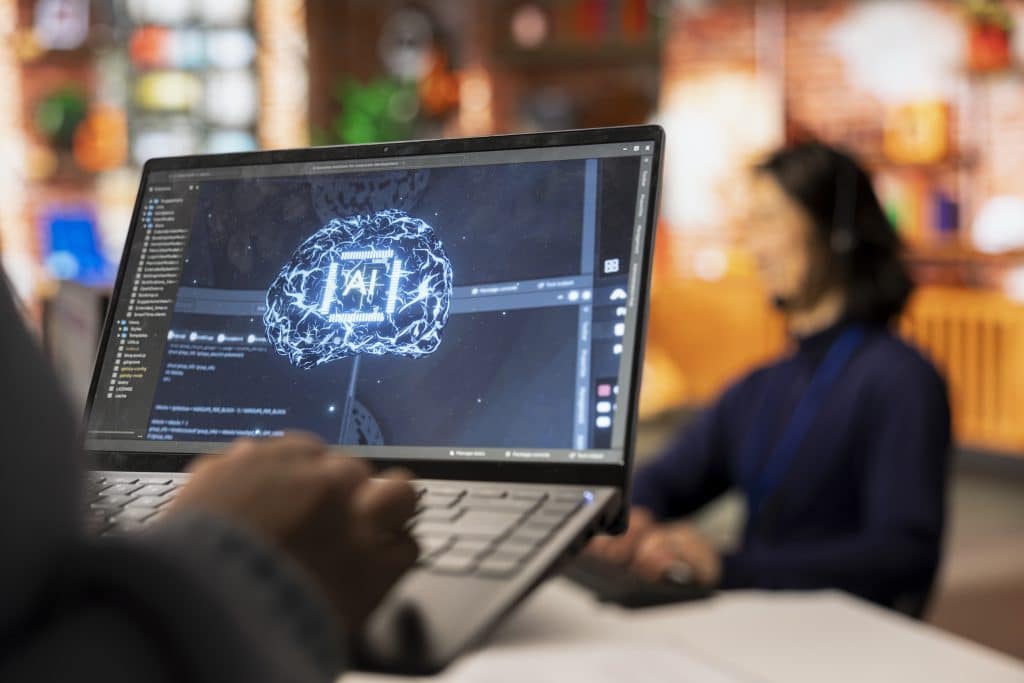
The burgeoning field of artificial intelligence presents a dual challenge to US Copyright Laws in 2026: its role in the creation of new works and its potential for copyright infringement.
As AI tools become more sophisticated, capable of generating text, images, music, and even code, fundamental questions about authorship, ownership, and originality are brought to the forefront. These questions require careful consideration and potential adjustments to existing legal frameworks.
On one hand, AI can be a powerful creative assistant, enabling artists to explore new styles and generate content at an unprecedented scale.
On the other hand, the training of AI models often involves ingesting vast quantities of existing copyrighted material, raising concerns about unauthorized copying and derivative works. The legal system is now grappling with how to apply human-centric copyright principles to machine-driven processes.
Addressing AI-generated content and ownership
Human direction: If a human provides significant creative input and direction to an AI tool, the resulting work might be copyrightable by the human.
AI as a tool: When AI is used merely as a tool, similar to a paintbrush or camera, the human operator remains the author.
Pure AI generation: Works created solely by AI, without human intervention in the creative process, are currently unlikely to be protected by copyright.
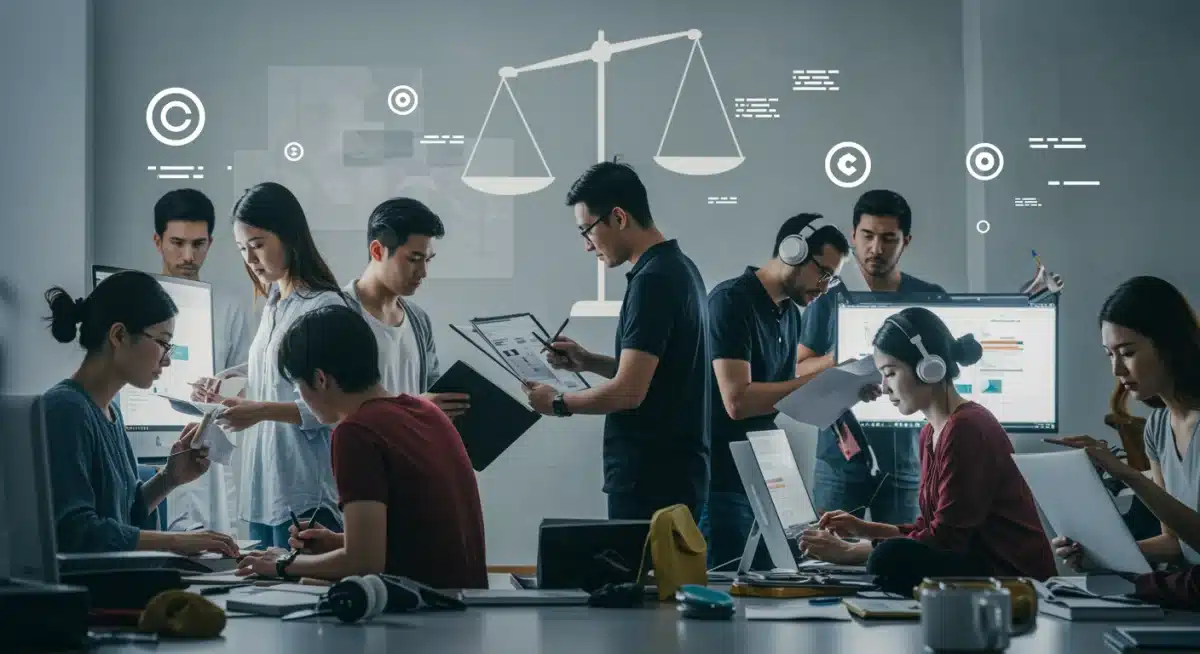
Furthermore, the use of copyrighted material to train AI models is a major area of contention. Copyright holders argue that this constitutes unauthorized reproduction and creates derivative works, while AI developers often claim fair use.
International implications and global copyright harmonization
These efforts aim to provide consistent protection for intellectual property across different jurisdictions, simplifying enforcement and reducing legal complexities for creators and businesses operating globally.
However, achieving complete harmonization is a complex task, as different countries have varying legal traditions, economic priorities, and cultural perspectives on intellectual property.
While there is a general consensus on fundamental principles, specifics such as the duration of copyright, the scope of fair use, and the liability of online platforms can differ significantly. These variations can create challenges for creators seeking to protect their work worldwide and for businesses distributing content internationally.
Key international copyright agreements
Several international agreements form the backbone of global copyright protection, influencing US Copyright Laws and providing frameworks for cross-border enforcement:
Berne Convention for the Protection of Literary and Artistic Works: This foundational treaty establishes minimum standards for copyright protection, including automatic protection without registration and national treatment for foreign works.
WIPO Copyright Treaty (WCT): Addresses copyright in the digital environment, particularly concerning the rights of reproduction, distribution, and communication to the public over digital networks.
Trade-Related Aspects of Intellectual Property Rights (TRIPS) Agreement: Administered by the World Trade Organization (WTO), TRIPS sets out comprehensive standards for intellectual property protection for all WTO member states.
The ongoing dialogue within these international bodies, coupled with bilateral trade agreements, will continue to shape the global copyright landscape.
For US creators and businesses, understanding these international dimensions is crucial for effectively managing their intellectual property rights in an interconnected world. Navigating these global complexities requires a nuanced approach, balancing domestic protections with international obligations and opportunities.
Future outlook: anticipating changes in US copyright law
Looking ahead to the mid-2020s and beyond, the future of US Copyright Laws promises to be a dynamic and evolving field, driven by the relentless pace of technological change. Anticipating these changes is vital for creators, legal professionals, and digital industries to remain compliant and competitive.
The discussions around AI, the metaverse, and new forms of digital expression will undoubtedly lead to further legislative and judicial developments, reshaping how we understand and protect intellectual property.
One major area of focus will likely be the adaptation of copyright law to emerging technologies. The rapid development of immersive virtual environments (the metaverse) and non-fungible tokens (NFTs) introduces new challenges concerning ownership, licensing, and infringement in decentralized digital spaces.
Existing legal frameworks may need significant adjustments to effectively address these novel forms of creation and distribution.
Potential areas of reform and focus
Several specific areas are poised for potential reform or increased scrutiny within US copyright law:
Metaverse and virtual assets: Clarifying copyright ownership and transfer for digital assets within virtual worlds, including virtual real estate, avatars, and unique digital creations.
NFTs and copyright: Defining the relationship between ownership of an NFT and the underlying copyrighted work it represents, particularly regarding reproduction and distribution rights.
Enhanced public education: Increased efforts to educate the public and creators about copyright basics, fair use, and digital rights in an increasingly complex environment.
The evolving landscape of copyright laws is increasingly focused on greater transparency in ownership and easier access to licensing information. These developments in laws aim to simplify how creators, businesses, and consumers navigate intellectual property rights in a rapidly changing digital environment.
| Key Aspect | Brief Description |
|---|---|
| Evolving Digital Landscape | Ongoing modernization of laws to address digital content, online platforms, and global distribution challenges. |
| AI and Copyright | New legal questions regarding authorship, ownership, and infringement for AI-generated works and AI training data. |
| Creator Protection Strategies | Emphasis on copyright registration, clear licensing, and proactive monitoring to safeguard intellectual property. |
| Global Harmonization | Continued international efforts to standardize copyright protections across borders through treaties and agreements. |
Frequently asked questions about US Copyright Laws in 2026
Currently, the U.S. Copyright Office requires human authorship for copyright protection. Works purely generated by AI without significant human creative input are generally not eligible. However, if a human directs the AI as a tool, the human may claim copyright.
Fair use on social media is determined by the same four factors: purpose, nature of the work, amount used, and market effect. Transformative uses, like parody or commentary, are more likely to be considered fair. Commercial uses or extensive copying are less likely.
Yes, copyright registration remains highly important. While copyright protection is automatic, registration with the U.S. Copyright Office provides significant legal advantages, including the ability to sue for infringement and claim statutory damages and attorney’s fees.
The metaverse introduces complex copyright questions regarding ownership of virtual assets, digital identity, and licensing within immersive environments. Existing laws will need adaptation to address these new forms of creation, distribution, and potential infringement effectively.
Conclusion
The landscape of US Copyright Laws in 2026 is one of continuous adaptation and innovation, driven by the relentless pace of technological change. From the complexities of AI-generated content to the global harmonization of intellectual property rights, creators and businesses must remain vigilant and informed.
Proactive engagement with registration, licensing, and monitoring, combined with an understanding of evolving legal interpretations like fair use, will be paramount. As the digital realm expands, safeguarding creative works will require a collaborative effort between lawmakers, technologists, and the creative community to ensure a fair and robust environment for all.