Deepfakes & Disinformation: Protect Yourself from Online Scams
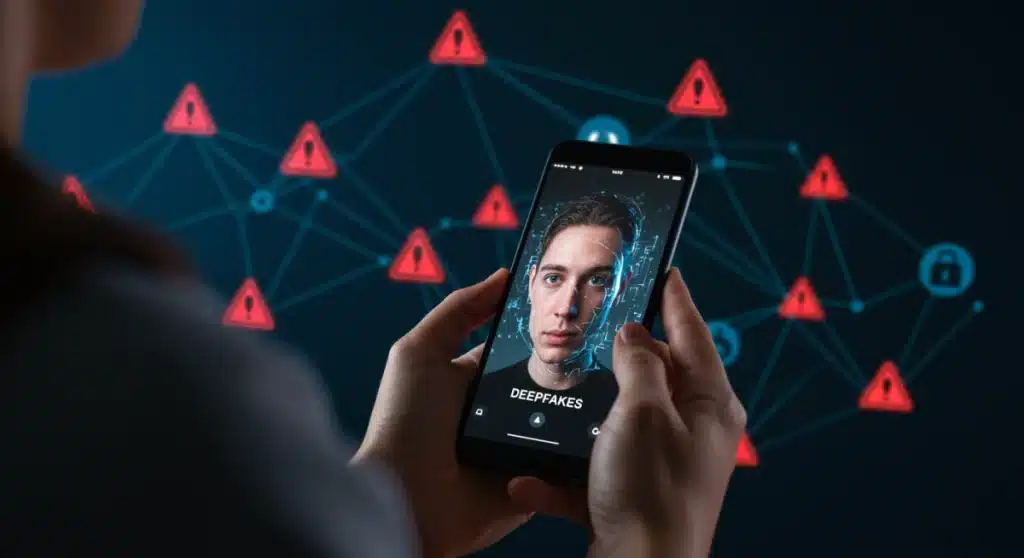
Deepfakes and disinformation represent significant threats in the digital age, requiring individuals to develop critical evaluation skills and implement robust security measures to protect themselves from increasingly sophisticated online scams.
In an era where digital content reigns supreme, the lines between reality and fabrication are increasingly blurred. The rise of deepfakes and disinformation: how to protect yourself from online scams has ushered in a new frontier of digital threats, making it more critical than ever to understand, identify, and combat these pervasive dangers. This guide will equip you with the knowledge and tools needed to navigate this complex landscape safely.
Understanding the deepfake phenomenon
Deepfakes are a rapidly evolving form of artificial intelligence-generated media that can create highly realistic, yet entirely fake, images, audio, and video. These sophisticated manipulations often feature individuals saying or doing things they never did, making them powerful tools for disinformation and online scams.
The technology behind deepfakes leverages deep learning algorithms, specifically generative adversarial networks (GANs), to superimpose existing images or audio onto source material. This process allows for the creation of convincing synthetic media that can be incredibly difficult to distinguish from genuine content, even for trained eyes. The implications of this technology are far-reaching, impacting everything from personal privacy to national security.
The mechanics of deepfake creation
At its core, deepfake technology relies on two neural networks: a generator and a discriminator. The generator creates synthetic media, while the discriminator attempts to identify whether the media is real or fake. Through a continuous feedback loop, both networks improve, leading to increasingly convincing fakes.
- Generative Adversarial Networks (GANs): The foundational AI framework for deepfakes, where two neural networks compete to produce realistic output.
- Autoencoders: Used to compress and decompress data, often for facial swapping in videos.
- Voice synthesis: AI models that can replicate a person’s voice from a small audio sample.
- Synthetic media: Any form of media that is artificially generated or manipulated using AI.
The accessibility of deepfake tools has also grown, moving from highly specialized labs to more user-friendly applications. This democratization of the technology means that malicious actors, even those without extensive technical expertise, can now create and disseminate deepfakes, amplifying the risk of their misuse in online scams and disinformation campaigns. Understanding how these fakes are made is the first step in learning how to identify them.
The growing threat of disinformation campaigns
Disinformation, defined as deliberately false or inaccurate information spread with the intent to deceive, has long been a challenge. However, the advent of deepfakes has endowed disinformation campaigns with unprecedented persuasive power. These campaigns exploit human biases and vulnerabilities, often amplified by social media algorithms.
Modern disinformation tactics often involve a multi-pronged approach, combining text, images, and now deepfake videos or audio to create compelling narratives designed to mislead. These campaigns can target individuals, organizations, or even entire populations, aiming to influence public opinion, sow discord, or facilitate financial fraud. The speed at which disinformation can spread online makes it particularly dangerous.
Psychological impact of fabricated content
The human brain is often ill-equipped to process and critically evaluate the sheer volume of information encountered daily, especially when it appears to be from trusted sources or aligns with pre-existing beliefs. Deepfakes exploit this by presenting seemingly credible evidence that bypasses our natural skepticism.
- Confirmation bias: People are more likely to believe information that confirms their existing views, making them susceptible to disinformation.
- Emotional manipulation: Disinformation often taps into strong emotions like fear, anger, or excitement to bypass rational thought.
- Source credibility: Fabricated content can be made to appear as if it originates from reputable news organizations or public figures.
The emotional toll of falling victim to deepfake-driven scams or disinformation can be severe, ranging from financial loss to reputational damage and psychological distress. It is crucial to recognize that these campaigns are not just about spreading lies; they are about eroding trust in institutions, media, and even interpersonal relationships. Developing a healthy skepticism and a critical approach to online content is paramount.
Identifying deepfakes: red flags and warning signs

While deepfake technology is increasingly sophisticated, there are still tell-tale signs that can help individuals identify manipulated content. Developing a keen eye for these anomalies is a vital defense mechanism against online scams and disinformation. No deepfake is perfectly flawless, and understanding common imperfections can empower you.
The challenge lies in the subtlety of these imperfections. Often, deepfakes require careful scrutiny, sometimes frame-by-frame analysis, to detect inconsistencies. However, even without specialized tools, a critical approach and awareness of common deepfake characteristics can significantly improve your ability to spot them. Trusting your instincts when something feels ‘off’ is a good starting point.
Visual and audio inconsistencies
Deepfakes, particularly early versions, often exhibit various visual and audio glitches that can betray their artificial nature. These might include unnatural movements, strange lighting, or distorted audio. As the technology advances, these signs become more subtle.
- Unnatural blinking or eye movements: Deepfake subjects may blink irregularly, too frequently, or not at all.
- Inconsistent lighting or shadows: The lighting on a deepfake subject’s face might not match the surrounding environment.
- Unusual facial expressions: Expressions might appear stiff, exaggerated, or not align with the audio.
- Audio sync issues: Lip movements may not perfectly match the spoken words.
- Robotic or monotone voices: Synthesized voices can sometimes lack natural inflection and emotion.
- Blurring or pixelation: Edges around the deepfake subject, especially the face, might appear blurred or inconsistent.
Beyond these technical tells, consider the context. Does the content seem out of character for the person depicted? Is the information presented highly sensational or emotionally charged? These contextual clues, combined with visual and audio analysis, form a robust framework for identifying potential deepfakes. Always consider the source and the potential motives behind the content.
Common deepfake and disinformation scams
The malicious applications of deepfakes and disinformation are diverse, ranging from financial fraud to reputation damage. Scammers constantly adapt their methods, using these advanced tools to create more convincing and personalized attacks. Awareness of these common scam types is crucial for prevention.
These scams often prey on trust and urgency, using fabricated identities or urgent requests to bypass critical thinking. The emotional impact of a seemingly credible deepfake can override rational judgment, making victims more susceptible. Understanding the common scenarios in which deepfakes are deployed can help you anticipate and avoid them.
Types of deepfake-enabled fraud
Deepfakes amplify the effectiveness of traditional scamming techniques by adding a layer of apparent authenticity. This makes them particularly dangerous in scenarios where visual or auditory verification is expected.
- CEO fraud/Business Email Compromise (BEC): Deepfake audio or video is used to impersonate a CEO or executive, ordering fraudulent wire transfers.
- Romance scams: Scammers use deepfake videos or images to create fake personas, building emotional connections to solicit money.
- Political manipulation: Fabricated videos of public figures making controversial statements can sway public opinion or spread misinformation.
- Extortion and revenge porn: Deepfakes are used to create non-consensual intimate imagery for blackmail.
- Phishing and identity theft: Deepfake videos or audio can be used in highly personalized phishing attempts to extract personal information.
The key takeaway is that if a request or piece of information seems too urgent, too good to be true, or emotionally manipulative, it warrants extreme skepticism. Always verify information through independent channels, especially when it involves financial transactions or highly sensitive personal data. Never trust a voice or face alone when a deepfake could be involved.
Protecting yourself from online scams: practical steps
Navigating the digital landscape requires a proactive approach to security. Protecting yourself from online scams, especially those involving deepfakes and disinformation, involves a combination of critical thinking, robust digital hygiene, and staying informed. It’s about building a resilient defense against evolving threats.
No single solution offers complete protection, but by integrating multiple layers of security and adopting skeptical habits, you can significantly reduce your vulnerability. Think of it as a personal cybersecurity toolkit, constantly updated and refined. The goal is to make yourself a less attractive target for malicious actors.
Essential digital safety practices
Beyond identifying deepfakes, strong general cybersecurity practices form the bedrock of protection against all types of online scams. These habits are fundamental to securing your digital presence.
- Strong, unique passwords: Use complex passwords for all accounts and enable two-factor authentication (2FA) wherever possible.
- Software updates: Keep all operating systems, browsers, and applications updated to patch security vulnerabilities.
- Antivirus and anti-malware: Install reputable security software and perform regular scans.
- Backup data: Regularly back up important files to protect against ransomware and data loss.
- Privacy settings: Review and adjust privacy settings on social media and other platforms to limit shared information.

Additionally, be wary of unsolicited messages, emails, or calls, especially those asking for personal information or urgent action. Scammers often create a sense of urgency to bypass your rational judgment. Always verify the sender’s identity through an independent channel before responding or clicking any links. Your vigilance is your first line of defense.
The role of critical thinking and media literacy
In an age saturated with information, the ability to critically evaluate content is perhaps the most powerful tool against deepfakes and disinformation. Media literacy is no longer a niche skill but a fundamental requirement for informed citizenship and personal safety online. It empowers individuals to question, analyze, and verify information.
Critical thinking involves more than just spotting errors; it’s about understanding the context, motivation, and potential biases behind any piece of information. It encourages a healthy skepticism, prompting you to ask who created this, why, and what evidence supports it. This mindset is vital in discerning truth from fiction in the digital realm.
Strategies for content verification
Developing effective strategies for verifying online content is crucial. This involves actively seeking out multiple perspectives and cross-referencing information from diverse, credible sources. Don’t rely solely on a single source, even if it appears reputable.
- Fact-checking websites: Utilize established fact-checking organizations (e.g., Snopes, PolitiFact, FactCheck.org) to verify claims.
- Reverse image search: Use tools like Google Images or TinEye to check the origin and context of images and videos.
- Multiple sources: Compare information across several reputable news outlets and academic sources.
- Consider the source: Evaluate the credibility of the source. Is it known for accuracy? Does it have a clear agenda?
- Check publication date: Old information can be repurposed as new disinformation.
By actively engaging in these verification steps, you become a more discerning consumer of information, less susceptible to the manipulative tactics of deepfakes and disinformation. Teach these skills to others, fostering a more informed and resilient online community. Collective vigilance is a powerful deterrent against these growing threats.

Future of deepfakes and ongoing challenges
The landscape of deepfakes and disinformation is constantly evolving. As detection technologies improve, so too do the methods of creation, leading to an ongoing arms race between those who create synthetic media and those who seek to identify it. This dynamic presents continuous challenges for individuals, technology companies, and policymakers alike.
The future likely holds even more sophisticated deepfakes, potentially making current detection methods obsolete. This necessitates continuous research and development in AI forensics and media authentication. Furthermore, the ethical implications of deepfake technology, particularly regarding consent and privacy, will remain a significant area of debate and policy-making.
Technological countermeasures and policy responses
In response to the growing threat, various technological solutions and policy frameworks are being developed to combat deepfakes and disinformation. These efforts aim to provide both technical and legal safeguards.
- AI-powered detection tools: Researchers are developing AI models specifically designed to identify deepfake characteristics.
- Digital watermarking and provenance: Technologies that embed verifiable metadata into media to prove its authenticity and origin.
- Content authentication initiatives: Industry collaborations to establish standards for verifying digital content.
- Legislation and regulation: Governments are exploring laws to penalize malicious deepfake creation and dissemination.
- Public awareness campaigns: Educational initiatives to inform the public about the dangers of synthetic media.
While technology and policy play crucial roles, individual vigilance remains paramount. The sheer volume of online content makes it impossible for any system to catch every piece of disinformation. Therefore, a combination of personal responsibility, technological innovation, and robust regulatory frameworks will be essential in shaping a safer digital future. The battle against deepfakes and disinformation is a shared responsibility.
| Key Point | Brief Description |
|---|---|
| Deepfake Definition | AI-generated realistic fake images, audio, or video used to deceive. |
| Disinformation Threat | Deliberately false information, amplified by deepfakes, to mislead and manipulate. |
| Identification Cues | Look for visual/audio inconsistencies, unnatural movements, and contextual red flags. |
| Protection Strategies | Critical thinking, strong digital hygiene, and verifying information from multiple sources. |
Frequently asked questions about deepfakes and disinformation
The primary danger of deepfakes lies in their ability to create highly convincing fake content that can be used for malicious purposes, such as financial fraud, reputation damage, political manipulation, and extortion. They erode trust in digital media and make it harder to distinguish truth from fabrication, leading to widespread confusion and potential harm.
While advanced deepfakes are challenging, look for inconsistencies: unnatural blinking, odd facial expressions, inconsistent lighting, or robotic audio. Also, consider the context and source. If something feels off or is highly sensational, it warrants closer inspection and verification from multiple trusted sources. Trust your gut feeling.
The legality of deepfakes varies. Creating or sharing deepfakes with malicious intent (e.g., fraud, harassment, non-consensual imagery) is illegal in many jurisdictions. However, deepfakes for satire or artistic expression may be protected. Laws are still evolving to address this technology, reflecting the complex ethical and legal challenges it poses globally.
Misinformation refers to false or inaccurate information spread without intent to deceive. Disinformation, on the other hand, is deliberately false information spread with the explicit intent to deceive or mislead. Deepfakes are primarily tools for disinformation, as they are created specifically to trick audiences into believing fabricated content.
If you encounter a suspicious deepfake, do not share it. Instead, report it to the platform where you found it. Verify the content’s authenticity using fact-checking sites or by cross-referencing with reputable news sources. Educate others about the dangers of deepfakes and always practice critical thinking before accepting online content as fact.
Conclusion
The digital age, while offering unparalleled connectivity and access to information, simultaneously presents formidable challenges in the form of deepfakes and disinformation. Protecting yourself from online scams driven by these sophisticated tools requires a multi-faceted approach. By understanding the mechanics of deepfake creation, recognizing the warning signs, adopting robust digital safety practices, and fostering a strong sense of critical thinking and media literacy, individuals can significantly enhance their resilience against these evolving threats. The battle for truth in the digital realm is ongoing, and personal vigilance, coupled with technological advancements and policy initiatives, will be key to safeguarding our information ecosystem and ensuring a more secure online experience for everyone.