Work Anxiety? 4 Quick Calming Techniques in Under 5 Minutes
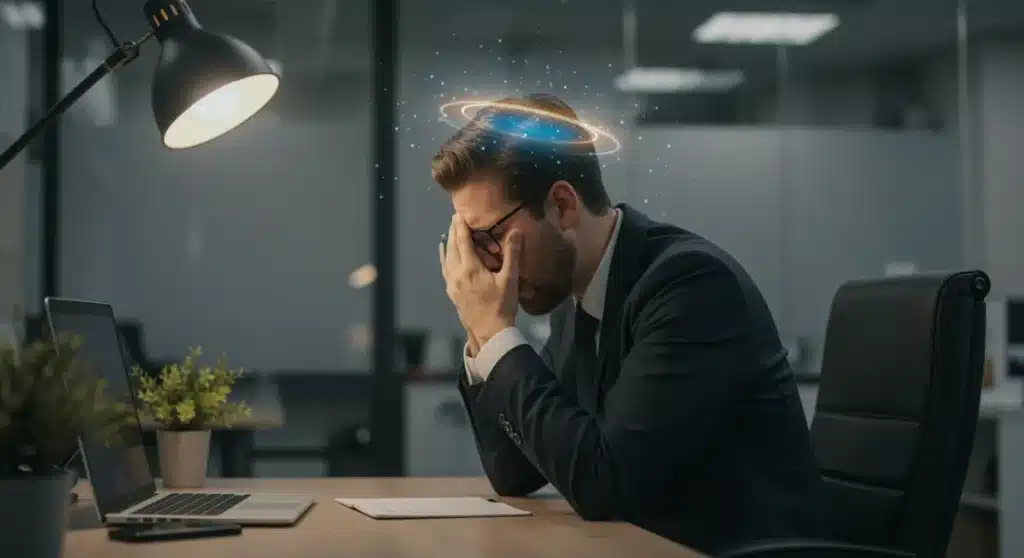
Feeling overwhelmed by workplace pressure? If you’re experiencing work anxiety calming techniques are essential tools for navigating the daily grind in the US.
The fast-paced professional environment often leaves little room for extended breaks, making quick, effective strategies invaluable for maintaining your mental well-being and productivity.
Understanding the Roots of Workplace Anxiety in the US
Workplace anxiety is a pervasive issue across the United States, impacting millions of professionals daily. It’s more than just occasional stress; it’s a persistent feeling of worry, nervousness, or unease, often triggered by job demands, interpersonal dynamics, or the constant pressure to perform.
Recognizing the underlying causes is the first step toward effective management.
The modern American workplace, characterized by high expectations, rapid technological advancements, and often blurred lines between work and personal life, can be a breeding ground for anxiety.
Deadlines, performance reviews, job insecurity, and even open-plan offices can contribute to a heightened sense of stress. Understanding these triggers is crucial for developing targeted coping mechanisms.
Common Triggers and Their Impact
Several factors frequently contribute to workplace anxiety. Identifying these can help individuals better prepare and react to stressful situations.
High Workload and Deadlines: The constant pressure to meet tight deadlines and manage a heavy workload is a primary stressor for many.
Lack of Control: Feeling powerless over one’s tasks, schedule, or career trajectory can lead to significant anxiety.
Interpersonal Conflicts: Disagreements with colleagues or superiors, or a toxic work environment, can severely impact mental health.
Fear of Failure: The worry about making mistakes or not meeting expectations can be paralyzing.
Job Insecurity: Economic fluctuations and organizational changes often create a climate of fear regarding job stability.
The impact of uncontrolled workplace anxiety extends beyond individual discomfort. It can lead to decreased productivity, impaired decision-making, and even physical health problems like headaches, digestive issues, and sleep disturbances.
Over time, chronic anxiety can contribute to burnout and more severe mental health conditions. Therefore, incorporating quick calming techniques is not just about momentary relief but also about long-term resilience.
Technique 1: The 4-7-8 Breathing Method for Instant Calm
When anxiety strikes, our breathing often becomes shallow and rapid, exacerbating the fight-or-flight response. The 4-7-8 breathing method, popularized by Dr. Andrew Weil, is a powerful and discreet technique that can quickly reset your nervous system, promoting a sense of calm in under five minutes.
This method is incredibly effective because it consciously slows down your heart rate and signals to your brain that you are safe.
This technique can be performed anywhere, whether you’re in a busy office, during a stressful meeting, or simply feeling overwhelmed at your desk.
It requires no special equipment or setup, making it an ideal go-to strategy for immediate relief from work anxiety calming techniques. Consistent practice can also enhance its effectiveness over time.
How to Practice 4-7-8 Breathing
Mastering this technique is straightforward, and the steps are easy to remember, even under stress. It’s a simple yet profound way to regain control when your mind is racing.
Preparation: Find a comfortable position. You can be sitting at your desk, standing, or even lying down. Place the tip of your tongue against the ridge of tissue just behind your upper front teeth, and keep it there throughout the entire breathing process.
Exhale Completely: Exhale completely through your mouth, making a ‘whoosh’ sound. This ensures your lungs are empty and ready for a fresh intake of air.
Inhale (4 Counts): Close your mouth and inhale quietly through your nose for a count of four. Focus on filling your lungs slowly and deeply.
Hold Breath (7 Counts): Hold your breath for a count of seven. This pause allows oxygen to circulate more effectively throughout your body.
Exhale (8 Counts): Exhale completely through your mouth, again making a ‘whoosh’ sound, for a count of eight. Make sure to fully empty your lungs.
Repeat this cycle three more times for a total of four breaths. You’ll likely notice a significant shift in your mental and physical state.
The extended exhalation is key to activating the parasympathetic nervous system, which is responsible for rest and digestion, counteracting the stress response. Regular practice of this method can make it an automatic response to stress, enhancing your overall resilience in the workplace.
Technique 2: Progressive Muscle Relaxation (PMR) in Minutes
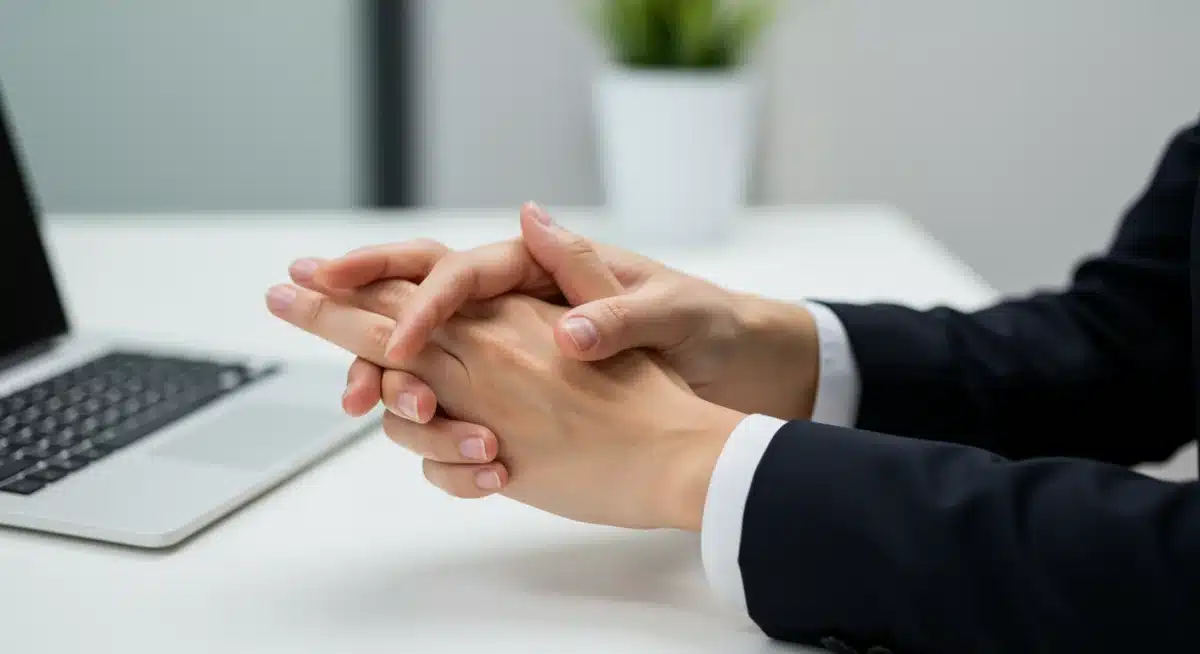
Progressive Muscle Relaxation (PMR) is a technique where you systematically tense and then relax different muscle groups in your body. This simple yet powerful exercise helps you become more aware of physical tension and, more importantly, how to release it.
When anxiety takes hold, our bodies often clench unconsciously, leading to discomfort and perpetuating the stress cycle. PMR breaks this cycle by consciously releasing that tension.
The beauty of PMR is its adaptability. While a full session can take 15-20 minutes, a condensed version can be highly effective in under five minutes, making it a perfect solution for a quick break at your desk. It’s one of the most accessible work anxiety calming techniques because it requires no prior experience and can be done without anyone else noticing.
Targeting Key Muscle Groups Quickly
For a quick PMR session, focus on the muscle groups that tend to hold the most tension during stress: your shoulders, neck, jaw, and hands. By isolating these areas, you can achieve significant relief in a short amount of time.
Hands and Arms: Make a tight fist with your right hand, squeezing as hard as you can for 5 seconds. Feel the tension. Then, release completely for 15 seconds, noticing the sensation of relaxation. Repeat with your left hand.
Shoulders and Neck: Shrug your shoulders up towards your ears, holding for 5 seconds. Feel the tightness. Then, let them drop completely, allowing your neck to lengthen, for 15 seconds. You can also gently roll your neck from side to side if comfortable.
Jaw and Face: Clench your jaw tightly for 5 seconds, noticing the tension around your temples and cheeks. Then, release your jaw, letting your mouth slightly open, for 15 seconds. You might even gently massage your temples.
Legs and Feet: (Optional, if space allows) Tense your thigh muscles and curl your toes for 5 seconds, then release for 15 seconds.
As you practice, pay close attention to the contrast between tension and relaxation. This heightened awareness helps you identify when you’re holding tension unconsciously throughout your workday and gives you the tools to release it.
Regular, short bursts of PMR can prevent tension from accumulating, making you feel more relaxed and less prone to anxiety throughout the day. It’s a proactive approach to managing physical manifestations of stress.
Technique 3: Grounding Through the 5-4-3-2-1 Method
When anxiety or panic sets in, your mind can race, making it difficult to focus on the present moment. The 5-4-3-2-1 grounding technique is a simple yet incredibly effective way to bring your awareness back to your surroundings and interrupt anxious thought patterns.
It engages your five senses, pulling your focus away from internal worries and anchoring you to the here and now. This technique is particularly useful because it can be done discreetly, making it one of the best work anxiety calming techniques for public or professional settings.
This method works by systematically observing your environment, forcing your brain to shift its attention from abstract worries to concrete sensory details. It’s a cognitive distraction that effectively breaks the cycle of rumination, allowing you to regain composure and clarity of thought quickly.
Engaging Your Senses to Reconnect
The 5-4-3-2-1 method is a guided sensory exercise that can quickly bring you back to the present. Follow these steps when you feel anxiety escalating:
5 Things You Can See: Look around and identify five distinct objects. Name them silently or in your head. For example, ‘my computer screen, the pen on my desk, the plant in the corner, a colleague’s jacket, the light fixture.’
4 Things You Can Touch: Notice four things you can feel. This could be the texture of your clothes, the smooth surface of your desk, the feeling of your feet on the floor, or the warmth of your coffee mug.
3 Things You Can Hear: Listen for three sounds around you. This might be the hum of the air conditioning, distant traffic, keyboard clicks, or the faint murmur of conversations.
2 Things You Can Smell: Identify two smells. This could be your coffee, a faint scent from a colleague’s lunch, the smell of paper, or even the subtle scent of your own soap or lotion. If you can’t identify two distinct smells, focus on one, or imagine a pleasant scent.
1 Thing You Can Taste: Notice one thing you can taste. This might be the lingering taste of your morning coffee, a sip of water, or you can even imagine a favorite taste.
By systematically engaging each sense, you force your mind to focus on external stimuli rather than internal anxious thoughts.
This process effectively ‘resets’ your mental state, bringing you back to a more grounded and present awareness. The more you practice this technique, the faster and more effective it becomes in managing acute moments of anxiety at work.
Technique 4: Mindful Minute and Sensory Focus
In the midst of a demanding workday, finding even a minute for mindfulness can seem impossible. However, the ‘Mindful Minute’ is specifically designed to be a quick, accessible burst of awareness that can significantly reduce stress and improve focus.
This technique involves intentionally bringing your attention to a single sensory experience for a brief period, effectively pulling you out of the cycle of anxious thoughts and into the present moment. It’s an excellent addition to your repertoire of work anxiety calming techniques because it’s so adaptable.
Unlike longer meditation practices, a mindful minute doesn’t require silence or a specific posture. It can be done at your desk, in a break room, or even while waiting for a meeting to start. The goal is not to clear your mind completely, but rather to observe whatever is happening in the present without judgment.

Simple Ways to Practice a Mindful Minute
There are numerous ways to practice a mindful minute, depending on your environment and what feels most comfortable. The key is to choose one sensory focus and stick with it for 60 seconds.
Focus on Your Breath: Simply pay attention to the sensation of your breath entering and leaving your body. Notice the rise and fall of your chest or abdomen, the temperature of the air, and the rhythm of your breathing. Don’t try to change it; just observe.
Observe a Single Object: Pick an object on your desk – a pen, a paperweight, a plant – and observe it as if you’ve never seen it before. Notice its colors, textures, shadows, and any imperfections.
Listen to Sounds: Close your eyes (if comfortable) and simply listen to the sounds around you without labeling or judging them. Just let the sounds wash over you.
Mindful Drinking: If you have a glass of water or a cup of coffee, take a mindful sip. Notice the temperature, the taste, the sensations in your mouth and throat.
The beauty of the mindful minute lies in its simplicity and accessibility. By regularly integrating these short bursts of mindfulness into your day, you can train your brain to be more present and less reactive to stressors.
This practice builds resilience, making you less susceptible to the overwhelming feelings of anxiety and more capable of responding thoughtfully to challenges. It’s a small investment of time with significant returns for your mental peace and overall well-being.
Integrating Calming Techniques into Your Workday Routine
Having a toolkit of quick calming techniques is one thing; consistently applying them is another. The real power of these work anxiety calming techniques lies in their integration into your daily routine, transforming them from emergency responses into proactive wellness habits.
This doesn’t require a major overhaul of your schedule, but rather small, intentional shifts in how you approach your day.
Start by identifying specific moments in your workday when anxiety typically peaks. Is it before a big meeting?
During a particularly demanding task? Or perhaps right after lunch when energy levels dip? Pinpointing these triggers allows you to strategically deploy your chosen techniques before anxiety becomes overwhelming.
Making Calm a Habit
Incorporating these techniques doesn’t have to be a chore. Think of them as micro-breaks that refresh your mind and body, similar to stretching after sitting for too long. Here are some practical tips for seamless integration:
Schedule It: Just like you schedule meetings, block out a few 5-minute slots in your calendar for a ‘mindfulness break’ or ‘breathing exercise.’ Even a reminder on your phone can be helpful.
Tie to Existing Habits: Pair a calming technique with something you already do. For instance, practice 4-7-8 breathing after sending a difficult email, or do a quick PMR session before your daily stand-up meeting.
Use Visual Cues: Place a small, calming object on your desk – a smooth stone, a small plant – that serves as a reminder to take a mindful minute when you glance at it.
Practice Consistently: Even when you don’t feel anxious, practice these techniques. Regular practice builds mental muscle, making them more effective when you truly need them. Consistency is far more important than intensity.
Remember, the goal is not to eliminate stress entirely, which is often an unrealistic expectation in a fast-paced environment. Instead, it’s about developing the skills to manage your reactions to stress, thereby reducing its negative impact on your well-being and performance.
By proactively integrating these quick calming techniques, you’re not just reacting to anxiety; you’re building a more resilient, calm, and focused professional self.
Long-Term Strategies for Sustained Well-being
While quick calming techniques are invaluable for immediate relief from acute stress, addressing work anxiety calming techniques effectively also requires a commitment to long-term strategies for sustained well-being.
These strategies aim to build resilience, reduce overall stress levels, and create a more supportive work-life balance. Integrating these practices into your daily life can significantly diminish the frequency and intensity of anxious episodes.
It’s important to view mental health as an ongoing journey, not a destination. Just as we prioritize physical health with diet and exercise, nurturing our mental well-being requires consistent effort and attention. These long-term approaches complement the quick fixes, providing a holistic framework for managing workplace stress in the US.
Building Resilience Beyond Quick Fixes
Sustainable well-being at work involves more than just reacting to stress; it requires proactive steps to strengthen your mental and emotional foundations. Consider these broader strategies:
Prioritize Sleep: Adequate, restorative sleep is fundamental for mental resilience. Aim for 7-9 hours per night to help your brain process information and manage emotions more effectively.
Regular Physical Activity: Exercise is a powerful stress reducer. Even moderate activity, like a brisk walk during lunch, can release endorphins that boost mood and reduce anxiety.
Healthy Nutrition: A balanced diet supports overall brain health and can stabilize mood. Limit caffeine and sugar, which can exacerbate anxiety symptoms.
Set Boundaries: Learn to say no and establish clear boundaries between work and personal life. Avoid checking emails after hours or during weekends to prevent work from encroaching on your downtime.
Seek Social Support: Connect with trusted colleagues, friends, or family members. Sharing your feelings can provide perspective and emotional relief.
Professional Help: If anxiety becomes chronic or debilitating, consider reaching out to a mental health professional. Therapy, such as Cognitive Behavioral Therapy (CBT), can provide effective tools and strategies for managing anxiety.
Mindfulness and Meditation: Beyond the ‘mindful minute,’ consider incorporating longer meditation sessions into your routine. Apps and online resources can guide you through these practices.
By combining these long-term strategies with the immediate calming techniques, you create a robust defense against workplace anxiety.
This comprehensive approach not only helps you cope with stress but also fosters a greater sense of control, well-being, and overall job satisfaction. Remember, investing in your mental health is an investment in your career and your quality of life.
| Technique | Brief Description |
|---|---|
| 4-7-8 Breathing | Consciously regulate breath (inhale 4, hold 7, exhale 8) to calm the nervous system quickly. |
| Progressive Muscle Relaxation | Systematically tense and release key muscle groups to relieve physical tension. |
| 5-4-3-2-1 Grounding | Engage five senses (see, touch, hear, smell, taste) to redirect focus from anxious thoughts. |
| Mindful Minute | Briefly focus on a single sensory experience (e.g., breath, object) to achieve present awareness. |
Frequently Asked Questions About Workplace Anxiety
You can use these techniques whenever you feel anxiety starting to build or when you need a quick mental reset. There’s no fixed schedule; listen to your body and mind. Regular, even daily, practice can also build resilience against future stress.
Yes, these techniques are highly adaptable and discreet, making them suitable for almost any work environment, from open-plan offices to remote settings. They require minimal movement and can often be done without drawing attention.
While these techniques offer immediate relief, they are not a substitute for professional therapy or medical advice for severe or chronic anxiety. They serve as excellent complementary tools but consulting a mental health professional is crucial for persistent issues.
It’s common to struggle with focus during high anxiety. Start with the simplest techniques, like 4-7-8 breathing, and gradually build up. Even a few seconds of intentional focus can make a difference. Practice when you’re calmer to build familiarity.
These techniques are designed to be subtle. For example, 4-7-8 breathing is almost imperceptible. Grounding techniques involve internal observation. Your colleagues are unlikely to notice, allowing you to manage anxiety discreetly and effectively.
Conclusion
Navigating the pressures of the modern American workplace can be challenging, but equipping yourself with effective work anxiety calming techniques is a powerful step towards maintaining your mental and emotional balance.
The four strategies outlined – 4-7-8 breathing, progressive muscle relaxation, the 5-4-3-2-1 grounding method, and the mindful minute – offer immediate, discreet, and highly effective ways to regain composure in under five minutes.
By integrating these quick fixes into your daily routine and complementing them with long-term well-being strategies, you can transform your approach to workplace stress, fostering greater resilience and a more peaceful professional life. Remember, prioritizing your mental health is not just beneficial for you, but also enhances your productivity and overall contribution.