US Social Security Benefits 2026: Updates & Projections

Are you wondering what the future holds for your retirement income? Delving into Understanding US Social Security Benefits: Updates and Projections for 2026 is more than just a financial exercise; it’s a crucial step in securing your future.
Social Security remains a cornerstone of financial stability for millions of Americans, and staying informed about its evolving landscape is absolutely vital.
The foundation of US Social Security Benefits
Social Security, established in 1935, serves as a vital safety net for retired workers, their families, and individuals with disabilities. It’s a complex system funded primarily through payroll taxes, with benefits calculated based on an individual’s earnings history. Understanding its foundational principles is the first step in comprehending future adjustments.
The system operates on a pay-as-you-go basis, meaning current workers’ contributions largely fund the benefits of current retirees.
This intergenerational contract is fundamental to its structure, though it also presents unique challenges as demographics shift. The Social Security Administration (SSA) continuously monitors economic and demographic trends to ensure the program’s long-term viability.
How Social Security is funded
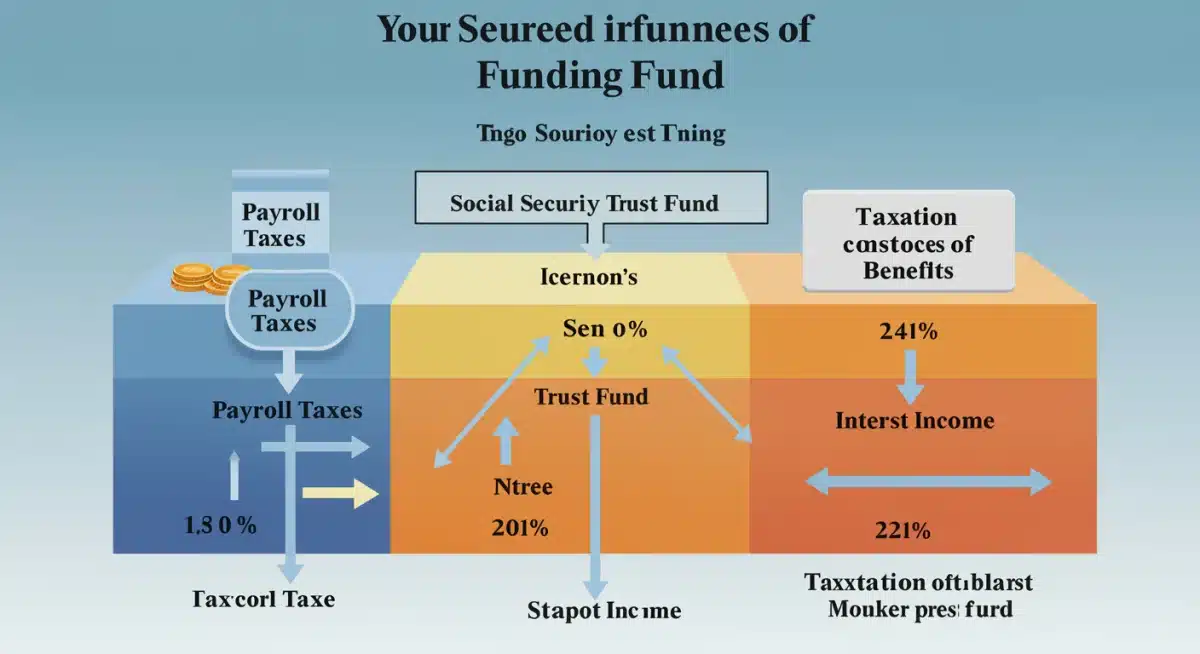
Payroll Taxes: A significant portion of funding comes from the Federal Insurance Contributions Act (FICA) and Self-Employment Contributions Act (SECA) taxes.
Taxation of Benefits: A portion of Social Security benefits received by higher-income beneficiaries is subject to federal income tax, with those revenues directed back to the trust funds.
Interest on Investments: The Social Security Trust Funds invest their reserves in special U.S. Treasury securities, earning interest that further supports the program.
These funding mechanisms collectively ensure that benefits can be paid out. However, changes in demographics, such as increasing life expectancy and declining birth rates, place increasing pressure on this structure, necessitating ongoing evaluation and potential adjustments to maintain solvency.
In essence, Social Security is a robust, yet dynamic, system. Its design aims to provide a basic level of income replacement, protecting beneficiaries from poverty in retirement, disability, and survivorship. Familiarity with these core elements is crucial for anyone seeking to understand the program’s future trajectory.
Key updates for 2026: what to expect
As we look towards 2026, several critical updates and potential changes are on the horizon for US Social Security Benefits. These adjustments are influenced by economic forecasts, legislative discussions, and the ongoing actuarial health of the trust funds. Staying informed about these potential shifts is essential for effective financial planning.
One of the most anticipated updates each year is the Cost-of-Living Adjustment (COLA). While the official COLA for 2026 won’t be announced until late 2025, it will be determined by inflation rates, specifically the Consumer Price Index for Urban Wage Earners and Clerical Workers (CPI-W).
This adjustment aims to ensure that the purchasing power of benefits doesn’t erode over time due to inflation.
Potential COLA projections
Economic analysts and government agencies provide projections for future COLA increases, though these are subject to change. For 2026, initial forecasts will consider inflation trends in the preceding year, as well as broader economic indicators such as wage growth and energy prices. A higher inflation environment typically leads to a more substantial COLA.
Inflationary Pressures: Ongoing global economic factors and domestic demand can influence inflation rates, directly impacting the COLA.
Wage Growth: Strong wage growth can also contribute to higher tax revenues for Social Security, indirectly supporting the program’s stability.
Actuarial Adjustments: The SSA also makes annual adjustments to various thresholds, such as the maximum earnings subject to Social Security tax and the earnings limits for beneficiaries who have not yet reached full retirement age.
These adjustments are not merely technical; they have direct implications for both current beneficiaries and those planning to claim benefits.
For instance, an increase in the maximum earnings subject to tax means higher contributions from high-income earners, while changes in earnings limits affect how much retirees can earn before their benefits are temporarily reduced.
Overall, 2026 is expected to bring a continuation of these regular adjustments, with the COLA being the most prominent. However, deeper legislative changes could also emerge, further shaping the program’s future.
The future of Social Security Trust Funds
The solvency of the Social Security Trust Funds is a perennial topic of discussion and a critical component of understanding the program’s long-term outlook. These funds, specifically the Old-Age and Survivors Insurance (OASI) and Disability Insurance (DI) Trust Funds, hold reserves that are used to pay benefits.
Actuarial reports consistently project that, without legislative changes, the trust funds will eventually be unable to pay 100% of scheduled benefits.
The latest Trustees’ Report typically provides projections for when the combined trust funds might be depleted, meaning they would only be able to pay a percentage of scheduled benefits from ongoing tax revenues.
Factors affecting trust fund solvency
Demographic Shifts: Declining birth rates and increasing life expectancy mean fewer workers are supporting more retirees, altering the worker-to-beneficiary ratio.
Economic Growth: Slower economic growth can lead to lower payroll tax revenues, impacting the funds’ solvency.
Interest Rates: The interest earned on the trust funds’ investments can also influence their financial health.
While the prospect of depletion sounds alarming, it’s crucial to understand that even if the trust funds were depleted, Social Security would not cease to exist.
It would still be able to pay a significant portion of benefits through ongoing tax contributions. The goal of policymakers is to implement changes that ensure full benefits can be paid well into the future.
Various proposals to shore up the trust funds have been debated, including adjustments to the full retirement age, changes to the COLA formula, increases in the payroll tax rate, or modifications to how benefits are calculated.
The timing and nature of any such legislative action will significantly influence the program’s future solvency and the benefits received by future generations.
Monitoring the annual Trustees’ Report and following legislative developments are vital for anyone concerned about the long-term viability of Social Security. These reports provide the most comprehensive and authoritative data on the program’s financial status and projections.
Impact on current and future beneficiaries
The projected updates and long-term outlook for US Social Security Benefits have significant implications for both current retirees and those still in their working years. Understanding these impacts is crucial for making informed decisions about retirement planning and financial security.
For current beneficiaries, the annual COLA is perhaps the most immediate concern, as it directly affects their monthly income.
While designed to keep pace with inflation, the COLA may not always perfectly align with the specific cost increases experienced by seniors, particularly in areas like healthcare. Therefore, retirees often need to supplement their Social Security income with other savings and investments.
Planning for the future
Future beneficiaries, especially younger workers, face different considerations. The discussions around trust fund solvency and potential legislative changes mean that the Social Security program they eventually rely on might look somewhat different from the current one. This necessitates a proactive approach to retirement planning.
Diversify Retirement Savings: Relying solely on Social Security for retirement income is generally not advisable. Diversifying with 401(k)s, IRAs, and other investment vehicles is crucial.
Understand Full Retirement Age: Knowing your full retirement age and the implications of claiming benefits early or delaying them can significantly impact your lifetime benefits.
Stay Informed: Regularly review information from the Social Security Administration and credible financial news sources to stay abreast of policy proposals and changes.
For those nearing retirement, strategic claiming decisions are paramount. Electing to claim benefits at your full retirement age, or even delaying until age 70, can result in substantially higher monthly payments.
This decision should be weighed against your health, other retirement savings, and immediate financial needs. Spousal and survivor benefits also offer opportunities for optimization.
For instance, a lower-earning spouse might claim spousal benefits based on their partner’s work record, potentially receiving more than they would on their own. Divorced individuals meeting certain criteria can also claim benefits based on an ex-spouse’s record without affecting the ex-spouse’s benefits.
Consulting with a financial advisor can help you navigate these complexities and make the most informed decision for your unique situation. Understanding your options and making strategic choices can significantly enhance your financial security in retirement.
Legislative landscape and potential reforms
The legislative landscape surrounding US Social Security Benefits is perpetually active, with various proposals and discussions aimed at ensuring the program’s long-term solvency and adapting it to modern economic realities. These debates often involve complex trade-offs between benefit levels, tax rates, and eligibility rules.
Lawmakers from both sides of the aisle frequently introduce bills and engage in discussions about potential reforms. These proposals range from minor adjustments to more significant overhauls. The challenge lies in finding solutions that are politically feasible, economically sound, and equitable across different generations.
Common reform proposals
Several types of reform proposals consistently surface in policy discussions. Each has its own set of advantages and disadvantages, impacting different groups of beneficiaries and taxpayers in varying ways.
Raising the Full Retirement Age: Gradually increasing the age at which individuals can receive unreduced benefits is often proposed to align with increased life expectancy.
Adjusting the COLA Formula: Modifying how the Cost-of-Living Adjustment is calculated, perhaps using a different inflation index, could slow the growth of benefits.
Increasing the Payroll Tax Cap: Raising or eliminating the maximum amount of earnings subject to Social Security taxes would increase revenue from high-income earners.
Increasing the Payroll Tax Rate: A direct increase in the percentage of earnings contributed to Social Security would boost overall funding.
Modifying Benefit Formulas: Changes to how initial benefits are calculated, potentially making them less generous for higher earners, are also considered.
Any legislative changes would likely be phased in over many years to minimize disruption for those nearing retirement. The political will to enact significant reforms often depends on the urgency of the trust fund’s projections and the broader political climate.
Understanding these potential reforms is crucial for anyone planning their financial future. While specific changes for 2026 are not yet certain, the ongoing dialogue in Congress indicates that modifications to the Social Security system remain a high-priority topic. Staying engaged with these discussions provides valuable insight into the program’s potential evolution.
Maximizing your Social Security Benefits for 2026
With an eye on 2026 and beyond, proactively planning to maximize your US Social Security Benefits is a smart financial move. While legislative changes might occur, there are established strategies individuals can employ to optimize their future income from the program.
The most significant factor influencing your benefit amount is your earnings history. Social Security benefits are calculated based on your 35 highest-earning years. Therefore, consistently working and earning a good income throughout your career directly contributes to a higher primary insurance amount (PIA).
Strategic claiming decisions
When you decide to start receiving benefits plays a pivotal role in the amount you get each month. This is often one of the most impactful decisions you’ll make regarding Social Security.
Claiming Early (Age 62): Results in permanently reduced monthly benefits, though you receive payments for a longer duration.
Claiming at Full Retirement Age (FRA): You receive 100% of your primary insurance amount. Your FRA depends on your birth year.
Delaying Benefits (Up to Age 70): For each year you delay past your FRA, your benefits increase by a certain percentage (currently 8% per year) due to delayed retirement credits, up to age 70.
For many, delaying benefits until age 70, if financially feasible, can lead to a substantially higher monthly payment for the rest of their lives. This decision should be weighed against your health, other retirement savings, and immediate financial needs. Spousal and survivor benefits also offer opportunities for optimization.
For instance, a lower-earning spouse might claim spousal benefits based on their partner’s work record, potentially receiving more than they would on their own. Divorced individuals meeting certain criteria can also claim benefits based on an ex-spouse’s record without affecting the ex-spouse’s benefits.
Consulting with a financial advisor can help you navigate these complexities and make the most informed decision for your unique situation. Understanding your options and making strategic choices can significantly enhance your financial security in retirement.
Navigating disability and survivor benefits

Beyond retirement income, US Social Security Benefits also provide crucial protection through disability and survivor benefits. These components offer a financial lifeline to individuals and families facing unforeseen circumstances, such as a severe illness or the loss of a primary earner.
Social Security Disability Insurance (SSDI) provides payments to individuals who are unable to work due to a severe medical condition that is expected to last at least a year or result in death. Eligibility requires a sufficient work history and payment of Social Security taxes. The application process can be complex and often requires medical documentation and sometimes legal assistance.
Understanding eligibility criteria
For both disability and survivor benefits, specific eligibility criteria must be met. These criteria are designed to ensure that benefits are directed to those genuinely in need, based on the program’s rules.
Disability Benefits: Requires a medical condition preventing substantial gainful activity, expected to last over 12 months or result in death, plus sufficient work credits.
Survivor Benefits: Available to widows, widowers, and dependent children of deceased workers, often with age and relationship requirements.
Dependent Benefits: In some cases, dependent parents or children of a retired, disabled, or deceased worker may also qualify for benefits.
Survivor benefits are particularly important for families who lose a breadwinner. These benefits can provide a percentage of the deceased worker’s basic Social Security benefit to eligible family members, offering critical financial support during a difficult time. The amount depends on the deceased worker’s earnings and the relationship to the survivor.
It’s important to note that the rules for these benefits can be intricate, with various factors influencing eligibility and benefit amounts. For instance, a surviving spouse might have different claiming options depending on their age, whether they are caring for the deceased’s children, and their own work record.
If you or a loved one might be eligible for disability or survivor benefits, reaching out to the Social Security Administration directly or consulting with an expert is highly recommended. Early application and thorough documentation are key to a successful claim.
| Key Aspect | Brief Description |
|---|---|
| 2026 COLA Projections | Anticipated Cost-of-Living Adjustment based on inflation rates, vital for maintaining purchasing power. |
| Trust Fund Solvency | Ongoing debate and projections regarding the long-term financial health of the Social Security Trust Funds. |
| Legislative Reforms | Potential policy changes, such as adjustments to retirement age or tax rates, to ensure program viability. |
| Maximizing Benefits | Strategies like delaying claims and optimizing earnings history to increase monthly Social Security payments. |
Frequently asked questions about Social Security Benefits
The official Cost-of-Living Adjustment (COLA) for 2026 won’t be announced until late 2025. It will be determined by the inflation rate, specifically the Consumer Price Index for Urban Wage Earners and Clerical Workers (CPI-W) from the third quarter of 2025.
While the Social Security Trust Funds currently project an inability to pay 100% of scheduled benefits in the distant future without legislative changes, no immediate reductions are anticipated for 2026. Ongoing legislative discussions aim to address long-term solvency.
You can maximize your benefits by working for at least 35 years, earning a high income, and strategically delaying when you claim your benefits, ideally up to age 70, to earn delayed retirement credits.
Your full retirement age (FRA) depends on your birth year. For those born between 1943 and 1954, it’s 66. For those born in 1960 or later, it’s 67. Claiming before your FRA results in reduced benefits.
Yes, a portion of Social Security benefits can be taxable if your combined income (adjusted gross income + non-taxable interest + half of your Social Security benefits) exceeds certain thresholds, ranging from $25,000 to $34,000 for individuals.
Conclusion
Understanding US Social Security Benefits: Updates and Projections for 2026 is not just an academic exercise but a critical component of personal financial resilience. The program, while complex and subject to ongoing evolution, remains an indispensable pillar of financial security for millions of Americans.
Staying informed about annual adjustments like the COLA, understanding the health of the trust funds, and engaging with potential legislative reforms are all vital steps.
By strategically planning your claiming age, optimizing your earnings history, and diversifying your retirement savings, you can effectively navigate the future landscape of Social Security and ensure a more secure financial future.