US School Zones: Property Taxes & Education Impact
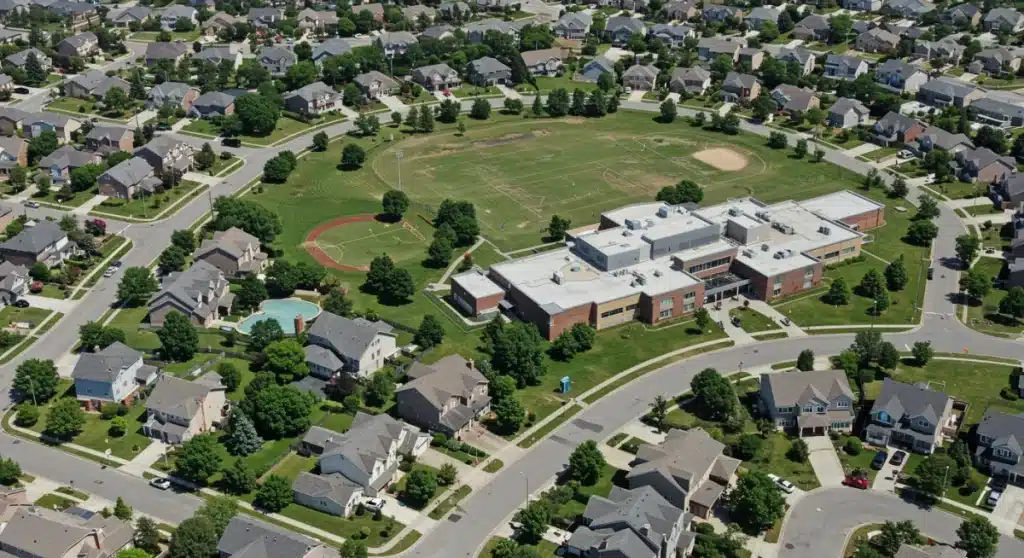
US school zones significantly impact property taxes and children’s education by creating direct links between residential location, local funding, and school quality, influencing both financial burdens and academic opportunities for families.
Have you ever wondered how your address connects to your child’s classroom and your financial ledger? The concept of US school zones is far more intricate than just drawing lines on a map; it profoundly shapes property taxes, home values, and, most importantly, the educational journey of millions of children across the nation. Understanding these zones is crucial for any American family.
the foundational structure of US school zones
The system of school zones in the United States is a cornerstone of local governance and public education. It dictates which public schools a child will attend based on their residential address, a seemingly straightforward concept that carries immense weight in daily life. This geographical delineation is not arbitrary; it is meticulously planned and often contentious, reflecting a complex interplay of demographics, resources, and community aspirations.
These zones are typically drawn by local school districts, which are autonomous governmental units responsible for the administration of public schools within their jurisdiction. The boundaries set by these districts determine everything from school enrollment to the allocation of local educational resources. Understanding how these zones are established and maintained is the first step in appreciating their broader impact on both families and communities.
how school districts define boundaries
School districts employ various criteria when establishing or redrawing school zone boundaries. These considerations are often multifaceted, aiming to balance several competing interests. The process can be highly localized, with significant variations from one district to another, reflecting the diverse needs and priorities of different communities.
- Population Density: Ensuring schools are not overcrowded or under-enrolled.
- Geographic Proximity: Minimizing travel times for students and optimizing bus routes.
- Existing Infrastructure: Utilizing current school buildings efficiently.
- Demographic Balance: Aiming for diverse student populations, though this is often a complex and debated objective.
The decisions made by school boards regarding these boundaries are subject to public input and can often lead to significant debate among residents. Changes to school zones can have immediate and far-reaching effects, influencing everything from neighborhood cohesion to property values. Therefore, transparency and community engagement are vital, though not always perfectly achieved, in this process.
Ultimately, the foundational structure of US school zones is designed to provide public education systematically. While the goal is universal access, the quality and resources available within these zones can vary dramatically, setting the stage for many of the challenges and opportunities discussed throughout this article. It’s a system that, while locally managed, has national implications for educational equity and community development.
the direct link: school zones and property taxes
One of the most immediate and significant impacts of US school zones is their profound effect on local property taxes. In many parts of the United States, public education is primarily funded through local property taxes. This means that the quality of schools in a particular zone often correlates directly with the property values and tax rates of the homes within that zone. It creates a self-reinforcing cycle where desirable school districts attract higher property values, which in turn generate more tax revenue for schools.
When considering a move, many families prioritize access to high-quality schools. This demand drives up home prices in desirable school districts, making properties in these areas a significant investment. Consequently, higher property values translate into higher property tax assessments for homeowners. These increased taxes are then channeled back into the local school system, theoretically enhancing the educational resources available to students in that zone.
how property taxes fund local schools

The mechanism by which property taxes fund schools is relatively straightforward but crucial to understand. Local government entities, often county or municipal, assess the value of real estate within their jurisdiction. A tax rate, usually expressed in mills or as a percentage of the assessed value, is then applied to determine the annual property tax owed by homeowners.
- Assessment: Homes are appraised to determine their market value.
- Tax Rate: A percentage or millage rate is applied to the assessed value.
- Collection: Taxes are collected by local authorities.
- Allocation: A significant portion of these funds is directed to local school districts.
This system means that homeowners in areas with highly-rated schools often pay substantially more in property taxes than those in districts with lower-rated schools. This financial contribution is often seen as an investment in the community’s future and the educational success of its children. However, it also creates disparities, as districts with lower property values struggle to generate sufficient funds, impacting their ability to offer competitive educational programs and facilities.
The direct link between school zones and property taxes is a critical factor for both homeowners and prospective buyers. It influences affordability, investment potential, and the overall financial landscape of a community. Understanding this connection is essential for anyone navigating the real estate market or considering the long-term financial implications of their residential choices.
the educational impact on children and families
Beyond the financial implications, US school zones wield a profound influence on the educational trajectories of children and the overall well-being of families. The quality of schools directly impacts a child’s learning environment, access to resources, and future opportunities. For many parents, securing a spot in a top-rated school district is a primary driver behind their housing decisions, often outweighing other considerations like commute time or home size.
Children attending schools in well-funded districts often benefit from smaller class sizes, a wider array of extracurricular activities, advanced placement courses, and experienced, highly qualified teachers. These advantages can lead to improved academic outcomes, higher graduation rates, and better preparation for college and careers. The ripple effect extends to families, as parents often feel more secure and optimistic about their children’s futures when they are enrolled in strong educational institutions.
access to resources and opportunities
The resources available within a school zone can vary dramatically, significantly affecting a child’s educational experience. These resources are not just about textbooks; they encompass a broad spectrum of programs and facilities designed to enrich learning.
- Advanced Curricula: Offering AP, IB, or specialized STEM programs.
- Extracurricular Activities: A wider selection of sports, arts, and clubs.
- Technology Integration: Access to modern computers, labs, and educational software.
- Support Services: Counseling, special education, and tutoring programs.
- Experienced Educators: Schools in well-funded districts can often attract and retain top teaching talent.
Conversely, schools in less affluent zones may struggle with outdated facilities, limited access to technology, fewer specialized programs, and higher teacher turnover rates. This disparity can create an achievement gap, where children from different zones have vastly different educational opportunities, regardless of their individual potential. For families, this means that the choice of residence inherently shapes the educational landscape available to their children, making the decision a heavily weighted one.
Ultimately, the educational impact of school zones is a central concern for families. It underscores the importance of researching and understanding these boundaries, not just for property values, but for the fundamental right to quality education that every child deserves. The zones are more than administrative divisions; they are gateways to different educational realities.
navigating school zone changes and their implications

School zones are not static entities; they are subject to change, often in response to shifts in population, new housing developments, or district-wide reorganizations. For homeowners and prospective buyers, understanding the potential for these changes and their implications is crucial. A zone change can significantly impact property values, school quality, and family plans, sometimes with little warning.
Districts typically undertake boundary adjustments to address issues such as overcrowding, under-enrollment, or to balance resources across schools. While these changes are often made with the best intentions, they can cause considerable disruption for affected families. Children may be forced to switch schools, friendships might be broken, and commute times could increase, all of which can be stressful for both students and parents.
factors driving boundary adjustments
Several key factors can prompt school districts to consider redrawing their attendance boundaries. These factors are often interconnected and reflect the dynamic nature of communities.
- Population Growth: New housing developments can lead to an influx of students, necessitating boundary shifts to ease overcrowding.
- Declining Enrollment: Some areas experience population decline, leading to underutilized schools and the need to consolidate zones.
- New School Construction: The opening of a new school often requires a complete redrawing of surrounding attendance zones.
- Equity Concerns: Districts may attempt to rezone to create more equitable distribution of resources or to balance demographics.
The process of boundary adjustment usually involves public hearings and community input, but the final decisions rest with the school board. These decisions can be highly contentious, as residents often have deep attachments to their current schools and neighborhoods. For homeowners, a change that moves their property into a less desirable school zone can potentially decrease their home’s value, while moving into a more desirable zone could have the opposite effect.
Therefore, when buying a home, it’s not enough to simply check the current school zone. It’s also wise to research the district’s history of boundary changes, stay informed about any proposed adjustments, and understand the district’s long-term plans. Navigating these potential changes is an important aspect of making informed residential and educational decisions.
the socio-economic disparities perpetuated by school zones
While intended to provide universal access to education, US school zones often inadvertently perpetuate and exacerbate socio-economic disparities. The direct link between property taxes and school funding means that affluent areas tend to have well-funded schools, while lower-income areas struggle with fewer resources. This creates a cycle where educational opportunities are largely dictated by zip code, rather than by individual merit or need.
This disparity is not just about funding; it extends to teacher quality, facility maintenance, availability of advanced courses, and even the types of extracurricular activities offered. Children from less affluent school zones may enter adulthood with fewer academic advantages, potentially limiting their college and career prospects. This further entrenches socio-economic divisions, making upward mobility more challenging for those in under-resourced districts.
the impact on educational equity
The concept of educational equity aims to ensure that every student has access to the resources and opportunities they need to succeed, regardless of their background or where they live. However, the current school zone system often falls short of this ideal. The uneven distribution of resources has several critical implications for equity:
- Unequal Funding: Wealthier districts can levy higher property taxes, leading to more per-pupil spending.
- Teacher Quality Gap: Well-funded schools can offer higher salaries and better benefits, attracting more experienced teachers.
- Resource Disparity: Access to technology, modern facilities, and specialized programs varies significantly.
- Achievement Gaps: These disparities often contribute to differences in test scores, graduation rates, and college enrollment.
Efforts to address these disparities often involve state-level funding equalization formulas, but these are frequently insufficient to fully bridge the gap created by local property tax funding. Advocacy groups and policymakers continually debate reforms to create a more equitable system, but the entrenched nature of property tax funding makes fundamental change challenging.
Understanding the socio-economic disparities perpetuated by school zones is crucial for a comprehensive view of the US education system. It highlights the complex challenges of ensuring that all children, regardless of their residential location, have access to a quality education that prepares them for a successful future. This issue remains a central point of discussion in educational policy and community development.
making informed decisions: research and resources
Given the significant impact of US school zones on property taxes and children’s education, making informed decisions is paramount for families. This requires diligent research and an understanding of available resources to navigate the complexities of school district boundaries, school performance data, and real estate markets. Rushing into a decision without proper investigation can lead to unforeseen financial burdens or educational disappointments.
Prospective homeowners and parents should not rely solely on anecdotes or general reputation. Instead, they should delve into specific data, engage with local communities, and consult with experts to gain a comprehensive understanding of the schools and districts they are considering. This proactive approach ensures that residential choices align with educational aspirations and financial realities.
key resources for school zone research
Fortunately, a wealth of information is available to assist families in their research. Utilizing these resources can provide a clearer picture of what a particular school zone offers.
- School District Websites: Official sites offer boundary maps, academic calendars, curriculum details, and contact information.
- State Department of Education: Provides state-level performance data, accountability reports, and graduation rates.
- Real Estate Agents: Many agents specialize in specific school districts and can offer insights into local market trends and school reputations.
- Online School Review Platforms: Websites like GreatSchools.org or Niche.com offer ratings, parent reviews, and demographic data.
- Local Community Forums: Engaging with local parent groups or online forums can provide firsthand perspectives and experiences.
Beyond online research, visiting schools, attending parent-teacher association (PTA) meetings, and speaking with current parents can offer invaluable qualitative insights. Understanding the school’s culture, administrative philosophy, and community involvement can be just as important as reviewing test scores. Additionally, it’s vital to verify school attendance boundaries directly with the district, as online maps or third-party sites may not always be up-to-date.
Ultimately, making informed decisions about school zones involves a multi-faceted approach. It combines quantitative data with qualitative insights, ensuring that families select a residential area that not only meets their housing needs but also provides the best possible educational environment for their children. This diligent research is an investment in both financial stability and educational success.

the future of school zones: challenges and potential reforms
The system of US school zones, while deeply ingrained, is not without its critics and faces ongoing challenges. As demographics shift, urban centers evolve, and educational philosophies change, there is continuous discussion about potential reforms to create a more equitable and effective system. The future of school zones will likely involve navigating these complex issues, seeking solutions that address historical disparities while adapting to modern needs.
One of the primary challenges is the persistent link between property wealth and school funding, which often leads to significant funding gaps between districts. Addressing this requires innovative approaches to school finance, potentially involving greater state or federal intervention, or alternative funding models that decouple school quality from local property values. Such reforms are politically sensitive and often meet with resistance from communities that benefit from the current system.
innovative approaches and ongoing debates
Discussions around reforming school zones encompass a variety of innovative ideas and ongoing debates aimed at improving educational outcomes for all students. These conversations reflect a desire to move beyond the limitations of the current system.
- District-Wide Choice Programs: Allowing parents to choose schools across district lines, potentially with lottery systems.
- Regional Funding Models: Pooling resources across multiple districts or at the state level to achieve greater equity.
- Magnet Schools: Specialized schools that attract students from various zones, promoting diversity and unique learning opportunities.
- Charter Schools: Publicly funded but independently operated schools that offer alternative educational models.
- Weighted Student Funding: Allocating more funds to schools based on the needs of their student population (e.g., for low-income students, English language learners).
However, each of these potential reforms comes with its own set of challenges. District-wide choice, for instance, can lead to uneven enrollment and still leave some schools struggling. Regional funding may face local resistance over control and resource allocation. The debates are often passionate, reflecting the deeply held belief that education is a critical pathway to opportunity and the desire to protect local community assets.
The future of US school zones will depend on the willingness of communities, policymakers, and educators to engage in constructive dialogue and implement reforms that prioritize educational equity and excellence for all children. It’s a journey toward a system that better serves the diverse needs of a modern society, moving beyond the traditional boundaries to foster greater opportunity and success.
| Key Impact Area | Brief Description of Impact |
|---|---|
| Property Taxes | Higher property values in desirable school zones often lead to increased property taxes, directly funding local schools. |
| Children’s Education | School zones determine access to specific public schools, influencing educational quality, resources, and opportunities. |
| Home Values | Homes located in highly-rated school zones typically command higher market values due to demand. |
| Socio-Economic Disparity | The current system can perpetuate inequalities, with wealthier zones often having better-funded schools and resources. |
frequently asked questions about US school zones
School zones significantly impact property values. Homes in highly-rated school districts are often in higher demand, leading to increased market prices. This premium reflects the perceived value of access to quality education, making properties within these zones a more substantial investment.
Yes, school zone boundaries can change. Districts periodically adjust zones due to population shifts, new construction, or efforts to balance enrollment. It’s crucial to research a district’s history of boundary changes and stay informed about any proposed adjustments to anticipate potential impacts on your property and children’s schooling.
The most reliable way is to check the official website of the local school district. Many districts provide online maps or tools where you can enter an address to determine the assigned schools. Real estate agents also often have access to this information, but direct verification with the district is always recommended.
No, private schools do not follow public school zone rules. Admission to private schools is typically based on applications, interviews, entrance exams, and tuition payments, not on residential address. Families can apply to private schools regardless of their location within or outside a specific public school zone.
If you disagree with your assigned school zone, you can often appeal to the local school district. While challenging, some districts have processes for hardship transfers or specific enrollment exceptions. It’s best to contact the district administration directly to understand their policies and the steps involved in requesting an appeal or transfer.
conclusion
The intricate web of US school zones is undeniably a pivotal factor in the American landscape, influencing not only the financial aspects of homeownership through property taxes but also profoundly shaping the educational opportunities available to children. From the foundational structure of how these zones are drawn to their direct impact on home values and the perpetuation of socio-economic disparities, understanding this system is essential for any family navigating life in the United States. While challenges persist in achieving true educational equity, ongoing discussions and potential reforms offer a glimmer of hope for a future where every child, regardless of their zip code, has access to a quality education. Making informed decisions through diligent research remains the most powerful tool for parents and homeowners alike.