Future of Food in US: Climate Change & 2026 Grocery Shopping
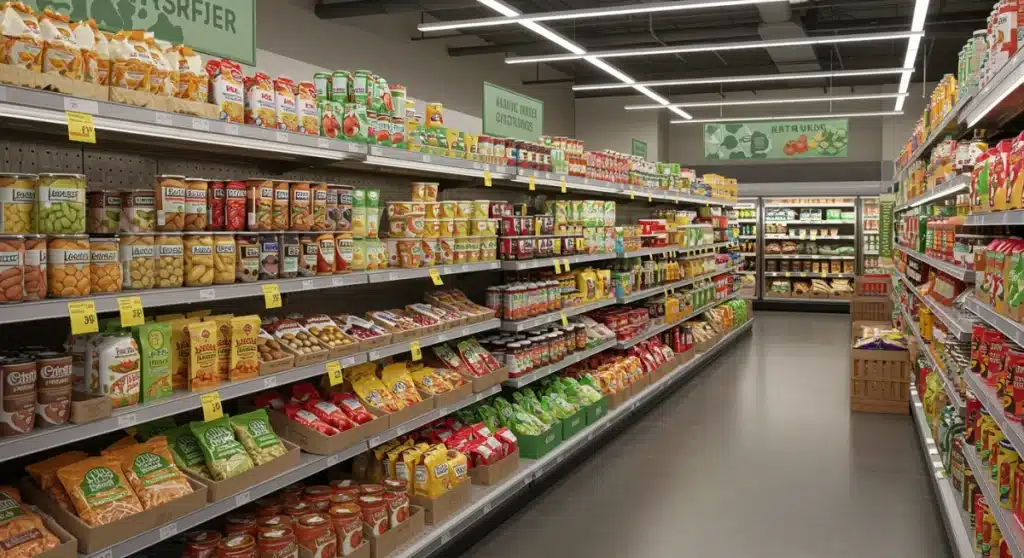
Have you ever paused to consider how the contents of your grocery cart might look different in just a few short years?
The impact of climate change is no longer a distant threat; it’s a present reality that is actively reshaping the future of food in the US: how climate change is reshaping grocery shopping in 2026.
From farm to fork, every aspect of our food system is undergoing a significant transformation, prompting consumers and retailers alike to adapt to an evolving landscape of availability, price, and ethical considerations.
The Unfolding Crisis: Climate Change’s Direct Impact on US Agriculture
The foundation of our food supply is agriculture, and it stands on the front lines of climate change.
Extreme weather events, shifting growing seasons, and increased pest pressures are already forcing American farmers to rethink traditional practices.
This isn’t just about minor adjustments; it’s about fundamental changes to what can be grown where, and how reliably.
Extreme Weather and Crop Yields
Droughts, floods, and unseasonal freezes are becoming more frequent and intense across the US.
These events directly devastate crop yields, leading to scarcity and price volatility for staple foods. Farmers in regions traditionally known for certain crops are finding their livelihoods increasingly precarious.
Water Scarcity: Western states face chronic water shortages, impacting irrigated crops like almonds, fruits, and vegetables.
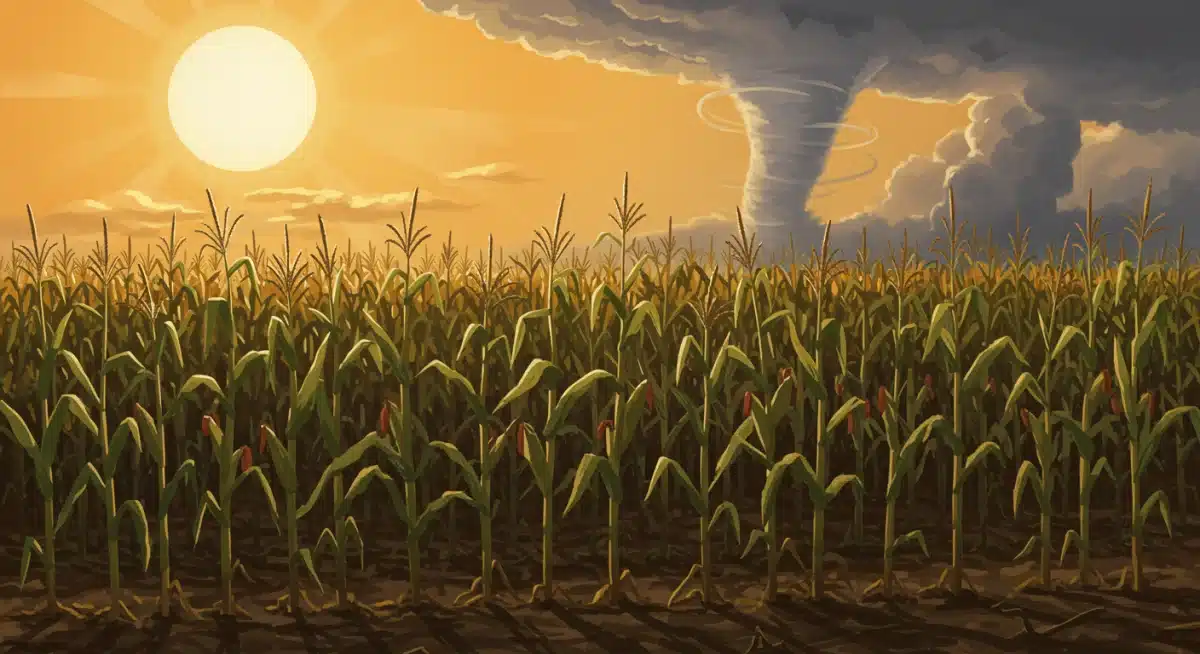
Heatwaves: High temperatures stress plants, reduce pollination, and accelerate ripening, often diminishing quality and quantity for crops like corn and soybeans.
Flooding: Midwestern farmlands, vital for grain production, are increasingly susceptible to destructive floods that wash away topsoil and destroy entire harvests.
Unpredictable Seasons: Fluctuations in spring thaws and autumn frosts disrupt planting and harvesting schedules, making long-term planning challenging.
Pest and Disease Proliferation
Warmer temperatures extend the breeding seasons and geographical ranges of agricultural pests and plant diseases.
This necessitates increased use of pesticides or the development of more resilient crop varieties, both of which come with their own set of environmental and economic implications.
The cumulative effect of these challenges is a less predictable and potentially less abundant food supply.
This directly translates to higher costs for consumers and a greater reliance on resilient farming techniques that can withstand these environmental pressures.
Understanding these agricultural shifts is crucial for comprehending the broader changes heading towards our grocery store shelves.
Supply Chain Vulnerabilities: From Farm to Shelf in a Changing Climate
Beyond the farm, the journey food takes to reach our plates is fraught with its own set of climate-induced challenges.
The complex web of transportation, storage, and distribution—our food supply chain—is highly sensitive to disruptions. By 2026, we can expect to see significant adjustments as companies strive for greater resilience.
Transportation Hurdles and Infrastructure Strain
Climate change impacts transportation in multiple ways. Extreme weather can shut down major highways, rail lines, and ports, delaying deliveries and increasing spoilage. Infrastructure, from roads to bridges, is also vulnerable to damage from floods and severe storms, leading to costly repairs and rerouting.
Fuel Costs: Longer routes due to weather disruptions or damaged infrastructure can increase fuel consumption and transportation costs, passed on to consumers.
Perishable Goods: Delays are particularly detrimental for fresh produce and dairy, leading to higher waste rates and reduced availability.
Labor Shortages: Disruptions can also impact the availability of truck drivers and other essential personnel needed to move goods.
Storage and Preservation Innovations
Maintaining optimal conditions for food storage is becoming more challenging with fluctuating temperatures and increased energy costs.
This drives innovation in cold chain logistics and packaging solutions designed to extend shelf life and reduce waste, even under adverse conditions.
The drive for greater efficiency and reduced environmental footprint within the supply chain will likely lead to more localized sourcing where possible, and more advanced, climate-controlled warehousing.
These adaptations are vital to ensuring a steady flow of goods, even as environmental variables become less stable. The vulnerabilities highlight the need for a more robust and adaptable system capable of absorbing climate shocks.
The Shifting American Palate: Consumer Choices in a New Era
As climate change impacts food availability and prices, American consumers are not passive observers.
Their preferences, purchasing habits, and dietary choices are evolving, driving demand for new categories of food and influencing retailer strategies. By 2026, these shifts will be undeniable in grocery aisles.
Demand for Sustainable and Resilient Foods
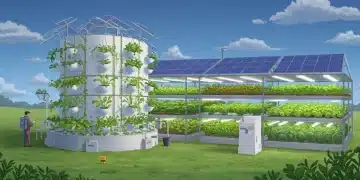
There’s a growing awareness among consumers about the environmental footprint of their food. This translates into increased demand for locally sourced produce, plant-based alternatives, and foods grown using sustainable practices like regenerative agriculture or vertical farming.
Shoppers are actively seeking options that promise less environmental impact.
Plant-Based Boom: The market for meat and dairy alternatives continues to expand rapidly, driven by environmental concerns and health benefits.
Local Sourcing: Consumers are increasingly prioritizing foods from nearby farms to reduce transportation emissions and support local economies.
Certified Sustainable: Labels indicating organic, fair trade, or other sustainability certifications gain more traction as shoppers seek ethical choices.
Price Sensitivity and Food Waste Awareness
Rising food prices due to climate-related disruptions will make consumers more price-sensitive and lead to a greater focus on value.
Simultaneously, awareness of food waste’s environmental impact is growing, prompting shoppers to be more mindful of what they buy and how they consume it.
These evolving consumer behaviors aren’t just fads; they represent a fundamental reevaluation of our relationship with food.
Grocery stores are responding by stocking a wider array of sustainable products, investing in better waste management, and offering more information about food origins. Understanding these shifts is key to anticipating the marketplace of tomorrow.
Grocery Store Innovations: Adapting to Climate Realities
Grocery retailers are at the nexus of these transformations, tasked with meeting evolving consumer demands while navigating supply chain complexities.
By 2026, the physical and operational landscape of grocery stores will reflect a concerted effort to adapt to climate change realities, offering new shopping experiences and product assortments.
Emphasis on Local and Regional Sourcing
To mitigate supply chain risks and cater to consumer preferences for sustainability, grocery stores are increasingly forging relationships with local and regional producers. This reduces transportation distances, supports local economies, and offers a more resilient supply of fresh goods.
Farm-to-Store Programs: Direct partnerships with nearby farms ensure fresher produce and allow for better tracking of sourcing practices.
Regional Distribution Centers: Investing in smaller, strategically located distribution hubs can reduce reliance on long-haul transport.
Community Supported Agriculture (CSA) Integration: Some stores may partner with or host CSA pick-up points, further embedding local food systems.
Technological Integration for Efficiency and Transparency
Technology will play a pivotal role in optimizing operations and providing consumers with more information.
From AI-powered inventory management that minimizes waste to blockchain technology offering farm-to-shelf traceability, innovation is key.
Smart shelves, personalized recommendations based on sustainable choices, and improved cold storage technologies will become more commonplace.
These innovations aim to make the shopping experience more efficient, transparent, and aligned with environmental values, ultimately shaping how we interact with our food sources. The grocery store of 2026 will be a hub of sustainable and tech-forward solutions.
Policy, Regulation, and the Future of Food Security
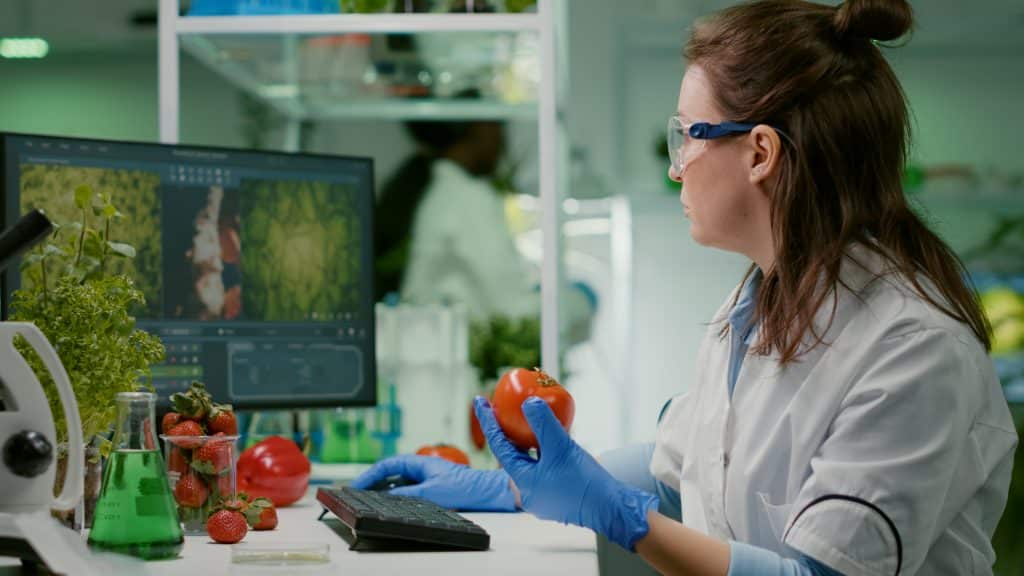
The profound challenges posed by climate change to the food system are not solely a matter for individual consumers and businesses.
Government policies and regulations play a critical role in shaping agricultural practices, supply chain resilience, and ultimately, national food security. By 2026, we anticipate a stronger, more coordinated policy response.
Incentives for Sustainable Agriculture
Federal and state governments are likely to expand programs that incentivize farmers to adopt climate-smart agricultural practices. These include techniques that improve soil health, conserve water, reduce greenhouse gas emissions, and enhance biodiversity, all crucial for long-term food production.
Carbon Sequestration Programs: Payments to farmers for practices that capture carbon in the soil.
Water Conservation Grants: Funding for efficient irrigation systems and water-saving technologies.
Crop Insurance Reform: Adjusting policies to better support farmers adopting climate-resilient crops and methods.
Strengthening Supply Chain Infrastructure
Building a resilient supply chain is fundamental to securing the future of food in the United States. As climate-related disruptions become more frequent, investment in modern, adaptive infrastructure is no longer optional—it is essential.
Strengthening transportation networks, upgrading storage facilities, and decentralizing distribution systems will help protect food availability and stabilize prices in the years ahead.
Upgrading Transportation and Logistics
Transportation plays a critical role in the future of food distribution. Roads, rail systems, ports, and trucking networks must be reinforced to withstand extreme weather events such as floods, hurricanes, and heatwaves.
Delays caused by damaged infrastructure can result in spoiled goods, higher costs, and limited availability on store shelves.
Advanced logistics technologies, including AI-powered route optimization and predictive weather modeling, are expected to enhance the efficiency of food transportation.
These innovations will help retailers anticipate disruptions and reroute shipments quickly, reducing food waste and maintaining consistent supply.
Expanding Cold Storage and Preservation
Cold storage infrastructure is another key pillar supporting the future of food security. Temperature-controlled facilities extend the shelf life of perishable items such as produce, dairy, and meat.
By investing in energy-efficient refrigeration systems and decentralized storage hubs, communities can better withstand supply chain interruptions.
Improved cold storage also reduces spoilage and waste, contributing to both economic savings and environmental sustainability.
In the future of food systems, smarter preservation technologies—including renewable-energy-powered refrigeration and sensor-based monitoring—will become increasingly common.
Developing Regional Food Hubs
Regional food hubs are emerging as a strategic solution for strengthening the future of food supply chains.
These hubs aggregate, process, and distribute locally produced food, shortening transportation distances and supporting regional farmers. By decentralizing distribution networks, food systems become more flexible and less vulnerable to global disruptions.
Shorter supply chains reduce emissions, increase freshness, and improve transparency. As grocery retailers deepen partnerships with local producers, regional hubs will play a growing role in shaping the future of food resilience across urban and rural communities alike.
Evolving Regulatory Frameworks
Policy and regulation will significantly influence the future of food infrastructure. Regulatory frameworks are likely to evolve to promote greater transparency, traceability, and accountability throughout the supply chain.
This may include enhanced labeling standards, sustainability reporting requirements, and incentives for climate-resilient investments.
Stronger oversight ensures that environmental and social impacts are considered at every stage—from farm production to retail shelves. In the future of food governance, policymakers will aim to balance economic efficiency with equitable access to nutritious food.
Policy and Practice Working Together
The success of the future of food adaptation efforts will depend on the alignment between policy initiatives and real-world implementation.
Infrastructure funding, climate adaptation grants, and public-private partnerships must translate into measurable improvements in resilience and access.
By combining smart investment, forward-looking regulations, and collaborative industry practices, the United States can create a more robust and equitable food system.
The interplay between policy and practice will ultimately determine how effectively the nation secures the future of food for all Americans in an era of climate uncertainty.
Consumer Empowerment: Navigating the New Grocery Landscape
As the food system adapts to climate change, consumers will find themselves with both new challenges and new opportunities in their grocery shopping endeavors.
Empowering individuals with knowledge and tools will be crucial for making informed choices that benefit both personal health and planetary well-being. By 2026, proactive consumer engagement will be a defining characteristic of the food landscape.
Informed Purchasing Decisions
Access to clear and concise information about food origins, environmental impact, and ethical sourcing will become paramount. Shoppers will increasingly seek out labels, certifications, and digital tools that provide transparency, allowing them to align their purchases with their values.
Nutritional Transparency: Clearer labeling regarding nutritional content and processing methods.
Environmental Footprint Labels: Information on carbon emissions, water usage, and biodiversity impact of products.
Ethical Sourcing Badges: Certifications indicating fair labor practices and animal welfare standards.
Embracing Food Innovation and Diversity
The future of food in the United States will be defined by innovation, resilience, and diversity. As climate pressures reshape agriculture and consumer expectations evolve, shoppers will be encouraged to explore a broader spectrum of ingredients and products.
Climate-resilient crops, alternative proteins, regenerative farming outputs, and locally adapted varieties will become central pillars of the future food landscape.
Diversification strengthens the future of food systems in multiple ways. Expanding beyond a narrow range of staple crops reduces vulnerability to extreme weather events and market disruptions.
Incorporating drought-resistant grains, heat-tolerant vegetables, and regionally suited produce creates a more adaptable agricultural network.
At the same time, alternative proteins—such as plant-based meats, cultivated proteins, and fermentation-derived ingredients—offer lower environmental footprints while meeting rising global demand.
Expanding Culinary Horizons
The future of food is not only about sustainability—it is also about discovery. Consumers will have opportunities to experiment with new flavors, global ingredients, and culturally diverse recipes.
As grocery stores introduce innovative products, shoppers can expand their culinary experiences while supporting more sustainable production methods.
Retailers are expected to create curated sections highlighting climate-friendly foods, local farm partnerships, and emerging food technologies.
Clear labeling and transparency will empower consumers to understand how their purchases align with environmental goals. In the future of grocery shopping, education will be seamlessly integrated into the retail experience.
The Role of Education and Awareness
Educational initiatives will play a crucial role in shaping the future of food choices. In-store signage, QR codes, digital apps, and online resources will help consumers learn how to prepare unfamiliar ingredients and understand their environmental impact.
Cooking demonstrations, sustainability scores, and transparent sourcing information will make innovation more accessible.
As awareness grows, consumers will gain confidence in trying new foods that support climate resilience and biodiversity.
The future of food depends on informed decision-making—when shoppers understand the benefits of alternative proteins, seasonal produce, and regenerative farming, they are more likely to incorporate these options into their diets.
Collective Consumer Power
Ultimately, the future of food will be shaped by collective consumer demand. Every purchase signals preference. When shoppers consistently choose sustainable, locally sourced, and innovative products, retailers and producers respond by scaling those offerings.
This market-driven transformation accelerates the transition toward a more resilient food system.
The empowered shopper of 2026 will not simply react to changes in the grocery aisle—they will actively influence the future of food systems.
By embracing innovation, supporting diversity, and making informed choices, consumers become agents of positive environmental and economic change. In this evolving landscape, the grocery store becomes more than a place to buy food—it becomes a platform for shaping a sustainable and resilient future.
| Key Aspect | Impact by 2026 |
|---|---|
| Agricultural Output | Increased volatility and shifts in crop types due to extreme weather, leading to higher prices and potential scarcity for some traditional staples. |
| Supply Chain | More localized sourcing, diversified transportation, and advanced cold chain logistics to enhance resilience against climate disruptions. |
| Consumer Behavior | Growing demand for sustainable, plant-based, and locally sourced foods, alongside increased price sensitivity and awareness of food waste. |
| Grocery Retailers | Adopting tech for efficiency, expanding sustainable product lines, and investing in localized distribution networks to meet new demands. |
Frequently Asked Questions About the Future of Food
How will climate change affect food prices in the US by 2026?
The future of food in the United States is closely tied to climate patterns. Rising temperatures, prolonged droughts, floods, and extreme weather events are already affecting crop yields and livestock production.
By 2026, these pressures are expected to contribute to higher food prices and increased volatility in staple goods such as grains, dairy, and fresh produce.
Supply chain disruptions caused by climate-related events can also increase transportation and storage costs.
In the future of food markets, consumers may notice seasonal price spikes and shifting availability of certain items.
However, investments in climate-resilient crops, diversified sourcing, and improved logistics systems aim to stabilize prices over time.
What new food products can I expect to see in grocery stores?
The future of food innovation will be highly visible on grocery shelves. Consumers can expect a wider range of plant-based alternatives, including improved meat and dairy substitutes with enhanced nutritional value and taste.
Climate-resilient crops, such as drought-resistant grains and heat-tolerant vegetables, will likely become more common.
Vertical farming and controlled-environment agriculture will expand urban food production, offering fresher greens grown closer to consumers.
In the future of food retail, packaging will also highlight sustainability metrics, such as carbon footprint labeling, regenerative farming certifications, and water conservation practices, giving shoppers more transparency than ever before.
Will local food sourcing become more common?
Yes, local sourcing is expected to play a major role in the future of food systems. Shorter supply chains reduce transportation emissions and make food networks more resilient to global disruptions. Grocery retailers are increasingly partnering with regional farmers to secure stable, fresh supplies.
Consumers are also driving this change by prioritizing transparency and community support. In the future of food distribution, hybrid models—combining local production with global trade—will likely dominate, balancing resilience with variety.
How can consumers contribute to a more sustainable food system?
The future of food sustainability depends heavily on consumer behavior. Individuals can make meaningful contributions by choosing plant-forward meals, purchasing seasonal and locally sourced products, and reducing household food waste through better planning and storage.
Supporting brands that invest in regenerative agriculture, ethical sourcing, and eco-friendly packaging also shapes the future of food production.
Small daily decisions—like understanding expiration labels or composting organic waste—collectively create powerful demand signals that influence long-term industry change.
What role will technology play in grocery shopping by 2026?
Technology will be central to shaping the future of food retail. Artificial intelligence will help stores optimize inventory, reducing spoilage and waste.
Blockchain systems will improve traceability, allowing consumers to track products from farm to shelf with greater confidence.
Smart packaging innovations may extend shelf life and provide freshness indicators, while mobile apps will offer personalized recommendations based on dietary preferences and sustainability goals.
In the future of food ecosystems, these digital tools will enhance transparency, efficiency, and informed decision-making for shoppers nationwide.
As climate change, innovation, and consumer awareness intersect, the future of food in the US will continue evolving toward resilience, sustainability, and smarter grocery shopping experiences.
Conclusion
The journey toward 2026 reveals a food landscape in the US profoundly shaped by the escalating impacts of climate change.
From the fundamental challenges faced by American agriculture to the intricate vulnerabilities within our global supply chains, every segment of the food system is undergoing a necessary, often urgent, transformation.
Consumers, driven by both necessity and a heightened awareness, are pivoting towards more sustainable, locally sourced, and plant-based options, thereby creating a powerful demand signal that retailers are actively responding to.
Grocery stores are not merely passive recipients of these changes; they are innovating rapidly, adopting new technologies, and forging stronger regional partnerships to ensure resilience and meet evolving shopper expectations.
Government policies are also beginning to align, offering incentives for climate-smart agriculture and investing in critical infrastructure to safeguard food security. Ultimately, the future of food in the US is a dynamic interplay of environmental pressures, market adaptations, and informed consumer choices.
While challenges are significant, the collective movement towards a more resilient, sustainable, and transparent food system offers a hopeful outlook for what lands in our grocery carts in the years to come.