Avoid the Scam: Spotting Fake $1000 Giveaways
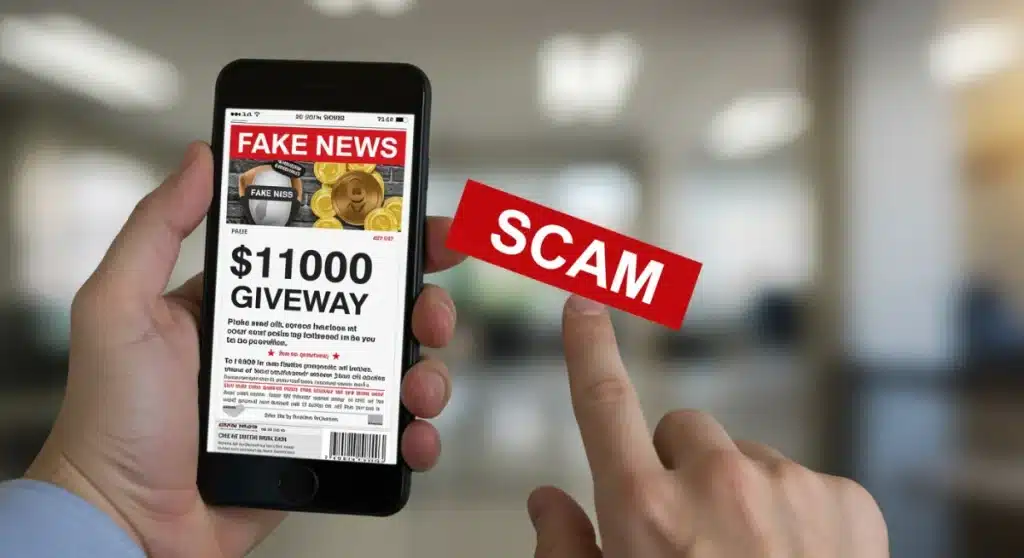
Online scams promising $1000 giveaways are prevalent, and recognizing their deceptive tactics is crucial to protect personal information and financial security from fraudulent schemes.
In today’s digital landscape, the allure of easy money is a powerful hook for scammers. You’ve likely seen headlines or social media posts promising an enticing $1000 giveaway, a seemingly harmless offer that can quickly turn into a nightmare. Knowing how to Avoid the Scam: Spotting Fake News Articles That Promise 1000 Dollar Giveaways is no longer just good practice; it’s a critical skill for navigating the internet safely.
Understanding the Anatomy of a Fake Giveaway
Fake giveaways, particularly those offering significant sums like $1000, are meticulously designed to exploit human psychology. They tap into our desires for financial relief or unexpected windfalls, often appearing legitimate at first glance. These scams aren’t random occurrences; they are sophisticated operations aiming to steal your personal data, financial details, or even install malware on your devices.
Scammers employ a variety of tactics to make their fake news articles and social media posts convincing. They often mimic legitimate organizations, use urgent language, and create a sense of exclusivity to pressure individuals into acting quickly without thinking critically. Understanding these foundational elements is the first step in protecting yourself and others from falling victim to these deceptive schemes.
The psychology behind the lure
The appeal of a $1000 giveaway is undeniable. For many, it represents a significant sum that could alleviate financial stress, pay bills, or simply provide a treat. Scammers understand this deeply and craft their messages to resonate with these hopes and needs. They often target demographics that might be more susceptible to such offers, including those facing economic hardship or younger individuals less experienced with online fraud.
- Urgency and scarcity: Phrases like “limited time offer” or “only a few spots left” create pressure, overriding rational thought.
- Authority mimicry: Impersonating well-known brands, charities, or public figures lends a false sense of credibility.
- Emotional appeal: Messages often play on emotions, promising a solution to financial woes or a chance to fulfill a dream.
Common platforms for fake giveaways
Fake $1000 giveaways aren’t confined to a single platform; they proliferate across various digital channels. Social media platforms like Facebook, Instagram, and Twitter (X) are prime targets due to their wide reach and the ease of sharing deceptive content. Email phishing campaigns are also incredibly common, often designed to look like official communications from reputable companies.
Beyond these, dubious websites designed to look like news outlets or promotional pages are frequently used to host these fake offers. These sites often have slightly altered URLs or poor grammar, but their overall design can be convincing enough to trick unsuspecting users. Being aware of where these scams typically appear is vital for effective prevention.
In essence, recognizing the underlying structure and psychological manipulation behind fake giveaways is paramount. It’s about developing a skeptical mindset and learning to question anything that seems too good to be true. This foundational understanding will serve as a strong defense against the sophisticated tactics employed by online fraudsters.
Identifying Red Flags in Giveaway Offers
When you encounter an offer for a $1000 giveaway, your immediate reaction should be healthy skepticism. While legitimate giveaways exist, the vast majority of unsolicited offers, particularly those found in unexpected places, are scams. Learning to identify the subtle and not-so-subtle red flags is your best defense against becoming a victim.
These red flags often appear in a combination, making the fraudulent nature of the offer more apparent upon closer inspection. From the language used to the website design and the information requested, scammers leave a trail of clues for those who know what to look for. Cultivating a discerning eye is crucial in this digital age.
Unrealistic promises and urgent demands
One of the most glaring red flags is an offer that seems unbelievably generous, especially when paired with an urgent call to action. A legitimate company offering a $1000 prize will typically have clear rules, official announcements, and a verifiable process. Scammers, however, thrive on creating a sense of panic and excitement to bypass critical thinking.
- Too good to be true: Any offer of a large sum of money with minimal effort or no clear reason should raise suspicion.
- Immediate action required: “Claim your prize now!” or “Offer expires in minutes!” are classic scam tactics to prevent you from investigating.
- Lack of clear rules: Legitimate giveaways always have detailed terms and conditions; scams typically lack these or provide vague, poorly written ones.
Poor grammar, spelling, and unprofessional design
Professional organizations and reputable news outlets invest heavily in quality control, ensuring their communications are error-free and aesthetically pleasing. Scammers, on the other hand, often rush their fraudulent content, leading to glaring mistakes in grammar, spelling, and overall design. These small details can be powerful indicators of a fake offer.
Look for inconsistent branding, low-resolution logos, or a general lack of polish. While not every typo signals a scam, a proliferation of errors is a strong indicator that the source is not credible. Trust your instincts; if something looks off, it probably is.
Requests for sensitive personal information
Legitimate giveaways rarely ask for highly sensitive personal or financial information upfront to claim a prize. Scammers, however, will often request details such as your bank account number, social security number, or even credit card information under the guise of verifying your identity or processing the prize. This is a critical red flag that should never be ignored.
Always question why certain information is being requested. If it feels intrusive or unnecessary for claiming a prize, it’s almost certainly a phishing attempt. Remember, your personal data is valuable, and you should be extremely cautious about sharing it online, especially with unknown entities.
Verifying the Legitimacy of a Giveaway
Once you’ve encountered a giveaway that raises your suspicions, the next crucial step is to verify its legitimacy. This proactive approach can save you from falling victim to a scam and protect your personal and financial information. Verification involves a series of investigative steps, focusing on official channels and reliable sources.
Never rely solely on the information provided within the suspicious offer itself. Scammers are adept at creating convincing facades. Instead, take the initiative to independently confirm the details of the giveaway before taking any action. This due diligence is your most potent weapon against online fraud.
Check the official source directly
If the giveaway claims to be from a well-known company, organization, or public figure, bypass the link provided in the suspicious message. Instead, navigate directly to their official website, social media pages, or legitimate news sources. Search for the giveaway on their official channels. If it’s not prominently displayed there, it’s highly likely to be a fake.
Be wary of slight variations in URLs or social media handles. Scammers often create fake profiles or websites that look almost identical to the real ones, but with subtle differences. Always double-check the spelling and domain name to ensure you are on the authentic site.
Research the company or individual
A quick online search can often reveal whether a giveaway is legitimate or a known scam. Use search engines to look up the company or individual offering the prize, along with terms like “scam,” “fake giveaway,” or “fraud.” You might find warnings from consumer protection agencies, news articles, or discussions on online forums about similar scams.

Also, check for reviews or reputation. A legitimate organization will have a verifiable history and a professional online presence. If you can’t find much information, or if what you find is negative, it’s a strong indicator to proceed with extreme caution.
Examine the URL and email addresses
The web address (URL) and the sender’s email address are critical indicators of authenticity. Fake news articles and phishing emails often use URLs that are similar to legitimate ones but contain misspellings or additional characters. For example, instead of “google.com,” it might be “go0gle.com” or “google-promo.net.”
- Hover over links: Before clicking, hover your mouse over any links to see the actual URL. If it doesn’t match the expected domain, do not click.
- Sender’s email: Check the full email address, not just the display name. Scammers often use generic email services or addresses that don’t match the purported sender’s official domain.
By diligently verifying these details, you can significantly reduce your risk of falling for fraudulent $1000 giveaway scams. It requires a bit of effort, but the protection of your personal and financial information is well worth it.
The Dangers of Falling for Fake Giveaways
The consequences of falling for a fake $1000 giveaway extend far beyond simply not receiving the promised prize. Scammers design these schemes to extract valuable assets from their victims, leading to a range of severe and often long-lasting problems. Understanding these potential dangers can reinforce the importance of vigilance and caution when encountering such offers.
The risks are multifaceted, encompassing financial losses, identity theft, and even damage to your digital devices. Each piece of information you provide, or every action you take in response to a scam, opens another door for fraudsters to exploit. Therefore, recognizing the gravity of these threats is essential for protecting yourself in the online world.
Identity theft and financial loss
One of the primary goals of fake giveaways is to acquire your personal information for identity theft. If you provide details like your social security number, date of birth, or even just your full name and address, scammers can use this data to open credit accounts in your name, file fraudulent tax returns, or access existing accounts. This can lead to significant financial loss and a long, arduous process of recovering your identity.
Furthermore, if you’re asked for bank account or credit card details, scammers can directly drain your accounts or make unauthorized purchases. Even small “processing fees” requested to claim a prize are a form of financial theft, as the prize never materializes, and your money is simply gone.
Malware and data breaches
Clicking on malicious links embedded in fake giveaway messages can lead to the installation of malware, viruses, or ransomware on your computer or smartphone. This software can compromise your device, allowing scammers to steal sensitive data, monitor your online activity, or even lock you out of your own system until a ransom is paid.
- Phishing attacks: Links often lead to fake websites designed to look legitimate, where any data you enter is immediately captured by fraudsters.
- Spyware installation: Unbeknownst to you, software might be installed that tracks your keystrokes and steals login credentials.
- Ransomware threats: Your files could be encrypted, holding your data hostage until a payment is made, often in untraceable cryptocurrencies.
Loss of trust and emotional distress
Beyond the tangible losses, falling victim to a scam can have a profound psychological impact. The feeling of betrayal, embarrassment, and anger can lead to significant emotional distress. It can erode trust in online interactions and even impact relationships if shared accounts or devices are compromised. The time and effort required to mitigate the damage can also be incredibly stressful.
The cumulative effect of these dangers underscores why vigilance against fake $1000 giveaway scams is so critical. It’s not just about losing a potential prize; it’s about safeguarding your entire digital and financial well-being from malicious actors.
Protecting Yourself from Future Scams

In an increasingly digital world, scams are an unfortunate reality. However, you are not powerless. By adopting a proactive and informed approach, you can significantly reduce your vulnerability to fake giveaway schemes and countless other online frauds. Protection is an ongoing process that involves continuous learning and careful online habits.
Building a strong defense against future scams requires a combination of technological safeguards, critical thinking, and a healthy dose of skepticism. It’s about empowering yourself with the knowledge and tools necessary to navigate the internet safely and confidently, without succumbing to the enticing but ultimately deceptive promises of fraudsters.
Update your security software regularly
Keeping your operating system, web browser, and antivirus software up to date is a fundamental step in online security. Software updates often include critical security patches that protect against the latest threats and vulnerabilities that scammers exploit. An outdated system is an open invitation for malware and other malicious attacks.
- Antivirus and anti-malware: Install reputable security software and ensure it’s configured for automatic updates and regular scans.
- Operating system updates: Enable automatic updates for Windows, macOS, or your mobile operating system to benefit from the latest security enhancements.
- Browser security: Use modern browsers that offer built-in security features and keep them updated. Consider browser extensions that warn about suspicious websites.
Be wary of unsolicited messages
A significant number of fake giveaways originate from unsolicited emails, text messages, or social media direct messages. If you didn’t specifically sign up for a contest or provide your contact information to a particular organization for promotional purposes, be extremely cautious about any unexpected offers you receive.
Never click on links or open attachments from unknown senders. Even if the sender appears familiar, verify their identity through an alternative, trusted channel before interacting with the message. Scammers often spoof email addresses or create fake social media profiles to trick you.
Practice critical thinking and skepticism
Perhaps the most powerful tool in your arsenal against scams is your own critical thinking. Before clicking, sharing, or responding to any offer that seems too good to be true, take a moment to pause and evaluate. Ask yourself probing questions about the legitimacy of the offer and the source.

Consider the context: Did you enter a contest? Does this organization typically run such promotions? Is the language professional? Developing this habit of skepticism will serve you well not only against giveaway scams but against a wide array of online threats.
Reporting and What to Do If You’ve Been Scammed
Despite our best efforts, sometimes scams are so sophisticated that even the most vigilant individuals can fall prey. If you suspect you’ve been targeted by a fake $1000 giveaway scam, or worse, if you’ve already provided information or lost money, immediate action is crucial. Reporting the incident helps authorities combat fraud and can also aid in your recovery process.
Knowing the correct steps to take after a scam is vital for mitigating damage and preventing further harm. Don’t let embarrassment or fear prevent you from acting quickly; the sooner you address the situation, the better your chances of recovery and protecting others.
Report the scam to relevant authorities
Reporting a scam not only helps you but also contributes to a larger effort to identify and stop fraudsters. The information you provide can help law enforcement agencies track down criminals and develop better prevention strategies. There are several key organizations where you should file a report.
- Federal Trade Commission (FTC): Report all types of scams to the FTC at ReportFraud.ftc.gov. This is a central database for consumer complaints in the U.S.
- FBI’s Internet Crime Complaint Center (IC3): If you’ve been a victim of an internet-related crime, including financial loss, file a report with IC3 at ic3.gov.
- Social media platforms: If the scam originated on a social media site, report the fraudulent post or account directly to the platform.
- State Attorney General’s office: Your state’s Attorney General’s office may also have a consumer protection division that handles scam complaints.
Contact your bank and credit card companies
If you’ve shared bank account details, credit card numbers, or any financial information, contact your bank and credit card companies immediately. They can monitor your accounts for suspicious activity, freeze cards, or even reverse unauthorized transactions. Time is of the essence in these situations.
Explain the situation clearly and provide them with all the details of the scam. They will guide you through the process of securing your accounts and disputing any fraudulent charges. Be prepared to provide documentation related to the scam.
Change passwords and monitor accounts
If there’s any chance your login credentials were compromised (e.g., you entered them on a fake website), immediately change passwords for all your online accounts, especially those linked to email, banking, and social media. Use strong, unique passwords for each account and enable two-factor authentication (2FA) wherever possible.
Additionally, regularly monitor your bank and credit card statements, as well as your credit report, for any unfamiliar activity. Services like IdentityTheft.gov can help you create a recovery plan and place fraud alerts on your credit reports. Being proactive in monitoring can help catch identity theft early and minimize its impact.
The Role of Media Literacy in Combating Scams
In an age saturated with information, distinguishing fact from fiction has become increasingly challenging. This challenge is particularly acute when it comes to deceptive online content, such as fake news articles promising $1000 giveaways. Developing strong media literacy skills is not just about being able to read; it’s about critically evaluating the information you consume and understanding its source, purpose, and potential biases.
Media literacy empowers individuals to navigate the digital landscape with confidence, making informed decisions and protecting themselves from manipulation. It moves beyond simply identifying red flags to fostering a deeper understanding of how information is constructed and disseminated, especially when it comes to sensational or too-good-to-be-true offers.
Understanding news sources and credibility
A cornerstone of media literacy is the ability to assess the credibility of a news source. When you encounter an article about a giveaway, consider the publication itself. Is it a well-known, reputable news organization with a history of accurate reporting? Or is it an unfamiliar website with a generic-sounding name and a suspicious URL?
- Check the “About Us” page: Legitimate news sites will have clear information about their mission, editorial team, and journalistic standards.
- Look for editorial consistency: Does the reporting seem balanced? Are there evident biases? A proliferation of sensational or poorly written articles can be a red flag.
- Cross-reference information: Verify the claims made in the article with other established news sources. If no other credible outlet is reporting on the $1000 giveaway, it’s likely fake.
Recognizing sensationalism and clickbait
Fake news articles, particularly those promoting scams, often rely on sensational headlines and clickbait tactics to grab attention. They use emotionally charged language, exaggerated claims, and urgent calls to action to bypass rational thought and provoke an immediate response. The goal is not to inform, but to manipulate.
Be skeptical of headlines that promise instant wealth, miraculous solutions, or exclusive opportunities. These are classic hallmarks of clickbait designed to lure you into engaging with fraudulent content. A legitimate giveaway or news story will present information in a more measured and factual tone, without resorting to hyperbole.
Educating others and promoting awareness
Media literacy isn’t just a personal skill; it’s a collective responsibility. By educating friends, family, and community members about the dangers of fake giveaways and the importance of critical evaluation, you contribute to a more informed and resilient online community. Share articles like this one, discuss common scam tactics, and encourage open dialogue about online safety.
Promoting awareness through conversations and sharing reliable resources helps create a network of vigilance, making it harder for scammers to find new victims. A well-informed public is the strongest defense against the spread of misinformation and fraudulent schemes. This collective effort is crucial in combating the pervasive nature of online scams.
Legitimate Giveaways vs. Scam Indicators
Distinguishing between a genuine $1000 giveaway and a fraudulent one can be challenging, as scammers often try to mimic legitimate practices. However, there are fundamental differences in how authentic organizations conduct giveaways compared to how fraudsters operate. Understanding these distinctions is key to confidently navigating online offers.
Legitimate giveaways are transparent, well-organized, and prioritize the participant’s safety. Scams, conversely, are opaque, rushed, and prioritize extracting personal data or money. By focusing on these core differences, you can develop a robust framework for evaluating any giveaway you encounter.
Characteristics of genuine promotions
When a reputable company or organization runs a giveaway, they follow established protocols designed to ensure fairness and transparency. These characteristics are often absent in fraudulent schemes, making them reliable indicators of authenticity.
- Official channels only: Promotions are announced and managed through official websites, verified social media accounts, or reputable marketing partners.
- Clear terms and conditions: Detailed rules, eligibility requirements, prize values, and how winners are selected and notified are readily available.
- No upfront fees: Legitimate giveaways never require you to pay a fee, tax, or shipping cost to claim a prize. The prize is truly free.
- Secure data handling: Any personal information requested is minimal and clearly explained for its purpose (e.g., shipping address for a physical prize), and submitted through secure, encrypted forms.
Typical scam indicators revisited
While we’ve touched on red flags, it’s worth reiterating the most common and critical indicators that an offer is a scam, especially when contrasted with legitimate practices. These are the aspects that should immediately trigger your alarm bells.
Fraudulent giveaways consistently display these characteristics, often in combination, making them easier to spot once you know what to look for. Always remember that scammers rely on your haste and lack of information.
- Unsolicited contact: You receive a notification about winning a contest you never entered.
- Pressure to act quickly: Phrases like “claim now” or “last chance” are designed to prevent critical thinking.
- Requests for sensitive data: Asking for bank details, SSN, or credit card numbers to “verify” or “process” your prize.
- Poor quality communication: Numerous typos, grammatical errors, and unprofessional design in emails or websites.
- Unusual payment methods: Demands for payment via gift cards, wire transfers, or cryptocurrency, which are difficult to trace.
By consistently applying this comparative framework, you can sharpen your ability to discern genuine opportunities from deceptive traps. It’s about empowering yourself with knowledge and making informed decisions in an environment where not everything is as it seems.
| Key Point | Brief Description |
|---|---|
| Unrealistic Promises | Offers that seem too good to be true, often with urgent demands for action. |
| Verification Steps | Always check official sources, research the sender, and scrutinize URLs/emails. |
| Dangers of Scams | Risk of identity theft, financial loss, malware, and emotional distress. |
| Media Literacy | Develop critical thinking to evaluate sources and recognize sensationalism. |
Frequently Asked Questions About Giveaway Scams
Legitimate giveaways are announced on official company channels, have clear terms, and never ask for upfront fees or sensitive financial information to claim a prize. Always verify the source directly, rather than clicking on links in unsolicited messages.
Never share your Social Security number, bank account details, credit card numbers, or passwords. Legitimate sweepstakes only require basic contact information for prize fulfillment, and never demand payment of any kind to receive your winnings.
Look for poor grammar, spelling errors, generic greetings, urgent calls to action, and suspicious sender email addresses. Hover over links to check the URL before clicking, and be wary of any email asking you to download attachments to claim a prize.
If you clicked a suspicious link, immediately run a full scan with reputable antivirus software. Change all your passwords, especially for banking and email accounts. Monitor your financial statements and credit report for any unusual activity and report the incident to authorities.
You should report fake giveaway scams to the Federal Trade Commission (FTC) at ReportFraud.ftc.gov and the FBI’s Internet Crime Complaint Center (IC3) at ic3.gov. Also, report the fraudulent content directly to the social media platform or email provider where you encountered it.
Conclusion
Navigating the digital world requires a keen eye and a healthy dose of skepticism, especially when confronted with offers that seem too good to be true. Learning to Avoid the Scam: Spotting Fake News Articles That Promise 1000 Dollar Giveaways is a crucial skill in today’s online environment. By understanding the tactics scammers employ, recognizing red flags, diligently verifying sources, and being aware of the severe dangers of falling victim, you can significantly enhance your personal online security. Empowering yourself with media literacy and knowing how to report fraudulent activities not only protects your own financial and personal well-being but also contributes to a safer digital community for everyone. Stay vigilant, stay informed, and always prioritize your safety over the allure of an easy prize.