Emergency Fund: Build a 6-Month Income Safety Net for Financial Peace

Building an emergency fund that covers 6 months of living expenses is crucial for financial stability, offering a vital safety net against unexpected life events and providing peace of mind amidst economic uncertainties.
Life is full of unexpected twists and turns, from sudden job loss to unforeseen medical emergencies or car repairs. In times of crisis, having a robust financial cushion can make all the difference between weathering the storm and falling into deep debt. That’s why understanding how to create an effective emergency fund income safety net, specifically one that covers at least six months of living expenses, is not just a good idea—it’s a financial imperative for peace of mind in the United States.
Understanding the Importance of an Emergency Fund
An emergency fund is more than just a savings account; it’s your personal financial bodyguard, ready to protect you from life’s inevitable curveballs. Many people underestimate its significance until they face a situation where they desperately need liquid assets. This fund acts as a buffer, preventing you from having to dip into retirement savings, accrue high-interest debt, or sell investments at an inopportune time.
The core philosophy behind an emergency fund is to provide stability. Without it, even minor financial setbacks can quickly spiral into major crises. Think about the peace of mind that comes with knowing you have resources to cover essential expenses if your income suddenly stops. This security allows you to make more rational decisions during stressful times, rather than being forced into desperate measures.
Why six months? The rationale behind the target
While some financial experts suggest three months, a six-month emergency fund is often recommended as the gold standard, particularly for those with fluctuating incomes, dependents, or specialized careers. This duration provides a more substantial cushion, acknowledging that some emergencies, like a prolonged job search, can last longer than initially anticipated. It accounts for potential delays in unemployment benefits or the time it takes to find new employment that matches your previous income.
- Job Loss: A six-month fund offers ample time to find new employment without panic.
- Medical Emergencies: Covers high deductibles, co-pays, and lost wages during recovery.
- Major Home/Car Repairs: Protects against large, unexpected costs that can arise.
- Economic Downturns: Provides resilience during broader financial instability.
Ultimately, the size of your emergency fund should align with your personal risk tolerance and financial situation. However, aiming for six months provides a robust foundation for nearly any unforeseen event, solidifying your emergency fund income safety net.
Assessing Your Current Financial Landscape
Before you can effectively build an emergency fund, you need a clear picture of your current financial situation. This means understanding your income, expenses, and existing debts. It’s a foundational step that many people skip, leading to an inaccurate assessment of their true financial needs.
Start by gathering all relevant financial documents: bank statements, credit card bills, loan statements, and pay stubs. This information will be crucial for creating an accurate budget and setting realistic savings goals. Don’t shy away from confronting the numbers; transparency is key to effective financial planning.
Calculating your monthly expenses
The cornerstone of determining your emergency fund goal is knowing your essential monthly expenses. This isn’t just about what you spend, but what you absolutely need to survive. Differentiate between fixed costs (rent/mortgage, loan payments) and variable costs (groceries, utilities, transportation), and then identify the truly essential ones.
- Housing: Rent or mortgage payment.
- Utilities: Electricity, water, gas, and essential internet.
- Food: Grocery bills, excluding dining out.
- Transportation: Car payment, insurance, gas, or public transit.
- Insurance: Health, auto, and any other essential coverage.
- Minimum Debt Payments: Student loans, credit cards (minimums only for survival).
Once you have a clear total of your essential monthly expenses, multiply that number by six. This will give you your target emergency fund amount. Remember, this is about bare-bones survival, not maintaining your current lifestyle during a crisis. Understanding this distinction is vital for setting an achievable and effective goal.
Strategies for Rapidly Building Your Emergency Fund
Building a substantial emergency fund requires discipline and a strategic approach. It won’t happen overnight, but with consistent effort and smart financial moves, you can reach your goal faster than you might think. The key is to treat your emergency fund contributions as a non-negotiable expense, just like rent or utilities.
Consider automating your savings. Set up a recurring transfer from your checking account to your dedicated emergency fund savings account each payday. This removes the temptation to spend the money and ensures consistent progress. Even small, regular contributions add up significantly over time.
Cutting unnecessary expenses
One of the quickest ways to free up cash for your emergency fund is to meticulously review your spending and identify areas where you can cut back. This might involve temporarily sacrificing certain luxuries or finding more affordable alternatives for everyday items.
- Dining Out: Cook at home more often instead of eating out.
- Subscriptions: Cancel unused streaming services, gym memberships, or apps.
- Entertainment: Look for free or low-cost activities.
- Impulse Buys: Implement a ’24-hour rule’ before making non-essential purchases.
- Transportation: Consider carpooling, public transport, or biking if feasible.
Every dollar saved from these categories can be redirected straight into your emergency fund, accelerating your progress towards a secure emergency fund income safety net. Be ruthless in this phase; it’s a temporary sacrifice for long-term security.
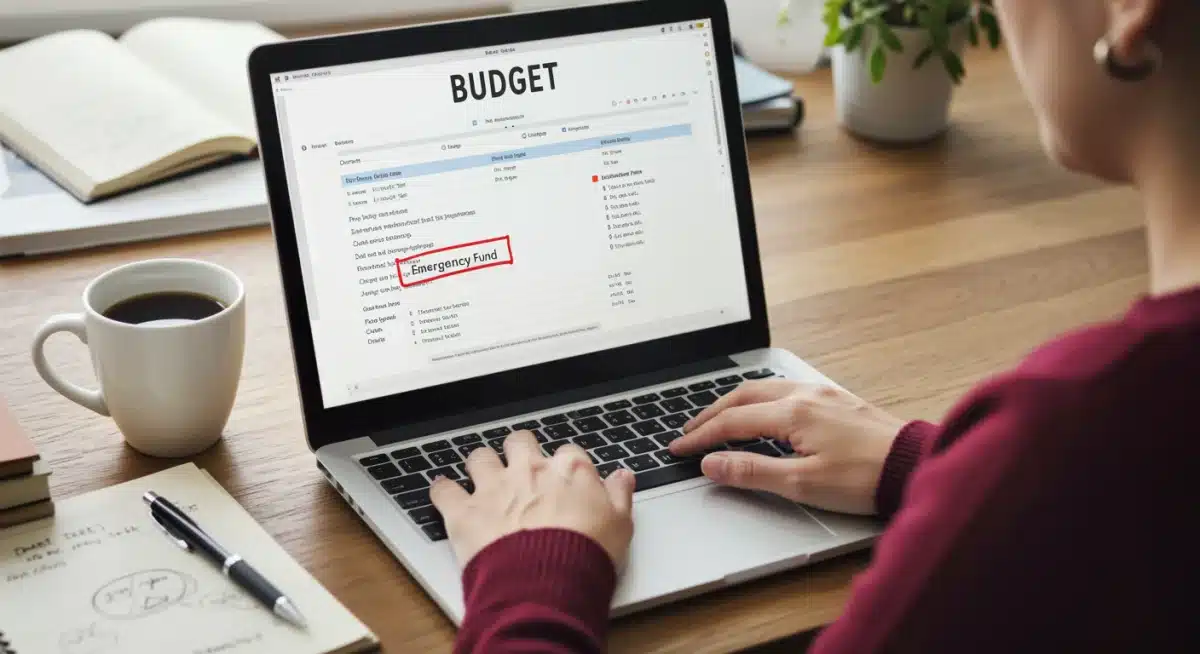
Boosting Your Income to Accelerate Savings
While cutting expenses is crucial, sometimes there’s only so much you can trim. That’s when focusing on increasing your income becomes a powerful tool for rapidly boosting your emergency fund. More income means more money available to stash away, without having to drastically alter your current lifestyle.
Explore various avenues to bring in extra cash. This could range from leveraging your existing skills to taking on new opportunities. The goal is to funnel every additional dollar directly into your emergency fund until you reach your target amount.
Side hustles and temporary gigs
The gig economy offers numerous opportunities to earn extra income outside of your primary job. Consider what skills you possess or what services you could offer in your free time. Even a few extra hours a week can make a significant difference in how quickly you build your emergency fund.
- Freelancing: Offer writing, graphic design, web development, or consulting services.
- Delivery Services: Drive for food delivery or ride-sharing platforms.
- Online Tutoring: Share your knowledge in a subject you excel at.
- Selling Goods: Declutter your home and sell unused items online or at a garage sale.
- Pet Sitting/Dog Walking: Turn your love for animals into extra cash.
Remember, this isn’t necessarily a permanent commitment. These side hustles can be a temporary sprint to build your emergency fund income safety net quickly. Once your fund is established, you can re-evaluate your time commitments.
Where to Store Your Emergency Fund
Once you start accumulating funds, where you store your emergency fund is almost as important as building it. The ideal location should offer a balance of accessibility, security, and modest growth potential, while keeping it separate from your everyday spending accounts.
Avoid investing your emergency fund in volatile assets like stocks or cryptocurrency. The primary purpose of this money is safety and liquidity, not aggressive growth. You need to be able to access it quickly and without risk of loss when an emergency strikes.
High-yield savings accounts and money market accounts
The best place for your emergency fund is typically a high-yield savings account (HYSA) or a money market account (MMA). Both offer better interest rates than traditional checking or savings accounts, allowing your money to grow slightly over time without significant risk.
- High-Yield Savings Accounts:
- Offer competitive interest rates.
- Federally insured (FDIC) up to $250,000 per depositor.
- Easy access to funds, usually via online transfers.
- Money Market Accounts:
- Often come with check-writing capabilities and a debit card.
- Higher minimum balance requirements than HYSAs.
- Also FDIC insured and offer competitive rates.
Keep your emergency fund in an account separate from your checking account. This psychological barrier helps prevent accidental spending and reinforces its purpose as a dedicated safety net. The goal is to make it accessible in an emergency, but not so easily accessible that you’re tempted to use it for non-emergencies.
Maintaining and Replenishing Your Emergency Fund
Building your emergency fund is a significant achievement, but the work doesn’t stop there. Maintaining and replenishing it is equally important to ensure your long-term financial security. Life continues to happen, and sometimes, you’ll need to tap into your fund. The key is to have a plan for how you’ll restore it.
Treat your emergency fund like an insurance policy; you hope you never need it, but you’re grateful it’s there if you do. If you use part of your fund, make it a top financial priority to replenish it as quickly as possible. This might mean temporarily re-implementing some of the expense-cutting or income-boosting strategies you used to build it initially.

When to use your emergency fund (and when not to)
It’s crucial to have a clear understanding of what constitutes a true emergency. Using your emergency fund for a new gadget, a vacation, or a fancy dinner defeats its purpose and leaves you vulnerable when a real crisis strikes. Be honest with yourself about whether a situation truly warrants dipping into your safety net.
- Appropriate Uses:
- Job loss or significant income reduction.
- Unexpected medical expenses not covered by insurance.
- Major home repairs (e.g., roof leak, furnace breakdown).
- Critical car repairs essential for transportation to work.
- Inappropriate Uses:
- New car down payment (unless old car is totaled and essential).
- Vacations or luxury purchases.
- Holiday shopping.
- Investment opportunities (even good ones).
If you find yourself frequently dipping into your emergency fund for non-emergencies, it might indicate a need to re-evaluate your regular budget or spending habits. The integrity of your emergency fund income safety net relies on disciplined usage.
Beyond the Emergency Fund: Next Steps in Financial Planning
Once you’ve successfully built and maintained your 6-month emergency fund, congratulations! You’ve achieved a significant milestone in your financial journey. This robust safety net provides a solid foundation, but it’s important to remember that it’s just one component of a comprehensive financial plan. There are always further steps you can take to enhance your financial well-being and pursue your long-term goals.
Having a fully funded emergency fund frees up your financial resources and mental energy to focus on other crucial areas. This might include tackling high-interest debt, saving for retirement, or investing for future wealth creation. The security provided by your emergency fund allows you to take calculated risks and make more strategic financial decisions without the constant worry of unexpected setbacks.
Investing for the future and debt reduction
With your emergency fund securely in place, prioritize high-interest debt. Credit card debt, in particular, can negate any investment gains due to its high interest rates. Focus on paying down these debts aggressively, as the interest saved is often a guaranteed return on investment.
- Tackle High-Interest Debt:
- Pay off credit cards with the highest interest rates first.
- Consider debt consolidation for better rates if appropriate.
- Boost Retirement Savings:
- Increase contributions to your 401(k) or IRA.
- Take advantage of employer matching programs.
- Invest for Long-Term Goals:
- Explore diversified investment portfolios, including stocks and bonds.
- Save for a down payment on a home, education, or other significant life events.
Your emergency fund income safety net empowers you to transition from merely reacting to financial challenges to proactively building wealth and securing your future. It’s a testament to good financial habits and provides the springboard for achieving even greater financial aspirations.
| Key Point | Brief Description |
|---|---|
| Target Goal | Aim for 6 months of essential living expenses to create a robust financial safety net. |
| Calculation | Identify and total your absolute essential monthly expenses, then multiply by six. |
| Funding Methods | Cut expenses, boost income with side hustles, and automate savings transfers. |
| Storage | Keep funds in a high-yield savings or money market account for safety and liquidity. |
Frequently asked questions about emergency funds
The ideal emergency fund typically covers 3 to 6 months of essential living expenses. For greater security, especially in uncertain economic times or with dependents, aiming for 6 months is highly recommended to provide a robust income safety net.
Your emergency fund should be stored in a separate, easily accessible, and liquid account, such as a high-yield savings account or a money market account. These accounts offer better interest rates than traditional savings without the risk of market fluctuations.
It is generally not advisable to invest your emergency fund in volatile assets like stocks or cryptocurrency. The primary purpose is safety and immediate access, not aggressive growth. Market downturns could jeopardize your ability to access the full amount when needed.
A true emergency includes unforeseen events like job loss, significant medical expenses, critical home repairs, or essential car repairs. It should not be used for discretionary spending, vacations, or non-essential purchases, as this undermines its protective purpose.
To build your fund quickly, focus on both cutting unnecessary expenses and increasing your income. Consider temporary side hustles, selling unused items, and automating regular savings transfers to a dedicated account. Every extra dollar should go directly into your fund.
Conclusion
Establishing a 6-month income safety net through a dedicated emergency fund is one of the most impactful financial decisions you can make. It transforms potential crises into manageable inconveniences, offering unparalleled peace of mind and protecting your financial future. By understanding your expenses, strategically saving, and diligently maintaining this fund, you are not just accumulating money; you are investing in your stability and freedom. This robust emergency fund income safety net serves as the bedrock upon which all other financial goals can confidently be built, empowering you to navigate life’s uncertainties with resilience and foresight.