Understanding US Legal System: Rights & Responsibilities
The US legal system, a complex framework of laws and institutions, defines citizen rights and responsibilities, ensuring justice and order through its intricate federal and state structures, vital for informed civic engagement.
Have you ever wondered about the intricate web of laws that govern daily life in the United States? Navigating the American legal landscape can seem daunting, but comprehending your role within it is crucial for every citizen.
This article aims to demystify the US legal system, shedding light on both your fundamental rights and the responsibilities that come with them, empowering you to engage confidently with the law.
Foundations of American Law: The Constitution and Its Principles
The bedrock of the US legal system is the United States Constitution, a document drafted over two centuries ago that continues to shape our society.
Understanding its core principles is essential to grasping how laws are made, interpreted, and applied across the nation. It establishes the framework for federal government and outlines the fundamental rights of its citizens.
The Constitution is a living document, continually reinterpreted and adapted through judicial review. Its supremacy ensures that all other laws, whether federal or state, must conform to its provisions. This hierarchical structure provides stability and consistency in legal matters nationwide.
Key Constitutional Concepts
Several foundational concepts embedded within the Constitution are vital for citizens to understand. These principles guide judicial decisions and legislative actions, impacting daily life in significant ways.
Separation of Powers: This divides governmental authority among the legislative (Congress), executive (President), and judicial (courts) branches, preventing any single branch from becoming too powerful.
Checks and Balances: Each branch has the ability to limit the powers of the other two, ensuring accountability and preventing abuses of power. For instance, the President can veto legislation, but Congress can override that veto.
Federalism: Power is divided between the federal government and state governments, allowing states to govern on local matters while the federal government handles national issues. This balance creates a dynamic legal environment.
Individual Rights: The Bill of Rights, the first ten amendments, guarantees essential freedoms such as speech, religion, and due process, protecting citizens from government overreach.
These principles are not merely abstract ideas; they are the practical mechanisms through which justice is sought and maintained.
Citizens benefit from these safeguards, which are designed to protect liberty and promote fairness in the application of the law. A solid understanding of these concepts empowers individuals to advocate for their rights effectively.
In essence, the Constitution provides the blueprint for a just society, outlining the powers of government and the protections afforded to its people. Its enduring relevance is a testament to its foresight and adaptability, forming the stable base upon which the entire US legal system operates.
The Dual Court System: Federal vs. State Jurisdictions
The United States operates under a unique dual court system, comprising both federal and state courts. This structure can often be a source of confusion, but understanding the distinction between these two judicial branches is critical for knowing where to seek legal recourse or where you might face legal proceedings.
Each system has its own distinct jurisdiction, meaning the types of cases it is authorized to hear. Federal courts generally handle cases involving the U.S. Constitution, federal laws, treaties, and disputes between states or citizens of different states. State courts, on the other hand, preside over the vast majority of legal disputes, including most criminal cases, contract disputes, family matters, and personal injury claims.
Federal Court Jurisdiction
Federal courts have limited jurisdiction, meaning they can only hear specific types of cases. These include matters that are explicitly granted to them by the Constitution or federal statutes.
Constitutional Questions: Cases arising under the U.S. Constitution.
Federal Laws: Cases involving federal statutes, such as patent law, bankruptcy, or civil rights.
Treaties: Cases involving treaties signed by the U.S. government.
Diversity of Citizenship: Disputes between citizens of different states where the amount in controversy exceeds $75,000.
United States as a Party: Cases where the U.S. government is a plaintiff or defendant.
The federal court system consists of district courts (trial courts), circuit courts of appeals, and the Supreme Court. The Supreme Court is the highest court in the land, and its decisions are binding on all other federal and state courts.
State Court Jurisdiction
State courts have broad jurisdiction, handling most legal disputes that arise within their borders. Each state has its own court system, which typically includes trial courts (often called superior, circuit, or district courts), intermediate appellate courts, and a state supreme court.

Common types of cases heard in state courts include criminal offenses (from misdemeanors to felonies), family law matters (divorce, child custody), probate cases (wills, estates), contract disputes, and torts (personal injury claims). The vast majority of legal interactions citizens have will be with the state court system.
Understanding which court system has jurisdiction over a particular issue is the first step in navigating a legal challenge. While some cases can potentially be heard in either federal or state court (concurrent jurisdiction), many fall exclusively under one or the other.
This dual system, though complex, ensures that justice is accessible at both local and national levels, reflecting the federalist structure of the United States.
Your Fundamental Rights as an American Citizen
As an American citizen, you are endowed with fundamental rights that are enshrined in the Constitution, particularly the Bill of Rights. These rights serve as crucial protections against government overreach and ensure individual liberties.
Knowing these rights is not just a matter of legal knowledge, but a cornerstone of active and informed citizenship.
These protections are not absolute; they come with limitations and responsibilities. However, their existence guarantees a significant degree of freedom and due process in many aspects of life. Understanding these rights empowers you to assert them when necessary and to recognize when they might be infringed upon.
Key Constitutional Rights
The Bill of Rights outlines many of the most critical protections afforded to individuals. These include freedoms related to expression, religion, and the right to fair treatment under the law.
Freedom of Speech (First Amendment): Protects your right to express opinions, even unpopular ones, without government censorship. This includes verbal, written, and symbolic speech, though it has limits like inciting violence or defamation.
Freedom of Religion (First Amendment): Guarantees the right to practice any religion or no religion at all, and prohibits the government from establishing a religion.
Right to Bear Arms (Second Amendment): Protects the right of individuals to keep and bear arms, subject to reasonable government regulation.
Protection Against Unreasonable Searches and Seizures (Fourth Amendment): Requires law enforcement to obtain a warrant based on probable cause before searching your property or person, protecting your privacy.
Due Process and Self-Incrimination (Fifth Amendment): Ensures fair legal proceedings, prevents double jeopardy, and protects you from being forced to testify against yourself in criminal cases.
Right to a Speedy and Public Trial (Sixth Amendment): Guarantees the right to a fair trial, including the right to an attorney, to confront witnesses, and to have an impartial jury.
Protection Against Cruel and Unusual Punishment (Eighth Amendment): Prohibits excessive bail, excessive fines, and punishments that are considered inhumane or degrading.
These rights are not static; their interpretation evolves through court cases and societal changes. For example, the right to privacy, though not explicitly stated, has been inferred from various amendments by the Supreme Court. Citizens should remain informed about these evolving interpretations.
Exercising your rights responsibly is also key. For instance, while you have freedom of speech, you cannot use it to incite violence. Similarly, the right to bear arms comes with regulations designed to ensure public safety.
These balances highlight the intricate nature of individual liberties within a functioning society, emphasizing the importance of informed civic engagement.
Your Responsibilities as a Citizen in the Legal System
While the US legal system grants citizens numerous rights, it also imposes significant responsibilities. These duties are crucial for the proper functioning of society and the maintenance of justice and order.
Fulfilling these responsibilities contributes to a healthy democracy and ensures that the legal system remains effective and fair for everyone.
These responsibilities often involve civic participation, adherence to laws, and cooperation with legal processes. Ignoring these duties can not only lead to personal legal consequences but also undermine the integrity of the system itself.
Civic and Legal Responsibilities
Engaging with the legal system means more than just knowing your rights; it means actively participating and upholding the law. This active participation strengthens the democratic process and ensures accountability.
Obeying Laws: The most fundamental responsibility is to abide by all federal, state, and local laws. This includes traffic laws, tax laws, and criminal statutes. Disobeying laws can lead to penalties and disrupt public order.
Serving on Juries: Jury duty is a cornerstone of the American justice system. It ensures that trials are decided by a jury of peers, a fundamental right guaranteed by the Sixth Amendment. Participating helps maintain fairness and impartiality in legal proceedings.
Paying Taxes: Taxes fund essential government services, including the courts, law enforcement, and public defenders. Paying your fair share is a civic duty that supports the infrastructure of the legal system.
Testifying as a Witness: If you witness a crime or have information relevant to a legal case, you may be called upon to testify. Cooperating with legal investigations and providing truthful testimony is vital for uncovering facts and delivering justice.
Voting: While not directly a legal system responsibility, voting for elected officials, including judges and legislators, indirectly shapes the laws and the composition of the judiciary, making it a crucial civic duty.
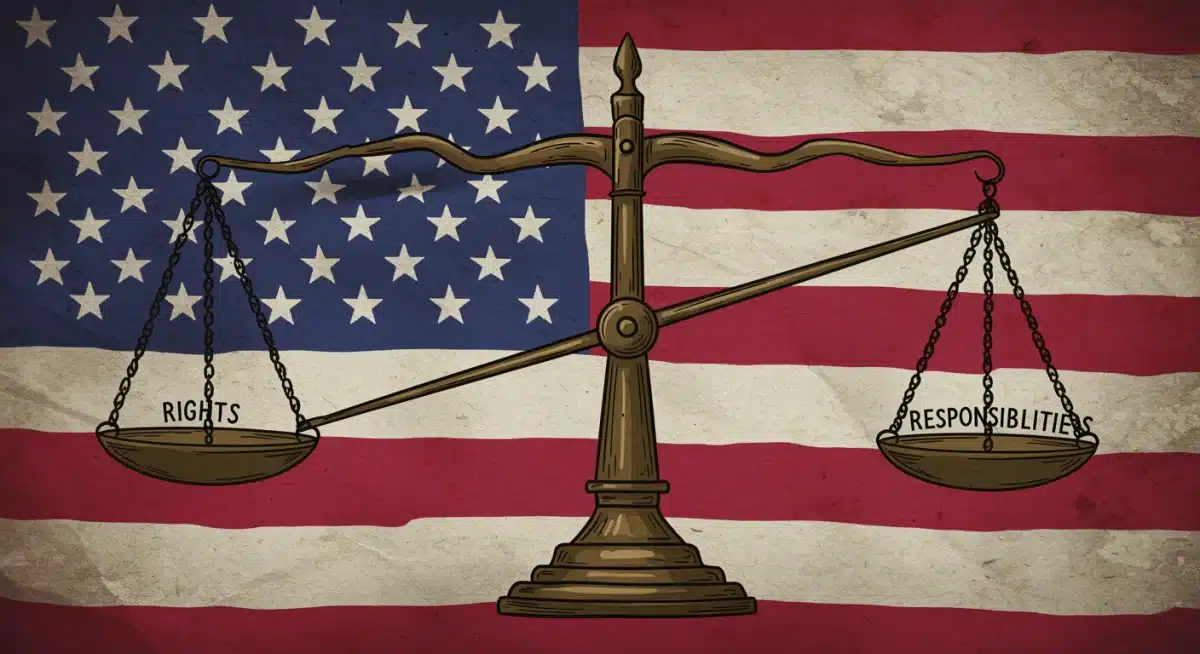
These responsibilities highlight the reciprocal relationship between citizens and the legal system. Rights are protected, but in return, citizens must contribute to the system’s efficacy. From the simple act of following traffic regulations to the profound duty of serving on a jury, each responsibility plays a part in upholding the rule of law.
Understanding and embracing these duties fosters a more engaged and responsible citizenry, which is essential for a legal system that truly serves the people. It is through this balance of rights and responsibilities that a society can maintain order while safeguarding individual freedoms.
Navigating Legal Challenges: Where to Find Help
Even with a good understanding of the US legal system, encountering a legal challenge can be overwhelming. Knowing where to turn for help is crucial, whether you need advice, representation, or simply information about your rights and options. Various resources are available to assist citizens in navigating complex legal situations.
Access to legal assistance is a fundamental aspect of justice. Without proper guidance, individuals might struggle to understand their rights, present their case effectively, or even know which legal avenues to pursue. Fortunately, the system offers several pathways for support.
Sources of Legal Assistance
When faced with legal issues, several types of professionals and organizations can provide valuable support. Choosing the right resource depends on the nature of your legal problem and your financial situation.
Private Attorneys: For most legal issues, hiring a private attorney is the most common route. Attorneys specialize in various fields (e.g., family law, criminal defense, business law) and can provide expert advice and representation.
Legal Aid Societies: These non-profit organizations provide free or low-cost legal services to individuals who cannot afford an attorney, typically in civil matters like housing, employment, or family law. Eligibility often depends on income.
Public Defenders: In criminal cases, if you cannot afford an attorney, the court will appoint a public defender to represent you. This right is guaranteed by the Sixth Amendment.
Bar Associations: State and local bar associations often offer lawyer referral services, connecting individuals with attorneys who specialize in their specific legal needs. Some also provide pro bono (free) legal clinics.
Online Legal Resources: Websites like LegalZoom, Avvo, and Nolo offer legal information, forms, and sometimes access to attorneys for specific tasks or consultations. These can be useful for general information but may not replace personalized advice.
Before engaging with any legal professional, it is wise to conduct thorough research, check credentials, and understand fee structures. Many attorneys offer initial consultations, which can be a good opportunity to discuss your case and assess your options.
The legal system can be a labyrinth, but you do not have to navigate it alone. Understanding the available resources empowers you to make informed decisions and ensures that your rights are protected throughout any legal process. Seeking timely assistance can often prevent minor issues from escalating into major problems.
The Role of Law Enforcement and the Judicial Process

Law enforcement and the judicial process are two critical components of the US legal system that work in tandem to maintain order and administer justice. Understanding their respective roles and how they interact is essential for comprehending the journey a legal case takes, from investigation to resolution.
Law enforcement agencies, such as police departments and the FBI, are responsible for investigating crimes, apprehending suspects, and maintaining public safety. The judicial process, involving courts and legal professionals, then takes over to determine guilt or innocence and apply appropriate legal remedies.
Law Enforcement Functions
Police officers and other law enforcement agents are the frontline of the legal system. Their duties extend beyond just making arrests.
Crime Prevention: Proactive measures to deter criminal activity through patrols, community engagement, and educational programs.
Investigation: Gathering evidence, interviewing witnesses, and identifying suspects in criminal cases.
Apprehension: Arresting individuals suspected of committing crimes, adhering to constitutional protections like the Fourth Amendment.
Maintaining Order: Responding to emergencies, resolving disputes, and ensuring public safety during events or civil unrest.
Citizens have rights when interacting with law enforcement, such as the right to remain silent and the right to an attorney. Knowing these rights is paramount during any police encounter to ensure proper legal protections are afforded.
The Judicial Process Overview
Once law enforcement has completed its role, a case typically moves into the judicial system. This process varies slightly between criminal and civil cases but generally follows a structured path.
Arrest and Booking: An individual is taken into custody and processed.
Initial Appearance/Arraignment: The suspect is informed of the charges, bail is set, and a plea is entered.
Discovery: Both sides exchange information and evidence relevant to the case.
Pre-trial Motions: Legal arguments made before the trial, such as motions to suppress evidence.
Trial: Evidence is presented, witnesses testify, and a judge or jury determines guilt or liability. In criminal cases, guilt must be proven beyond a reasonable doubt.
Sentencing/Judgment: If found guilty or liable, a sentence is imposed or damages are awarded.
Appeals: Parties may challenge the decision of a lower court in a higher court.
The judicial process is designed to be adversarial, with both sides presenting their arguments to an impartial arbiter. This system, while sometimes slow, aims to ensure fairness and adherence to legal principles, upholding the concept of due process for all involved.
Understanding Legal Terminology and Concepts
The US legal system, like any specialized field, has its own unique language. Understanding basic legal terminology and concepts is invaluable for any citizen, whether you are simply reading news articles about court cases or directly engaging with legal processes.
This knowledge empowers you to better comprehend legal discussions and documents.
Legal terms often have precise meanings that differ from their everyday usage, and misinterpreting them can lead to significant misunderstandings. Familiarizing yourself with these terms can demystify legal proceedings and make the system less intimidating.
Common Legal Terms and Their Meanings
Here are some fundamental terms and concepts you might encounter in the legal system, along with brief explanations to help clarify their significance.
Jurisdiction: The authority of a court to hear a case. It can be geographical (territorial jurisdiction) or based on the type of case (subject matter jurisdiction).
Plaintiff: The party who initiates a lawsuit (in civil cases).
Defendant: The party against whom a lawsuit is brought or a criminal charge is filed.
Plea Bargain: An agreement between a prosecutor and a defendant in a criminal case, where the defendant pleads guilty to a lesser charge or to one of several charges in exchange for a more lenient sentence.
Precedent: A legal principle or rule established in a previous court case that is to be followed by other courts when deciding subsequent cases with similar issues. This ensures consistency and predictability in the law.
Due Process: The legal requirement that the state must respect all legal rights that are owed to a person. It ensures fair treatment through the judicial system.
Habeas Corpus: A writ requiring a person under arrest to be brought before a judge or into court, especially to secure the person’s release unless lawful grounds are shown for their detention.
Subpoena: A writ ordering a person to attend a court.
Statute of Limitations: A law that sets the maximum time after an event within which legal proceedings may be initiated.
Beyond these terms, it’s also important to understand the difference between civil law and criminal law. Civil law deals with disputes between individuals or organizations, where compensation is awarded to the victim.
Criminal law, conversely, deals with behavior that is considered an offense against the public, society, or the state, and is punishable by fines, imprisonment, or both.
Gaining a basic vocabulary of legal terms is an ongoing process, but it is a valuable investment in becoming a more informed and capable citizen.
It allows for clearer communication, better comprehension of legal news, and more effective engagement with any legal challenges that may arise.
| Key Aspect | Brief Description |
|---|---|
| Constitutional Foundation | The US Constitution establishes government structure and guarantees fundamental citizen rights. |
| Dual Court System | Separate federal and state court systems handle different types of legal cases. |
| Citizen Rights | Guaranteed freedoms like speech, religion, and due process protect individuals. |
| Citizen Responsibilities | Duties include obeying laws, serving on juries, and paying taxes to support the system. |
Frequently asked questions about the US legal system
The United States Constitution is the supreme law of the land, serving as the primary source of all legal authority. It establishes the framework for government and defines fundamental rights, influencing all federal and state laws and judicial interpretations.
Federal courts handle cases involving the U.S. Constitution, federal laws, and disputes between states. State courts manage the vast majority of cases, including most criminal matters, family law, and contract disputes, operating under their respective state laws.
Miranda rights inform you of your right to remain silent and your right to an attorney when you are in police custody and being interrogated. These rights stem from the Fifth and Sixth Amendments and protect against self-incrimination.
Jury duty is vital for ensuring a fair trial by a jury of peers, a constitutional right. Citizen participation in juries upholds the integrity and impartiality of the justice system, making it a cornerstone of democratic legal proceedings.
If you cannot afford an attorney, you may seek assistance from legal aid societies for civil matters or be provided with a public defender in criminal cases. Bar associations also often offer lawyer referral services or pro bono clinics.
Conclusion
Understanding the US legal system is a continuous journey, but one that is profoundly empowering for every American citizen.
By grasping the foundational principles of the Constitution, distinguishing between federal and state jurisdictions, and recognizing both your rights and responsibilities, you become a more informed and engaged participant in society.
This knowledge not only protects you but also enables you to contribute to a fair and just system for all. The complexities of law can be navigated successfully with awareness and a commitment to civic duty.