New Study: 40% of Americans Get News Primarily From Social Media

A recent study indicates that 40% of Americans now primarily source their news from social media feeds, underscoring a profound transformation in how individuals access and engage with information.
A significant shift in how Americans consume information is underway, as a new study reveals 40% of Americans now get their news primarily from social media feeds. This statistic isn’t just a number; it represents a profound transformation in the media landscape, challenging traditional news outlets and raising critical questions about the future of informed citizenry. What does this mean for democracy, media literacy, and the very fabric of our society?
The Digital Deluge: A Paradigm Shift in News Consumption
The rise of social media platforms has irrevocably altered the way individuals interact with information. What began as a tool for connection has evolved into a primary news source for a substantial portion of the American public. This shift is not merely about convenience; it reflects deeper changes in trust, accessibility, and the very definition of ‘news’.
For decades, television, newspapers, and radio were the undisputed gatekeepers of information. Their editorial processes, journalistic standards, and established reputations formed the bedrock of public discourse. However, the digital age has democratized news dissemination, allowing anyone with an internet connection to publish and share content. This has led to an explosion of information, both reliable and otherwise, directly into users’ feeds.
From Broadcast to Browser: The Evolution of News Access
The journey from waiting for the evening news broadcast to instantly scrolling through a personalized feed highlights a rapid technological and cultural evolution. Social media platforms offer an immediate, often unfiltered, stream of events as they unfold, appealing to a generation accustomed to on-demand content.
- Instantaneous Updates: News breaks and spreads almost instantaneously, often before traditional outlets can verify and publish.
- Personalized Feeds: Algorithms curate content based on user engagement, creating unique news experiences for each individual.
- Interactive Engagement: Users can comment, share, and react to news, fostering a sense of community and participation.
- Diverse Perspectives (and Misinformation): Access to a wider range of voices, but also a heightened risk of encountering biased or false information.
This paradigm shift has profound implications for how citizens understand global and local events, impacting everything from political engagement to consumer choices. The speed and personalization offered by social media are undeniable draws, yet they also come with a complex set of challenges that warrant close examination.
The Allure of the Feed: Why Americans Turn to Social Media for News
Understanding the motivations behind this significant trend is crucial. Why are so many Americans now choosing social media as their primary news source, bypassing or supplementing traditional channels? The reasons are multi-faceted, ranging from convenience and accessibility to perceived authenticity and community engagement.
One primary factor is sheer convenience. In an increasingly fast-paced world, social media offers news directly within platforms users already frequent for social interaction. There’s no need to navigate to a separate news website or wait for a scheduled broadcast; information is simply there, interwoven with updates from friends and family.
Accessibility and Ease of Use
Social media platforms are designed for ease of use. Their interfaces are intuitive, and content is optimized for quick consumption on mobile devices. This low barrier to entry makes news accessible to a broader demographic, including those who might not actively seek out traditional news sources.
- Mobile-First Design: Platforms are built for smartphones, making news consumption easy on the go.
- Algorithmic Curation: Feeds are tailored to individual interests, presenting content users are more likely to engage with.
- Multimodal Content: News is often presented through videos, infographics, and short text, catering to diverse learning styles.
Beyond convenience, there’s also a perception among some users that social media offers a more authentic, less filtered perspective. While this can be a double-edged sword, it appeals to those disillusioned with mainstream media or seeking alternative viewpoints. The ability to directly interact with content creators and other users also fosters a sense of community and shared understanding, even if that understanding is sometimes based on echo chambers.
Challenges and Concerns: The Dark Side of Social Media News
While the accessibility and personalization of social media news offer certain advantages, this shift is not without its significant drawbacks and concerns. The very mechanisms that make social media appealing for news consumption can also contribute to a less informed, and potentially misinformed, public. These challenges are critical to address as this trend continues to grow.
One of the most pressing issues is the proliferation of misinformation and disinformation. Social media algorithms, designed to maximize engagement, often prioritize sensational or emotionally charged content, regardless of its accuracy. This can lead to the rapid spread of false narratives, which are often difficult to debunk once they gain traction.
The Echo Chamber Effect and Polarization
Social media algorithms tend to show users content that aligns with their existing beliefs and preferences. This creates ‘echo chambers’ or ‘filter bubbles,’ where individuals are primarily exposed to information that reinforces their worldview, limiting exposure to diverse perspectives and fostering political and social polarization.
- Reinforced Biases: Users are less likely to encounter dissenting opinions, strengthening existing biases.
- Reduced Critical Thinking: Constant exposure to similar viewpoints can diminish the incentive to critically evaluate information.
- Increased Polarization: The lack of exposure to opposing views can deepen societal divides and make constructive dialogue more difficult.
Furthermore, the often-unverified nature of social media content means that the line between credible journalism and opinion, or even propaganda, can become blurred. This places a heavy burden on individual users to discern truth from fiction, a task many are not adequately equipped to handle. The speed at which information spreads can also make fact-checking reactive rather than proactive, often too late to prevent widespread misconceptions.
Impact on Traditional Journalism and Media Trust
The increasing reliance on social media for news has profound implications for traditional journalism. News organizations, once the primary arbiters of information, are grappling with declining revenues, shrinking newsrooms, and a struggle to maintain relevance in a fragmented media landscape. This shift challenges their business models and their role in a democratic society.
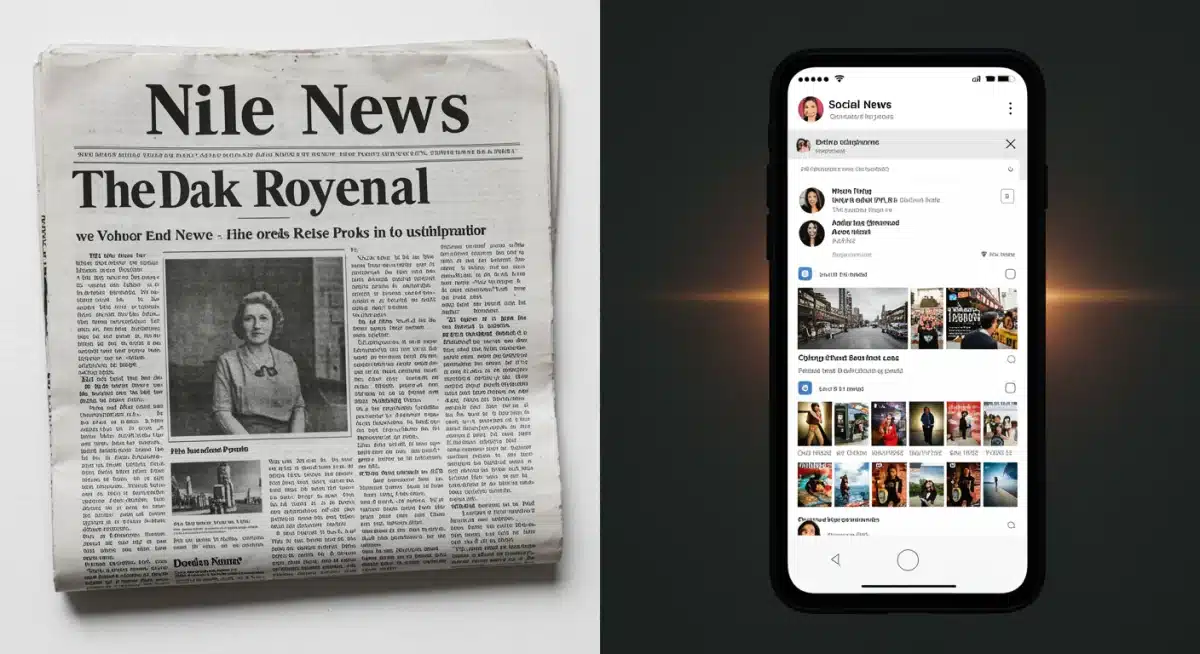
Many traditional outlets have seen their audience migrate to social platforms, where news is often consumed in snippets and headlines, rather than in-depth articles. This has forced news organizations to adapt, often by establishing a significant presence on social media themselves, but not without compromising their original identity and mission.
Financial Strain and the Future of Investigative Reporting
The decline in advertising revenue, traditionally a lifeline for newspapers and broadcasters, has hit hard. As audiences shift to ad-supported social platforms, traditional media struggles to fund the expensive, time-consuming work of investigative journalism. This can lead to a reduction in critical reporting that holds power accountable.
- Reduced Staffing: Newsrooms cut back on journalists and editors, impacting the quality and quantity of original reporting.
- Focus on Engagement Metrics: Traditional outlets may prioritize clickbait and viral content to compete on social platforms.
- Threat to Local News: Local newspapers, vital for community information, are particularly vulnerable to these financial pressures.
Moreover, trust in media has been eroding for years, a trend exacerbated by the often-unregulated nature of social media content. When news is consumed primarily through feeds that mix credible sources with partisan blogs and outright misinformation, distinguishing between reliable and unreliable information becomes increasingly difficult. This erosion of trust poses a significant threat to the informed public discourse necessary for a healthy democracy.
Navigating the New Information Landscape: Media Literacy in the Digital Age
In light of this significant shift, the importance of media literacy has never been greater. If 40% of Americans are primarily getting their news from social media, then equipping them with the skills to critically evaluate that information is paramount. This isn’t just about identifying fake news; it’s about understanding bias, recognizing propaganda, and appreciating the complexities of news production.
Media literacy empowers individuals to become active, discerning consumers of information rather than passive recipients. It involves teaching people how to question sources, understand editorial processes (or the lack thereof), and recognize the influence of algorithms on what they see in their feeds. This education needs to start early and continue throughout life, adapting to the ever-changing digital environment.
Essential Skills for Discerning News Consumers
Developing media literacy involves cultivating a set of critical thinking skills that are applicable across all forms of media, but especially crucial on social platforms where information is often decontextualized and rapidly shared.
- Source Verification: Learning to identify credible news organizations, fact-checking websites, and reputable experts.
- Bias Recognition: Understanding how political, economic, or personal biases can influence news reporting.
- Algorithmic Awareness: Knowing that social media feeds are curated, and actively seeking out diverse viewpoints.
- Critical Questioning: Asking who created the content, why, and what evidence supports the claims made.
Promoting media literacy is a shared responsibility, involving educators, parents, policymakers, and even the social media platforms themselves. It requires a concerted effort to move beyond simply consuming information to actively engaging with it in a thoughtful and analytical manner. Without these skills, the risk of a misinformed public, susceptible to manipulation and division, grows exponentially.
The Path Forward: Rebuilding Trust and Fostering Informed Engagement
The finding that 40% of Americans rely primarily on social media for news presents both a challenge and an opportunity. While concerns about misinformation and polarization are valid, it also highlights the immense reach and potential of these platforms to disseminate information. The path forward involves a multi-pronged approach focused on rebuilding trust, enhancing media literacy, and encouraging more responsible platform design.

For traditional news organizations, this means adapting without sacrificing journalistic integrity. It requires innovating how news is presented on social platforms, engaging with audiences where they are, and clearly distinguishing verified reporting from opinion or sponsored content. Rebuilding trust will also necessitate greater transparency in their own processes and a renewed commitment to objective reporting.
Collaborative Solutions for a Healthier Information Ecosystem
Addressing the complexities of social media news consumption requires collaboration among various stakeholders. No single entity can solve this issue alone; it demands a collective effort to create a more informed and engaged citizenry.
- Platform Accountability: Social media companies need to invest more in content moderation, fact-checking partnerships, and algorithm transparency.
- Educational Initiatives: Schools and community programs should prioritize media literacy education for all ages.
- Support for Quality Journalism: Readers and advertisers can support independent, high-quality news organizations.
- Individual Responsibility: Users must be encouraged to diversify their news sources and critically evaluate information.
Ultimately, the goal is not to demonize social media, but to harness its power for positive impact while mitigating its risks. This involves fostering an environment where accurate, diverse, and well-contextualized news can thrive, regardless of the platform. The future of an informed public depends on our collective ability to adapt to this evolving media landscape and ensure that the convenience of the feed does not come at the expense of truth and understanding.
| Key Aspect | Brief Description |
|---|---|
| News Source Shift | 40% of Americans now primarily get news from social media feeds, marking a significant departure from traditional media. |
| Driving Factors | Convenience, personalization, mobile accessibility, and perceived authenticity drive social media news consumption. |
| Major Challenges | Misinformation, echo chambers, polarization, and declining trust in media are key concerns. |
| Solutions & Future | Enhanced media literacy, platform accountability, and support for quality journalism are vital for a healthier information ecosystem. |
Frequently Asked Questions About Social Media News Consumption
The study indicates a significant trend: 40% of Americans now primarily obtain their news from social media feeds. This highlights a major shift away from traditional news sources and signals a new era in how information is accessed and processed by the public.
Several factors contribute to this trend, including the convenience of accessing news within existing social platforms, the personalized nature of algorithmic feeds, and the ease of mobile consumption. Many also perceive social media as offering more immediate or diverse perspectives.
Key risks include the rapid spread of misinformation and disinformation, the formation of echo chambers that limit exposure to diverse viewpoints, and increased societal polarization. The blurring lines between credible journalism and opinion also pose a significant challenge for users.
Traditional news organizations face declining revenues, reduced staffing, and a struggle to maintain relevance. They are often forced to adapt their strategies to compete on social platforms, which can sometimes compromise their in-depth reporting and journalistic integrity.
Addressing these challenges requires a multi-faceted approach. This includes enhancing media literacy education, increasing accountability for social media platforms regarding content moderation, and supporting high-quality, independent journalism. Individual users also bear responsibility for diversifying their news sources.
Conclusion
The finding that 40% of Americans now primarily rely on social media feeds for their news marks a pivotal moment in the evolution of information consumption. This shift, driven by convenience and personalization, brings with it a complex array of challenges, from the rampant spread of misinformation to the erosion of trust in established media. As we navigate this new digital landscape, the imperative to foster media literacy and support responsible journalism becomes more critical than ever. The future of an informed and engaged citizenry hinges on our collective ability to adapt to these changes, ensuring that the benefits of digital connectivity do not overshadow the fundamental need for accurate and diverse information.